
Fertilization
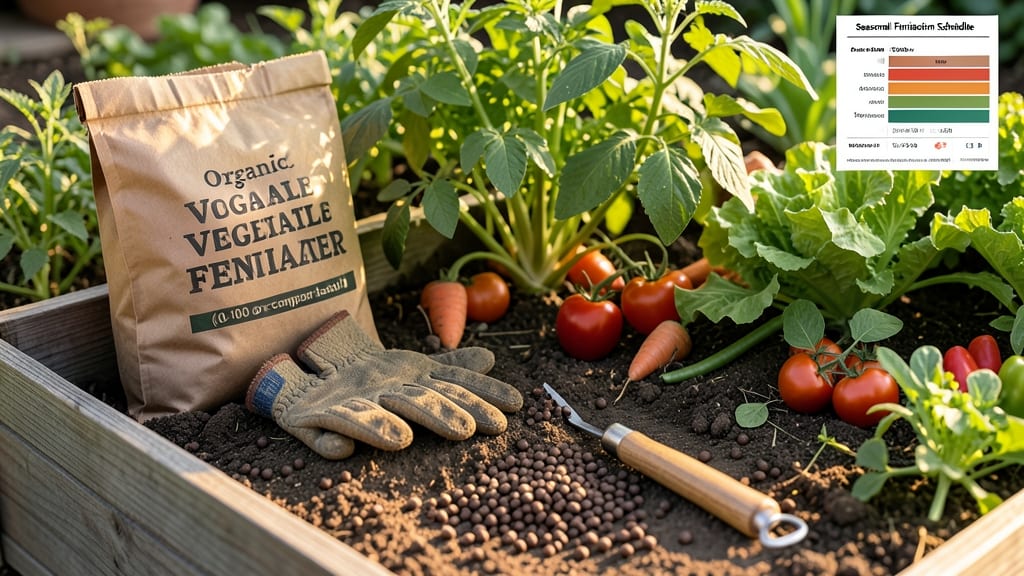
To fertilize your 🥕 vegetable garden at the right time means feeding it when plants are hungry—not just when you remember.
Picture this: you’ve spent weeks planting, watering, and hoping, only to watch your tomatoes struggle or your lettuce bolt before it’s ready. The problem? Fertilizer applied at the wrong stage can do more harm than good, leaving your garden stressed instead of thriving.
Timing matters because plants have specific nutrient needs at different growth stages—whether they’re sprouting leaves, setting flowers, or bulking up fruit. A spring feed jumpstarts the season, while a mid-summer boost keeps heavy feeders like corn and squash producing.
In this guide, I’ll break down the exact seasonal triggers for fertilizing—from pre-planting prep to post-harvest care—so you can feed your garden like a pro, not a guess.
4 Critical plant growth stages that determine fertilizer timing
Understanding your vegetable garden's growth stages is like reading a plant's roadmap to success. Each phase—from tiny sprouts to fruit-bearing powerhouses—demands different nutrients. Miss the timing, and you risk stunted growth or poor yields.
I've learned the hard way that a one-size-fits-all approach to fertilizing won't cut it. Let's break down these 4 biological triggers that tell you exactly when to feed your veggies for maximum harvests.
The first stage is all about seedling development. This is when your plants are most vulnerable, and their nutrient needs are modest but critical. Think of it as their foundation phase. Over-fertilizing here can burn delicate roots, while too little can leave them weak.
I always use a light organic starter fertilizer like fish emulsion or compost tea at half-strength during this time. This gives them just enough nitrogen to kickstart growth without overwhelming their tiny systems.
Once your seedlings have 2-3 true leaves and are ready to transplant, they enter the vegetative stage. This is when plants focus on leaf and stem growth, and their hunger for nutrients skyrockets. Balanced fertilizers with equal parts nitrogen, phosphorus, and potassium (like 10-10-10) become essential.
I apply my first full-strength feeding 2 weeks after transplanting, then repeat every 4-6 weeks. This timing aligns perfectly with when plants are actively building their foliage.
Here's where many gardeners go wrong: they keep feeding nitrogen-heavy fertilizers when their plants actually need to shift gears. The flowering stage demands a different nutrient profile. Your veggies now need more phosphorus to support bloom development.
I switch to a 5-10-5 or 3-4-6 formula during this phase, applied when the first flower buds appear. Tomatoes and peppers, for example, will reward you with better fruit set if you time this correctly.
🌱Visual Guide: Here's a quick reference for aligning your fertilizer with each growth stage:
The final stage is fruiting, where your plants are working overtime to produce the harvest you've been waiting for. This is when potassium becomes crucial for disease resistance and fruit quality. I often turn to natural sources like wood ash or banana peel tea during this phase.
The key is to feed lightly but consistently—every 3-4 weeks—rather than going heavy. Too much nitrogen now will lead to lush leaves but poor fruit development.
Pro tip: Pay attention to your plants' color cues. Healthy leaves should be vibrant green, not yellow or purple. Yellowing between veins often signals nitrogen deficiency, while purple stems indicate phosphorus needs.
I keep a small notebook by my garden to track these signs alongside my fertilizer schedule. This helps me adjust timing and types for next season.
Timing isn't just about when you apply fertilizer—it's about matching your feeding schedule to your plants' biological clocks. For example, I never fertilize late in the day, as this can encourage fungal growth.
Always apply in the early morning so nutrients have time to absorb before evening moisture sets in. This small habit has made a noticeable difference in my garden's productivity.
Remember that organic fertilizers release nutrients more slowly, so you'll need to plan ahead. If you're using synthetic fertilizers, you can be more precise with timing but need to monitor for salt buildup.
I've found that a combination approach—using compost for baseline nutrition and targeted organic fertilizers at key stages—gives me the best results without risking over-fertilization.
🌿 The most common mistake I see is gardeners focusing only on nitrogen. While it's important for leafy growth, it's just one piece of the puzzle. Your vegetable garden's success hinges on understanding this 4-stage nutrient cycle and adjusting your feeding schedule accordingly.
When you align your fertilizer applications with these biological triggers, you'll see stronger plants, better yields, and healthier harvests.
Seasonal fertilizer schedule by climate Zone: when to feed for peak yields
Your vegetable garden's success hinges on timing fertilizer applications to match your local climate. In cool climates (Zones 1-7), like the Pacific Northwest or Midwest, soil stays cooler longer, delaying growth.
Meanwhile, warm climates (Zones 8-11), such as Florida or California, allow year-round planting. Misaligning fertilizer with these cycles leads to wasted nutrients or stunted plants.
Soil temperature is your best indicator for when to fertilize. Aim to apply nutrients when soil reaches 50°F for cool-season crops (like kale or peas) or 60°F+ for warm-season crops (like tomatoes or peppers).
In cooler zones, this often means waiting until late April or May, while warmer zones can start as early as February or March.
🌱 Numbered Highlights: When to Fertilize Your Veg Garden by Season
- 🌱 Early Spring (Cool Zones): Apply balanced fertilizer (10-10-10) at planting (March-April) and again in late May for leafy greens and root veggies.
- 🌿 Late Spring (Warm Zones): Start fertilizing warm-season crops (tomatoes, peppers) in February-March with higher phosphorus (5-10-10) to boost flowering.
- ☀️ Summer (All Zones): Feed every 4-6 weeks with slow-release organic (e.g., compost or worm castings) during peak growth (June-August).
- 🍂 Fall (Cool Zones): Apply light fertilizer (half-strength) in September for late-season crops (e.g., spinach, carrots) to prevent winterkill.
- ❄️ Winter (Warm Zones): Skip fertilizing in December-February unless growing winter crops (kale, lettuce)—use low-nitrogen feed to avoid soft growth.
For cool-season gardens, prioritize nitrogen-rich fertilizers in early spring to fuel leafy growth. Switch to phosphorus-heavy feeds when plants bolt (e.g., broccoli, cabbage). In warm-season gardens, focus on potassium during fruiting stages to improve disease resistance and flavor.
Pro tip: Test soil pH before fertilizing. Cool climates often need lime (to raise pH), while warm climates may require sulfur (to lower pH).
Aim for 6.0-7.0 pH for most vegetables. Adjust fertilizer types based on your test results—acid-loving crops (blueberries, potatoes) thrive in 4.8-5.5 pH.
Over-fertilizing is a common mistake, especially in hot, dry climates. Always water deeply after feeding to prevent root burn. In humid zones, reduce fertilizer use in July-August to avoid fungal diseases like powdery mildew. Instead, opt for foliar sprays with micronutrients (e.g., magnesium or calcium).
Create a personalized calendar marking your last frost date and soil warm-up timeline. Use this to schedule fertilizations 2 weeks before planting and again at mid-season. For example, in Zone 5, fertilize early May for peas and late June for tomatoes.
In Zone 9, feed January for early greens and July for fall squash. 🌱