
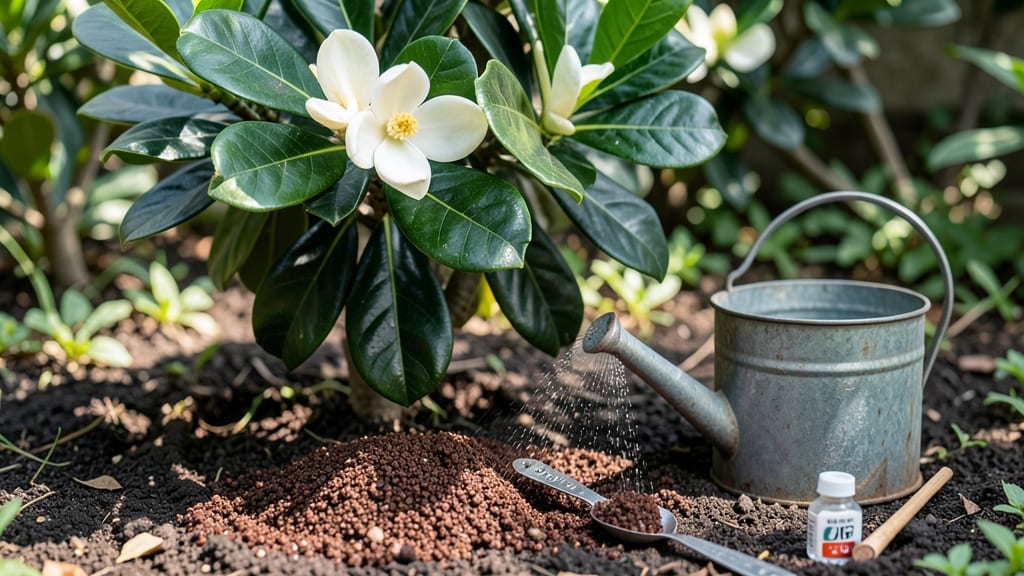
How Often to Fertilize Gardenias: Monthly Schedule for Lush, Fragrant Blooms

Fertilization

How Often to Fertilize Gardenias: Monthly Schedule for Lush, Fragrant Blooms

To fertilize gardenias properly means feeding them every 4-6 weeks during their growing season—spring through summer—when they’re hungry for nutrients to fuel those iconic fragrant blooms 🌸.

Struggling to keep your gardenias blooming as beautifully as they did when you first planted them? The secret likely lies in your fertilization schedule—overdoing or underdoing it can stunt growth, reduce fragrance, and even harm your plant.

These tropical beauties thrive in General (Tropical/Subtropical) zones 8-11, where consistent feeding mimics their natural, nutrient-rich soil. But timing matters: too much fertilizer burns roots, while too little leaves you with sparse, weak blooms.

In this guide, I’ll break down the exact month-by-month schedule, the best fertilizers to use, and how to spot when your gardenias are begging for (or rebelling against) more food.

💚 💚 💚
🌸 Gardenia Feeding Guide
Frequency
Every 4-6 weeks during growing season (spring-summer)
Best Time
Early morning
NPK Ratio
10-10-10 or 8-3-9 (acid-loving plant formula)
Amount
1 tbsp per plant every 4-6 weeks

Optimal gardenia fertilization frequency by season: a month-by-month guide

Your gardenias deserve a tailored fertilization schedule that matches their natural growth cycles. Unlike many plants, gardenias respond best to seasonal feeding adjustments, with heavy feeding during active growth and minimal input during dormancy.

The key is balancing nutrients to encourage lush foliage and abundant blooms without overloading the roots, which can lead to burn or stunted growth.

Gardenias thrive in acidic soil (pH 5.0-6.0) and need a fertilizer formulated for acid-loving plants. A balanced 10-10-10 or 8-3-9 NPK ratio works well, but always pair it with iron supplements to prevent yellowing leaves—a common deficiency in these tropical shrubs.

The timing of your feedings is just as critical as the type of fertilizer you choose.

Month Fertilization Frequency Fertilizer Type Notes
January None Dormant period; focus on pruning.
February None Prep soil for spring with compost.
March Light feed Slow-release granules Introduce nutrients gently as new growth begins.
April Feed Balanced 10-10-10 Apply 1 tbsp per plant; water deeply.
May Feed 10-10-10 + iron Peak blooming season; support with iron.
June Light feed Slow-release Reduce feeding after first bloom wave.
July Feed 8-3-9 (acid formula) Encourage second bloom cycle.
August Feed 10-10-10 Final feeding before fall slowdown.
September Light feed Slow-release Transition to dormancy; reduce nutrients.
October Light feed Compost tea Boost soil health for winter.
November None

Signs your gardenias need fertilizer (and when to stop feeding)

If your gardenia shrubs are showing yellowing leaves or sparse blooms, it’s time to check their nutrient levels. Gardenias thrive on a balanced diet, but too much or too little fertilizer can signal trouble.

I’ve noticed that leaf discoloration and slow growth are the first signs my gardenias need feeding. Understanding these clues helps me adjust care before problems worsen.

Pay close attention to leaf color changesyellow leaves often mean nitrogen deficiency, while brown tips could indicate over-fertilization. Even fewer blooms than usual signals your gardenias aren’t getting enough nutrients.

I’ve learned that leaf drop or stunted growth are red flags too, especially if they appear suddenly after a change in fertilizer routine.

⚠️ How Often to Fertilize Gardenias

Feed gardenias every 4-6 weeks during spring and summer (March-September). Pause fertilization in fall and winter (October-February) when growth slows. Over-fertilizing in cooler months can burn roots and harm the plant.

When your gardenias show new green growth after feeding, that’s a good sign they’re absorbing nutrients well. But if you see dark green leaves with purple stems, it’s a clear sign of phosphorus overload.

I once made this mistake and had to flush the soil with water to correct it. Always follow the recommended dosage on fertilizer packages.

Another key indicator is root health. Healthy roots should be white or light tan, while black or mushy roots mean over-fertilization. If you’re unsure, gently dig around the base of your gardenia—this simple check can save your plant from long-term damage.

I test soil moisture before fertilizing to ensure roots aren’t already stressed.

Stop fertilizing if your gardenias show new growth slowing or leaves curling inward. This usually happens in late summer as the plant prepares for dormancy. I’ve found that reducing feed in September helps my gardenias transition smoothly into winter. Always water thoroughly after feeding to help nutrients reach the roots.

Remember, gardenias are acid-loving plants, so use a balanced, acidic fertilizer (like 10-10-10 or 8-3-9). If your soil isn’t acidic enough, your gardenias won’t absorb nutrients properly, no matter how often you fertilize. Test your soil’s pH every 2-3 years to keep it in the ideal 5.0-6.0 range.

★★★★★4.6(11 reviews)
Categories Fertilization