
Picking
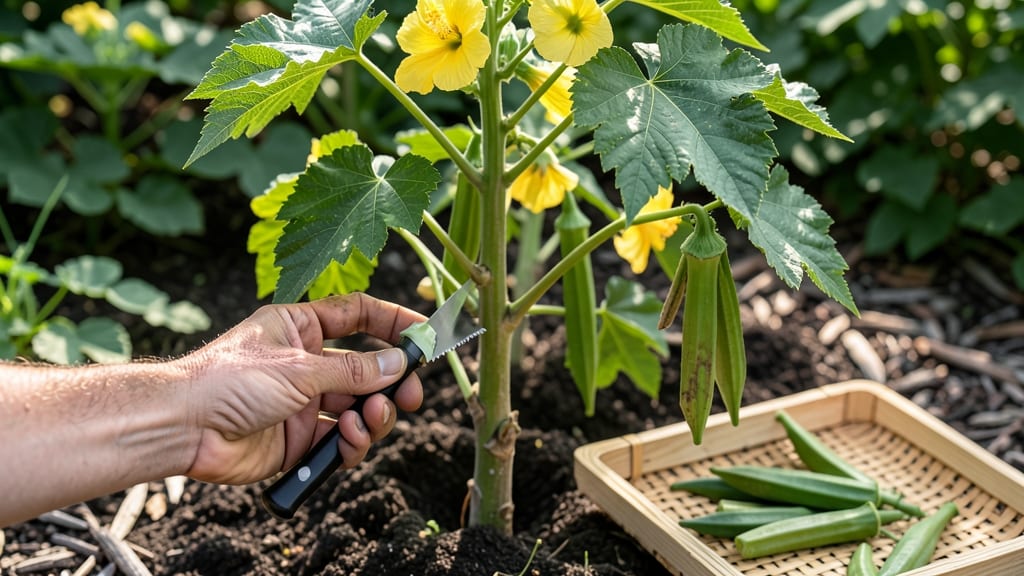
Picking okra from the garden at the right time means tender, flavorful pods every time — and avoiding the tough, woody sticks that turn your harvest into a chewy disappointment.
Okra lovers know the struggle: harvest too early, and you get bitter, underdeveloped pods; wait too long, and they turn into tough, fibrous sticks. Timing your okra harvest perfectly ensures tender, flavorful pods every time—here’s exactly when to pick for peak freshness.
The 3-6 inch rule is your best friend: pods this size are firm but tender, with a slight bulge and glossy skin. Check them every 2-3 days in summer’s heat, because once they snap easily when bent, it’s time to harvest before they toughen up.
Below, I’ll break down the exact signs of ripeness, how often to pick for maximum yield, and what to watch for when the heat of Zone 6a summers speeds up growth. No more guessing—just perfect, ready-to-cook okra every time.

Optimal okra pod size for harvesting: the 3-6 inch rule
Harvesting okra at the right pod size makes all the difference between tender, flavorful pods and tough, fibrous sticks. The 3-6 inch rule is your golden ticket to perfect okra—this range ensures pods are at their peak texture and taste.
Beginners often struggle with timing, but mastering these visual cues will transform your harvest every time.
Okra pods grow rapidly, so checking them every 2-3 days is key. When pods reach 3 inches, they’re young and sweet, while 6 inches marks the upper limit for tenderness.
Beyond this, pods develop thick walls and a woody texture that’s less appealing. Think of this window as your "sweet spot" for harvesting.
Visual cues are your best friends when deciding when to pick okra. Look for pods that are glossy and bright green, with a slight bulge but still flexible. Avoid dull, matte pods—they’re past their prime. The stem separation test is another pro trick: gently twist the pod at its base. If it snaps cleanly, it’s ready for harvest.
For beginners, use your hand as a reference. A 3-inch pod is roughly the length of your thumb from knuckle to tip, while a 6-inch pod spans from your wrist to your middle finger.
This tactile method helps you gauge size quickly without measuring tools. Practice this, and you’ll develop an instinct for the perfect harvest window.
Color plays a crucial role in determining ripeness. Bright green pods are ideal, but watch for subtle shifts to yellow or brown—this signals overripeness. Even within the 3-6 inch range, pods at the lighter green end are younger and more tender.
Darker green pods are still good but may have slightly firmer textures. Pay attention to these color gradients for consistent quality.
Texture is where many gardeners miss the mark. A perfectly ripe okra pod should feel firm but yielding when pressed gently with your thumb. If it feels like a hard plastic or bends too easily, it’s past its prime.
This tactile check is faster than measuring and ensures you’re always harvesting at peak tenderness. Make it a habit to test a few pods daily.
Seasonal adjustments matter too. In hot climates, okra grows faster, so you may need to harvest every 2 days to stay in the 3-6 inch window. In cooler regions, pods mature slower, giving you a 3-day window between checks. Always adapt your harvesting schedule to your local growing conditions for the best results.
Here’s a quick visual reference to keep handy while harvesting:
Pro tip: Use a small pruning shears or sharp knife to harvest okra. Cut the pod just above the stem to avoid damaging the plant. This clean cut encourages new pods to form and keeps your okra plant healthy.
I always keep a pair of shears in my gardening apron for quick, efficient harvesting.
If you’re growing okra in containers, the 3-6 inch rule still applies, but you’ll need to harvest more frequently due to limited space. Container-grown okra often produces pods faster, so check your plants every other day to stay ahead.
This vigilance pays off with a steady supply of fresh, tender okra all season long.
Remember, the goal is consistency. The more you harvest within the 3-6 inch window, the more your okra plant will produce. Neglecting harvests leads to overripe pods, which can reduce future yields.
Stay on top of it, and you’ll enjoy a bountiful harvest of tender, flavorful okra all summer long. Happy harvesting! 🌱
How to check okra ripeness without guessing: 5 key signs
Harvesting okra at the right moment transforms your garden into a flavor factory. The key? Learning to read your plant’s signals. Unlike some vegetables, okra doesn’t ripen after picking—once it’s off the vine, its quality declines rapidly. Here’s how to spot the perfect harvest-ready pods without guessing.
First, focus on the pod’s physical characteristics. Ready-to-pick okra has a distinct appearance that’s easy to miss if you’re not looking for these exact clues. I’ve learned that ignoring these signs leads to either underdeveloped pods (too small and bitter) or overmature pods (tough and stringy).
Let’s break down the five foolproof indicators.
- 1. Pod Length: Aim for 3-6 inches. This is the sweet spot for tenderness. Pods shorter than 2 inches are still developing, while anything over 6 inches becomes fibrous and tough.
- 2. Seed Visibility: Check inside the pod. If you can see small, barely visible seeds, it’s ready. Larger, prominent seeds mean the pod has passed its prime and will be woody and bitter.
- 3. Stem Separation: Gently twist the pod at its base. If it snaps cleanly from the stem, it’s ready. If it resists or tears, wait another day or two. This test saves you from pulling immature pods that will damage the plant.
- 4. Pod Texture: Press the pod lightly with your thumb. It should feel firm but slightly yielding, like a ripe avocado. If it’s rock-hard, it’s underripe; if it’s soft or spongy, it’s overripe.
- 5. Growth Stage: Okra plants produce pods in waves. The first pods appear 50-60 days after planting, but peak harvest happens when the plant is fully established (around 70 days). Monitor the plant’s growth rate—hotter weather speeds up pod development.
Don’t overlook the environmental factors that influence ripeness. Okra grows fastest in warm temperatures (75-90°F). If your summer is scorching, pods may mature quicker, requiring more frequent checks.
Conversely, cooler weather slows growth, giving you more time to harvest. I’ve found that morning harvests work best because pods are firmer and less prone to damage.
One common mistake is assuming all pods on a plant are ready at once. Harvest selectively—pick only the pods that meet your criteria. This encourages the plant to produce more pods and extends your harvest season.
I’ve seen gardens double their yield just by picking consistently and leaving some pods to mature naturally for seeds.
Pro tip: Use a small handheld pruner or sharp scissors to avoid crushing the pods. Cut about 1/4 inch above the pod where it meets the stem.
This reduces stress on the plant and keeps it producing. With these five key signs, you’ll never second-guess your okra harvest again! 🌿