
Tools
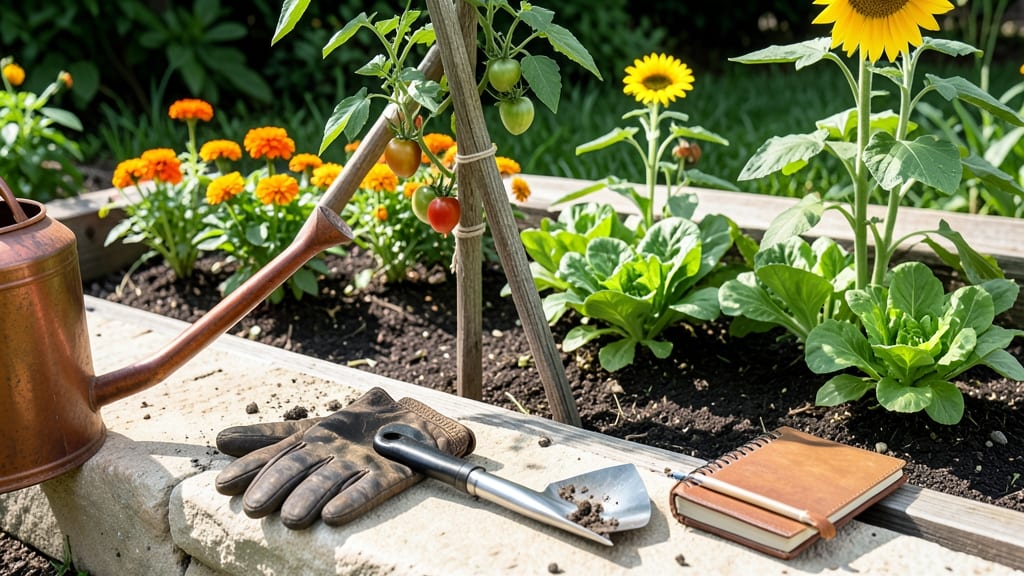
Gardening means cultivating plants—whether flowers, vegetables, or herbs—in soil or controlled environments to grow food, beautify spaces, or study botany. It involves planning, planting, nurturing, and maintaining plants through techniques like pruning, watering, and pest control for sustainable growth and harvests.
At its core, gardening is about creating life from seeds or cuttings, transforming bare soil into thriving ecosystems. 🌱 Whether you're growing tomatoes in your backyard or herbs in pots on a balcony, the process requires understanding how plants interact with their environment—from sunlight exposure to soil pH. I've found that even small gardens teach valuable lessons about patience and observation, as you learn to read subtle changes in plant health before problems become visible.
What sets gardening apart from simple plant care is its intentionality. You're not just keeping plants alive; you're shaping their growth through deliberate choices like companion planting (pairing compatible species) or crop rotation (preventing soil depletion).
The hands-on nature of gardening makes it both a science and an art—where data like temperature ranges and moisture levels meet creativity in design and harvest.
The beauty of gardening lies in its adaptability. You can practice it on a windowsill with microgreens or on acres with orchards, using everything from traditional dirt beds to high-tech hydroponic systems.
The key is matching your approach to your goals: whether that's growing food, creating pollinator-friendly habitats, or simply enjoying the therapeutic process of nurturing living things.
💡 In This Article
- Core Gardening Techniques and Their Scientific Foundations
- Types of Gardening and How to Choose the Right Approach
Core gardening techniques and their scientific foundations
Gardening thrives on understanding how plants convert sunlight, water, and nutrients into growth through photosynthesis.
This process occurs in chloroplasts—tiny structures in plant cells that capture light energy (600-700 nanometers wavelength) and convert carbon dioxide and water into glucose (the plant's food) and oxygen. 🌱 For example, tomatoes need 6-8 hours of direct sunlight daily to produce enough energy for fruit development, while shade-loving plants like ferns thrive with just 2-4 hours of indirect light.
The soil's composition directly impacts nutrient absorption. Ideal garden soil contains 45% minerals (sand, silt, clay), 5% organic matter, and 25% water, with 25% air space for root respiration.
The cation exchange capacity (CEC)—a measure of how well soil holds nutrients—explains why compost improves plant health: it increases CEC by adding organic matter that binds essential minerals like potassium and magnesium. Without proper soil structure, roots struggle to access water and nutrients, even if they're present.
Water absorption works through osmosis and capillary action. Plant roots release enzymes that break down soil particles, creating microscopic channels where water travels upward.
This is why mulching (covering soil with organic material) reduces evaporation—it maintains moisture levels while encouraging deeper root growth. 💧 The field capacity (maximum water soil can hold against gravity) for most garden soils sits around 20-30% by volume, which is why overwatering (beyond this point) leads to root rot by suffocating roots in anaerobic conditions.
Temperature and humidity create another critical balance. Most vegetables prefer 60-75°F daytime temperatures, while tropical plants like bananas thrive at 75-85°F. Humidity affects transpiration—the process where plants release water vapor through leaves—which can drop by 50% in dry conditions, stressing plants.
This is why morning watering (when humidity is naturally higher) is more effective than evening watering, which can promote fungal diseases.
Pest resistance often comes down to plant chemistry. For instance, marigolds release alpha-terthienyl, a compound that repels nematodes, while basil emits eugenol, a natural fungicide. These chemical defenses are why companion planting works—certain plant combinations create ecological relationships that deter pests without synthetic interventions.
Understanding these natural mechanisms lets gardeners make informed choices about plant pairings and cultural practices.
Seed germination begins with imbibition, where seeds absorb water and swell, activating enzymes that break down stored nutrients. The optimal germination temperature varies by species: tomatoes need 70-85°F, while peas prefer 60-70°F.
Light exposure also matters—some seeds (like lettuce) need light to germinate, while others (like beans) sprout better in darkness. This explains why planting depth matters: seeds planted too deep may not receive sufficient light to break through the soil surface.
Root development follows a predictable pattern: first comes the primary root (taproot), followed by secondary roots that branch out. The root zone typically extends 12-18 inches deep for most vegetables, which is why deep soil cultivation improves drainage and aeration.
Understanding this growth pattern helps gardeners space plants properly—crowding leads to competition for nutrients and increases disease risk through poor air circulation.