
Planting
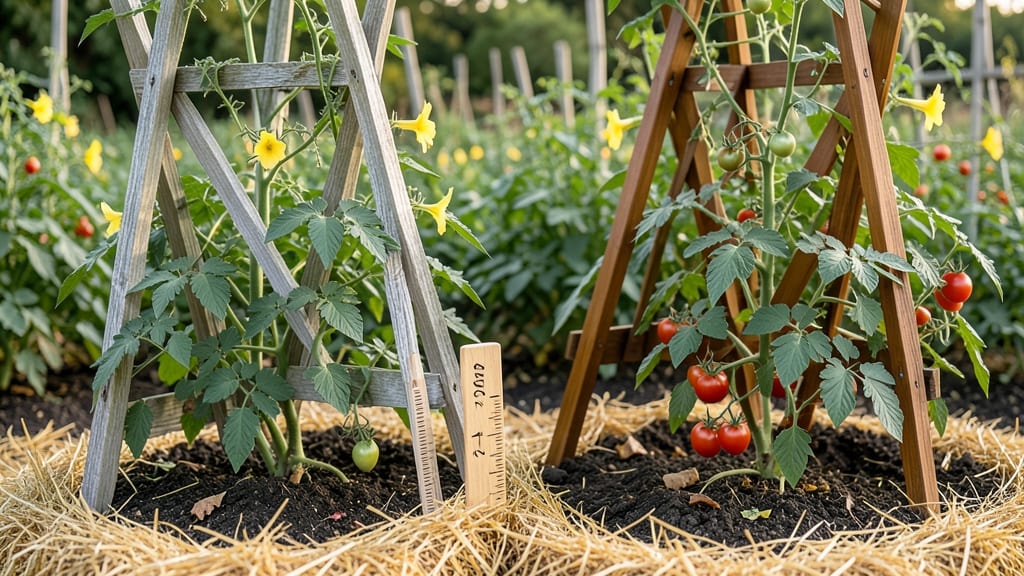
Getting your tomato garden spacing right can mean the difference between a handful of fruit and a bountiful harvest that feeds your family all summer.
Picture this: you’ve spent weeks nurturing your 🍅 seedlings, only to watch them struggle under crowded conditions, leaving you with stunted growth and disease-prone plants. The secret isn’t just how many you plant—it’s how you arrange them for airflow, sunlight, and space to thrive.
In this guide, I’ll break down the exact spacing rules for determinate (bush) and indeterminate (vining) varieties, plus how to squeeze more tomatoes into small spaces without sacrificing quality. Whether you’re working with rows, containers, or a tiny urban plot, these layouts will help you maximize every square foot.
You’ll also learn how to spot common spacing mistakes—like overcrowding—that invite pests and diseases—and how to adjust your setup for your climate or garden size. Ready to turn your tomato patch into a high-yielding powerhouse?
Optimal tomato plant spacing by Variety type (determinate vs indeterminate)
Choosing the right tomato plant spacing is the difference between a thriving harvest and a garden full of blight-prone, underperforming plants. Determinate (bush) and indeterminate (vining) varieties have completely different needs, and ignoring these can lead to stunted growth, poor fruit set, and even plant death.
Let’s break down the science behind spacing to maximize your yield while keeping your tomatoes healthy and productive.
Determinate tomatoes grow in compact bushes and produce fruit all at once, while indeterminate varieties grow continuously, producing fruit until frost. This fundamental difference dictates their spacing requirements. For example, determinate varieties like Roma or Celebrity need tight spacing—about 18-24 inches apart—because they’re designed to stay low and bushy.
Indeterminate types, like Sungold or Better Boy, need room to sprawl, often requiring 24-36 inches between plants to support their towering vines.
Proper spacing isn’t just about fitting more plants in—it’s about airflow and sunlight exposure. Crowded tomatoes trap moisture, creating the perfect conditions for fungal diseases like early blight and late blight. Poor airflow also weakens plants, making them more susceptible to pests.
Additionally, sunlight penetration is critical; tomatoes need 6-8 hours of direct sun daily to produce sweet, flavorful fruit. Overcrowding shades lower leaves, reducing photosynthesis and yield.
Here’s where it gets practical: row spacing matters just as much as plant-to-plant distance. For determinate tomatoes, rows should be 24-36 inches apart to allow for easy movement and airflow.
Indeterminate varieties, which often reach 6-10 feet tall, need 36-48 inches between rows to accommodate their sprawling habit and support structures like trellises or cages.
Now, let’s talk about square-foot gardening, a method that maximizes space efficiency. In a 1-square-foot grid, you can fit 1 determinate tomato plant (like Patio or Tiny Tim) or 1 indeterminate tomato if you’re using a vertical trellis.
This method is perfect for small gardens, containers, or urban spaces where real estate is limited. Just remember: even in tight spaces, airflow is non-negotiable.
For vertical gardening, indeterminate tomatoes are your best friend. By training vines to grow upward on trellises, cages, or stakes, you can reduce the footprint of your plants by up to 75%. This method is ideal for small gardens, patios, or even balconies.
Just ensure your support structure is sturdy and at least 6 feet tall—tall varieties like Brandywine or Cherokee Purple can easily exceed this height. Prune suckers (the shoots that grow between the stem and branches) regularly to direct energy into fruit production and maintain airflow.
Another game-changer is companion planting. Strategically placing tomatoes near compatible plants like basil, marigolds, or onions can improve growth and deter pests. For example, basil repels thrips and whiteflies, while marigolds deter nematodes.
However, avoid planting tomatoes near corn, fennel, or brinjals (eggplants), as they compete for nutrients or attract the same pests. When planning your layout, group companion plants within 12-18 inches of your tomatoes for maximum benefit.
Let’s address a common misconception: more plants
How to maximize tomato yield in small spaces using square-foot gardening
Square-foot gardening transforms tight spaces into high-yield tomato havens by optimizing every inch. This method lets you grow 16 tomato plants per 4'x4' square—or more for dwarf varieties—while ensuring each plant gets the airflow and sunlight it needs to thrive.
The key? Strategic spacing and variety selection tailored to your square-foot grid.
Start by dividing your garden into a grid using 1-foot squares. Each square becomes a dedicated zone for specific tomato types, preventing overcrowding while maximizing density.
For indeterminate varieties (like 'Sungold' or 'Brandywine'), place 1 plant per square and train vines vertically. Determinate tomatoes (like 'Roma' or 'Celebrity') can handle 4 plants per square since they stay compact.
📊 SUMMARY-TABLE: Tomato Spacing by Variety in Square-Foot Gardening
| Variety Type | Plants per Square Foot | Notes |
|---|---|---|
| Indeterminate (vining) | 1 | Train vertically; prune suckers |
| Determinate (bush) | 4 | Compact growth; no trellis needed |
| Dwarf/Cherry (e.g., 'Tiny Tim') | 9-16 | Ideal for containers or dense planting |
| Patio/Container (e.g., 'Balcony Red') | 2-3 | Use 5-gallon pots; 1 plant per pot |
Boost yields further by pairing tomatoes with companion plants that deter pests and improve soil. Plant basil, marigolds, or onions around your tomato squares—their scents repel aphids and whiteflies while attracting pollinators like bees. Avoid planting tomatoes near fennel or brassicas, which stunt their growth.
Rotate your tomato squares yearly to prevent soil-borne diseases like early blight. After harvesting, replace tomatoes with legumes (beans) or leafy greens (lettuce) in the same squares. This breaks disease cycles while replenishing nitrogen.
Mark your grid with stakes or flags to track rotations and avoid planting tomatoes in the same spot for 3+ years.
For vertical space optimization, install a trellis or cage in each square to support indeterminate varieties. This frees up floor space for additional plants like peppers or herbs. Prune suckers weekly to direct energy toward fruit production, and harvest regularly to encourage continuous blooming.
With square-foot gardening, even a 4'x4' patch can produce 50+ pounds of tomatoes per season. The secret? Precision spacing, smart companion choices, and relentless crop rotation. Start small—try a 1'x1' test square—and scale up as you master the method.