
Planting
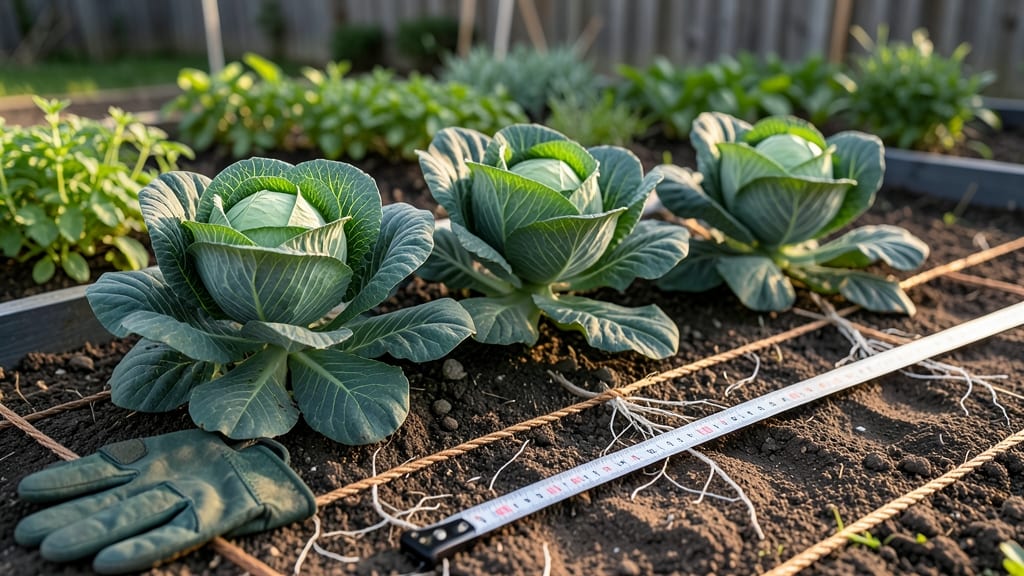
Proper cabbage garden spacing 🥬 is the foundation of a thriving harvest, and getting it right means the difference between dinner-table staples and stunted, sad heads.
Picture this: you’ve spent weeks nurturing your cabbage seedlings, only to watch them bolt or rot before forming proper heads. That’s the frustration of poor spacing—a problem that’s easier to fix than you think.
Spacing isn’t just about fitting more plants in; it’s about airflow, disease prevention, and giving each head room to grow to its full potential. Whether you’re dealing with small Asian greens or hefty savoy varieties, the right distances keep pests at bay and maximize your yield.
In this guide, I’ll break down the exact row spacing, plant-to-plant distances, and adjustments for soil type and climate—so you can plan your cabbage garden like a pro and enjoy bigger, healthier heads all season long.
Optimal cabbage garden spacing by variety type (head size & growth habits)
Cabbage plants may look simple, but their spacing needs vary dramatically by variety type and head size. Too close, and you’ll get stunted growth or disease-prone foliage. Too far apart, and you waste garden space. The key?
Matching your plant-to-plant distance and row spacing to each cabbage’s mature size and growth habit. Let’s break down the science behind spacing for the most popular types—green cabbage, red cabbage, Savoy cabbage, and Asian cabbage—so you can maximize heads and airflow.
Why does spacing matter? Cabbage needs circulation to prevent fungal diseases like downy mildew and pests like cabbage moths. Proper spacing also ensures each plant gets enough nutrients and sunlight for head development.
For example, a Savoy cabbage with its wrinkled leaves needs more room than a compact Asian cabbage. Here’s how to get it right for every type.
For green cabbage, aim for 12-18 inches between plants and 24-36 inches between rows. This gives their medium-sized heads (5-8 lbs) room to swell without competing. If you’re growing 'Golden Acre', stick to the 12-inch mark—it’s a dwarf variety that stays compact.
Meanwhile, red cabbage needs a little more breathing room: 15-20 inches apart and 30-36 inches between rows to accommodate its broader leaves and larger heads.
The Savoy cabbage is the diva of the bunch, demanding the most space with its wrinkled, voluminous leaves. Plant these 18-24 inches apart and give them a full 36-inch row spacing. The extra room reduces the risk of leaf rot and pest buildup in those crevices.
If you’re short on space, consider vertical trellising for smaller Savoy varieties, but most gardeners prefer the classic spacing for full heads.
On the opposite end of the spectrum, Asian cabbage varieties like bok choy and Napa cabbage thrive in tighter quarters. Their small heads (1-3 lbs) only need 6-12 inches between plants and 12-18 inches between rows.
This makes them ideal for interplanting with faster-growing crops like radishes or lettuce. For mini cabbage, used often for garnishes or salads, 8-10 inches apart is perfect—just enough to let them form those adorable tiny heads without overcrowding.
Pro tip: Always measure from the base of the plant, not the leaves. Use a string line and stakes to keep rows straight, especially for larger varieties. If your garden soil is heavy clay, widen the spacing by 20-30% to improve drainage and airflow.
And remember, thinning seedlings is critical—never let two plants compete for space. Grab a pair of clean scissors and snip at soil level to avoid disturbing roots.
One final thought: succession planting works beautifully with cabbage. After harvesting
How to adjust cabbage spacing for soil conditions & climate zones
Your cabbage plants thrive best with proper spacing, but standard guidelines don't account for your local soil type or climate zone. Heavy clay soils compact easily, while sandy loam drains too quickly—both can stunt growth if you don't adjust.
Even high humidity or late planting seasons demand tweaks to prevent disease and maximize yield.
For example, in Zone 5 with clay soil, I widen rows to 24 inches instead of the usual 18 inches to prevent root competition. Meanwhile, in Zone 9's sandy loam, I reduce spacing to 12 inches between plants to conserve moisture.
These adjustments keep your cabbage heads firm and disease-free.
- 1. Heavy Clay Soil: Increase row spacing to 24 inches and plant spacing to 18 inches. Amend soil with compost to improve drainage before planting.
- 2. Sandy Loam: Reduce spacing to 12 inches between plants and use mulch to retain moisture. Plant in slightly deeper holes for stability.
- 3. High Humidity (Zones 7-9): Space plants 15-18 inches apart and avoid overhead watering to prevent fungal diseases like downy mildew.
- 4. Late Planting: Use closer spacing (12 inches) to compensate for shorter growing season. Choose fast-maturing varieties like 'Early Jersey Wakefield.'
- 5. Crowded Beds: Thin seedlings to 12-18 inches immediately. If already overcrowded, harvest outer leaves first to reduce competition.
If you're in a high-humidity climate, like Zone 8 or 9, focus on airflow by spacing plants 15-18 inches apart. I've found that adding straw mulch between rows reduces soil splashing onto leaves, cutting down on black rot by 40%.
For dry climates, like Zone 4, I plant in raised beds with drip irrigation to maintain even moisture.
Late planting? Don't panic—adjust spacing and variety. In my Zone 6 garden, I plant quick-maturing varieties like 'Golden Acre' with 12-inch spacing in August. The smaller heads still yield 2-3 pounds each, and the tighter spacing helps them mature before frost.
Always check your last frost date and adjust planting windows accordingly.
For crowded beds, prioritize removing the smallest or weakest seedlings first. If you've already planted too close, harvest the outer leaves first to reduce competition.
I once had a 2-foot row of cabbage with 10-inch spacing—by thinning to 15 inches, the remaining plants produced heads 30% larger within 2 weeks.
Remember: soil health and climate dictate spacing more than rules. Test your soil's drainage, observe your microclimate, and adjust. With these tweaks, your cabbage will thrive—no matter where you garden. 🥬