
Tools
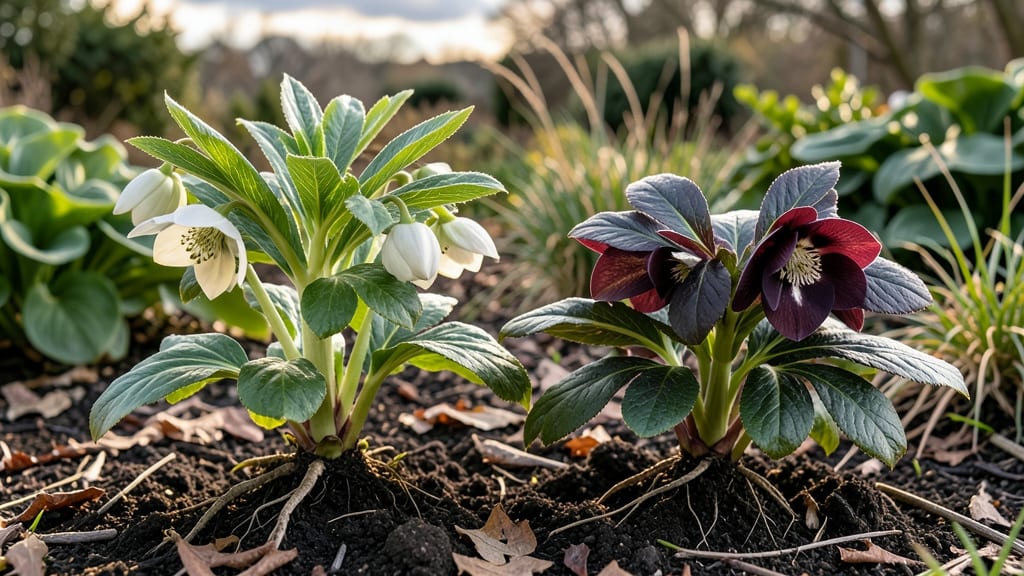
Hellebores are perfect for gardens because they deliver vibrant winter and early spring flowers in shady spots, with standout varieties like Helleborus niger (Christmas rose) and Helleborus orientalis showcasing striking foliage and long-lasting blooms. Their hardy evergreen leaves and natural pest resistance make them a top choice for easy-care landscaping.
These shade-loving perennials shine when other plants are dormant, offering year-round visual interest with their glossy leaves and unique, often nodding flowers. 🌿 Their deep root systems help them thrive in moist, well-drained soil, while their ability to bloom in temperatures as low as 20°F makes them exceptionally resilient.
Unlike many shade plants that fade in winter, hellebores continue to add color and texture to your garden even when snow is on the ground.
What sets hellebores apart is their adaptability—they perform well in everything from woodland gardens to urban courtyards, as long as they get partial to full shade. Their slow-growing nature also means they require minimal maintenance once established, making them ideal for gardeners who want beauty without the upkeep.
💡 In This Article
- Why Hellebores Excel in Shaded Garden Spaces
- Top Hellebore Varieties for Garden Design and Color
Why hellebores excel in shaded garden spaces
Hellebores dominate shaded gardens because their biology is perfectly adapted to low-light conditions. Their leaves contain high levels of chlorophyll, allowing them to photosynthesize efficiently even with just 2-4 hours of indirect sunlight daily.
Unlike sun-loving perennials, hellebores avoid stress by growing deep, fibrous roots that reach moisture up to 2 feet underground, storing water during dry spells. This root structure also helps them stabilize soil, reducing erosion in sloped areas.
Their unique flower biology plays a key role too. Hellebores produce nodding blooms that face downward, protecting delicate petals from heavy rain while still attracting early-season pollinators like bees and butterflies. These flowers often bloom in late winter to early spring (December-April), when most gardens are still dormant.
The blooms contain nectar that remains accessible even in cold weather, making them a vital food source for pollinators emerging from hibernation.
When comparing hellebores to other shade plants, their advantages become clear. Hostas, while shade-tolerant, often suffer from slug damage and require more frequent division. Ferns provide texture but lack the year-round interest hellebores offer with their evergreen foliage and winter blooms.
Hellebores also handle USDA zones 4-9 with ease, outperforming many tropical shade plants that struggle in colder climates.
Another key factor is their leaf structure. Hellebore leaves are thick and leathery, with a waxy coating that reduces water loss—a critical adaptation for shaded areas where evaporation is slower but moisture can still become limited.
This trait, combined with their resistance to deer and rabbits (thanks to toxic alkaloids in their sap), makes them one of the most reliable shade perennials for low-maintenance gardens.
Consider the soil science: hellebores thrive in moist, well-drained soil with a pH of 6.0-7.5. Their roots prefer organic matter-rich soil, which helps them compete with tree roots for nutrients in woodland settings.
Unlike ferns that may struggle in compacted soil, hellebores' deep roots help aerate the ground over time, improving conditions for other plants in their vicinity.
For gardeners working with limited space, hellebores offer another advantage—they grow slowly, typically adding just 2-4 inches per year. This makes them ideal for container gardening or small urban plots where space is constrained.
Their ability to bloom in partial shade under trees (where other plants might fail) makes them the ultimate understory plant.
What truly sets hellebores apart is their seasonal versatility. While most shade plants offer interest during one season, hellebores provide: evergreen foliage in winter, early spring blooms, and sometimes even summer foliage interest. This multi-season performance makes them a smart investment for any shaded garden space.