
Planting
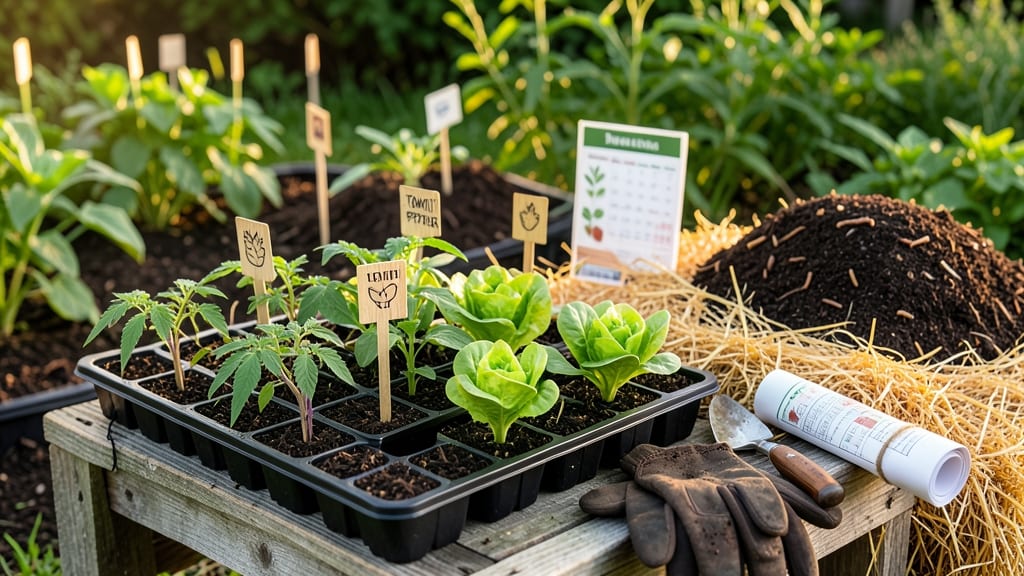
Planting your garden in Virginia at the right time means the difference between a bountiful harvest and a sad, frost-nipped disappointment.
Virginia’s diverse climate—from the mountains to the coast—means your planting timeline can vary by 4-6 weeks, but getting it wrong risks frost damage or poor yields. Whether you're in the Piedmont or Tidewater, knowing when to start seeds and transplant is the key to success.
Cool-season crops like lettuce and spinach thrive when planted in early spring or late summer, while warm-season favorites such as tomatoes and peppers need to wait until the soil is warm and the last frost has passed. The wrong timing can leave your garden struggling or even failing entirely.
In this guide, I’ll break down the exact planting windows for Virginia’s USDA zones, share tips for extending your growing season, and help you avoid common mistakes that ruin even the best-laid plans. Let’s get your garden off to the right start!
Virginia planting zones explained: when to start seeds and transplant by region
Virginia’s USDA Plant Hardiness Zones 6-8 create unique microclimates where your planting schedule can shift dramatically between the coastal Tidewater, Piedmont region, and Shenandoah Valley. Understanding these zones helps you avoid frost damage to tender seedlings or stunted growth from premature planting.
Let’s break down the key differences and ideal planting windows for both cool-season crops (like lettuce) and warm-season crops (like tomatoes).
The last average frost date varies by zone: Tidewater (Zone 8a) typically sees its last frost by March 15, while the Shenandoah Valley (Zone 6b) often waits until April 15. Piedmont (Zone 7a) usually falls in between, with April 1 as the average last frost date.
These dates are your garden’s calendar—plant too early, and frost will kill your seedlings; too late, and you’ll miss peak harvests.
For cool-season crops like lettuce, spinach, and kale, start seeds indoors 4-6 weeks before your region’s last frost date.
In Tidewater (Zone 8a), this means kicking off seed starting by February 15, while gardeners in the Shenandoah Valley (Zone 6b) should wait until March 1. These crops thrive in cooler temperatures and can even tolerate light frosts, making early planting ideal.
Warm-season crops such as tomatoes, peppers, and cucumbers need soil temperatures above 60°F to germinate. In Virginia, this typically aligns with late April to early May, but Tidewater gardeners can start transplanting as early as April 15.
For the Shenandoah Valley, wait until May 15 to avoid late spring frosts that can devastate young plants.
If you’re starting seeds indoors, use a grow light to supplement natural light, especially in winter months when days are shorter. For Tidewater gardeners, begin tomato seeds indoors by February 15, while Piedmont gardeners should start them by March 1.
This head start ensures your seedlings are hardy enough for transplanting after the last frost. Use biodegradable pots to minimize transplant shock when moving seedlings outdoors.
In Zone 7a (Piedmont), where last frosts average April 1, I recommend direct-sowing cool-season crops like carrots and radishes by March 1. These crops grow quickly and can be harvested before summer heat sets in.
For warm-season crops, wait until May 1 to transplant seedlings, giving the soil time to warm up sufficiently. Use a soil thermometer to confirm temperatures are above 60°F before planting.
One of my biggest gardening lessons came from a late spring frost in the Shenandoah Valley that wiped out my pepper seedlings in May. Since then, I’ve used row covers to protect young plants until the risk of frost has passed.
These lightweight fabrics create a microclimate that traps heat and shields plants from unexpected cold snaps. For Tidewater gardeners, row covers are less critical, but they’re still useful for extending harvests into fall.
For
Zero-frost risk crops for Virginia: safest planting months by vegetable type
Virginia’s three distinct microclimates—coastal Tidewater, Piedmont region, and mountainous Shenandoah Valley—require precise timing for zero-frost-risk crops. Warm-season vegetables like peppers and cucumbers need soil temperatures above 60°F to thrive, while broccoli and kale can handle cooler springs.
Let’s break down the safest planting windows by crop type and region.
For coastal Virginia (Zone 7b-8a), the last frost typically occurs by March 15–April 1, giving you an early start. Inland Piedmont (Zone 6b-7a) waits until April 15–May 1, while mountain regions (Zone 5b-6a) often delay until May 15–June 1.
These dates shift your planting windows significantly—especially for frost-sensitive crops like tomatoes and squash.
- 🌶️ Peppers & Eggplants: Plant May 1–June 1 (coastal) or June 1–July 1 (mountains). Use black plastic mulch to warm soil faster. 🌡️
- 🍅 Tomatoes & Cucumbers: Start seeds indoors March 1–April 1 (coastal) or April 15–May 1 (inland). Transplant after May 15 when soil hits 60°F. 🌱
- 🥬 Lettuce & Spinach: Sow March 1–April 15 (coastal) or April 15–May 1 (inland). Succession plant every 2 weeks for continuous harvest. 🌿
- 🥦 Broccoli & Kale: Plant March 1–April 15 (coastal) or April 15–May 15 (inland). Use row covers if frost threatens after planting. ❄️
- 🌽 Sweet Corn: Wait until May 1–June 1 (coastal) or June 1–July 1 (mountains). Plant in blocks, not rows, for better pollination. 🌾
To extend your growing season for frost-sensitive crops, use row covers or cold frames. For example, peppers planted in late May can still produce well if protected from unexpected late frosts (common in Piedmont).
The Virginia Tech Extension recommends floating row covers for early spring plantings of cabbage and carrots.
For mountain gardeners, prioritize heat-loving crops like okra and sweet potatoes, which tolerate cooler nights better than tomatoes or cucumbers. Start these after June 1 to avoid frost.
Coastal gardeners, meanwhile, can push the limits with fall plantings of kale and turnips as early as August 15.
Always monitor soil temperature with a soil thermometer—warm-season crops need 60–70°F soil, while cool-season crops thrive at 45–65°F. If your soil is too cold, wait 1–2 weeks or use black plastic mulch to speed up warming. Patience here prevents stunted growth or failed crops. ☀️