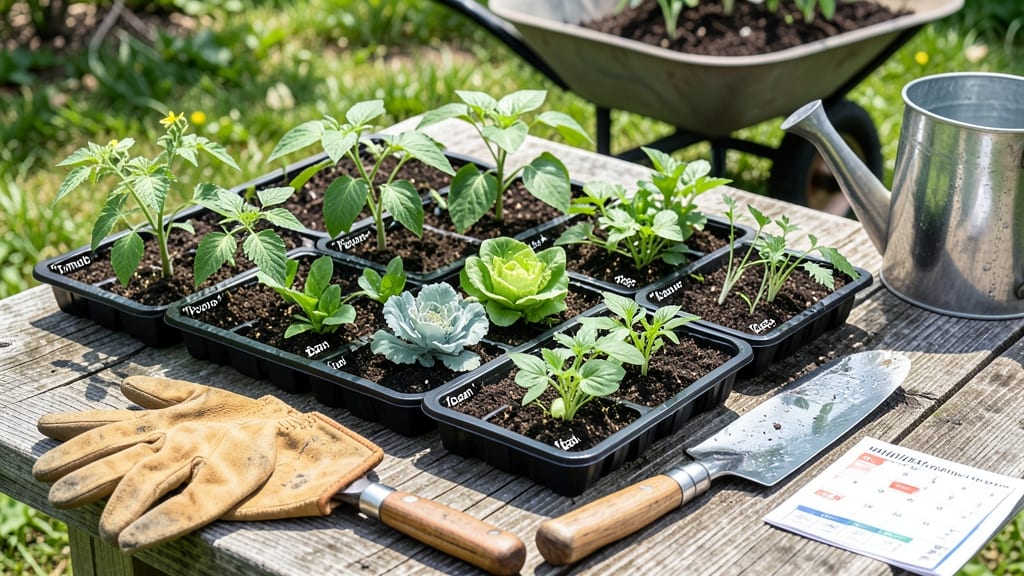
Planting a vegetable garden in Virginia at the right time means the difference between a lush summer harvest and a sad, wilted mess 🌱.
Virginia’s diverse climate—from coastal breezes to mountain chill—means planting your vegetable garden at the wrong time can turn eager seedlings into sad, wilted memories. But get the timing right, and you’ll enjoy a bumper crop of tomatoes, peppers, and greens that make your neighbors jealous.
Cool-season crops like lettuce and broccoli thrive in early spring, while warm-season favorites such as tomatoes and peppers need to wait until after the last frost. The key? Knowing your exact USDA zone and microclimate—whether you’re in the Piedmont’s valleys or the Tidewater’s coastal plains.
In this guide, I’ll break down the perfect planting windows for Virginia’s most popular vegetables, plus pro tips to adjust for unpredictable weather. No more guessing—just zero-fail harvests!
🌱
When to Plant Vegetable
Jan
❄️
Feb
❄️
Mar
🌱
Apr
🌱
May
🌱
Jun
🌱
Jul
☀️
Aug
☀️
Sep
🍂
Oct
🍂
Nov
🍂
Dec
❄️
Virginia’s planting zones & microclimates: exact start dates for cool-season vs. warm-season crops
Virginia spans USDA zones 5b through 8a, creating dramatic differences in planting windows from the cooler mountains to the warmer coastal plains. These zones alone won’t tell the full story—microclimates like urban heat islands or valley bottoms can shift your frost dates by 2-3 weeks.
For example, Richmond’s 7a zone might see tomatoes thrive planted in mid-April, while Roanoke’s 6b zone needs to wait until mid-May.
Cool-season crops like lettuce and broccoli need to be in the ground 4-6 weeks before your average last frost date. Warm-season crops such as tomatoes and peppers require soil temperatures above 60°F and should only go in after all danger of frost has passed.
The key is knowing your local frost-free averages and adjusting for microclimates that can push those dates earlier or later.
Urban areas often experience heat islands that delay frost, while mountain regions like the Blue Ridge face earlier frosts. Coastal areas benefit from moderating ocean breezes, extending growing seasons. For instance, Norfolk’s 8a zone has a 150-day frost-free season, while Blacksburg’s 6b zone only gets 130 days. These differences mean your neighbor’s planting schedule might not work for you!
Below is a region-specific planting guide for Virginia’s most common vegetable crops. Use this as your planting calendar to align with your local conditions. Remember, soil temperature matters more than air temperature—always check with a soil thermometer before planting warm-season crops.
| Region & Zone |
Cool-Season Start (Lettuce/Broccoli) |
Warm-Season Start (Tomatoes/Peppers) |
Last Frost Date |
Notes |
| Norfolk (8a) |
Feb 15 - Mar 1 |
Mar 15 - Apr 1 |
Feb 28 |
Long growing season; use heat-tolerant lettuce varieties. |
| Richmond (7a) |
Mar 1 - Mar 15 |
Apr 1 - Apr 15 |
Mar 20 |
Urban heat islands may push dates 1 week earlier. |
| Roanoke (6b) |
Apr 1 - Apr 15 |
May 1 - May 15 |
Apr 25 |
Mountain valleys can have 10°F colder nights. |
| Blacksburg (6b) |
Apr 15 - Apr 30 |
May 15 - Jun 1 |
May 5 |
High elevation shortens growing season by 2-3 weeks. |
| Abingdon (6a) |
Apr 30 - May 15 |
Jun 1 - Jun 15 |
How to adjust planting times for Virginia’s unpredictable weather: a 5-Step risk mitigation guide
Virginia’s weather can throw curveballs—one day it’s warm enough for tomatoes, the next you’re scrambling to cover seedlings from a surprise frost. The key to success? Flexible planting strategies that account for late frosts, spring rains, and summer humidity.
I’ve learned these tricks after years of trial (and a few wilted cucumbers) in my own garden.
Start by warming your soil early. Use black plastic mulch or clear plastic tunnels 2–3 weeks before your target planting date. This can add 5–10°F to soil temperature, helping warm-season crops like peppers and squash thrive sooner.
My cucumber plants went from struggling to flourishing after I tried this last year!
Next, time your row covers carefully. For cool-season crops like lettuce or broccoli, apply covers in late afternoon to trap heat during the day but allow airflow at night. For warm-season crops, use them only during late frosts—removing them by mid-morning to prevent overheating.
I lost an entire row of basil once by leaving covers on too long!
-
1. Soil Warm-Up: Use black plastic or straw mulch 2–3 weeks before planting tomatoes/peppers to raise soil temps by 5–10°F. Test with a soil thermometer—aim for 60°F+ for warm crops.
-
2. Frost Watch: Sign up for local frost alerts (like NOAA) and have row covers ready. For cucumbers/squash, wait until after May 15 in most of VA—late frosts hit hardest in Zone 6b (Piedmont).
-
3. Backup Planting: Sow fast-growing crops (radishes, lettuce) every 2 weeks in spring. For slow starters (squash, melons), plant 2 sets 2 weeks apart to hedge bets.
-
4. Humidity Hack: Space vining plants (cucumbers, beans) farther apart in high-humidity zones (coastal VA) to improve airflow. Add mycorrhizal fungi to soil to boost root health in damp conditions.
-
5. Heat Tolerance: Choose heat-resistant varieties (e.g., ‘Heatmaster’ tomatoes, ‘Malabar’ spinach). Plant shade cloth over seedlings if temps hit 90°F+ during germination.
Don’t forget backup planting schedules. For high-value crops like squash or cucumbers, I plant half my seeds at the optimal time and the other half 2 weeks later.
This ensures a harvest even if the first batch gets hit by pests or weather. Last summer, my zucchini plants produced for 6 weeks thanks to this trick!
Finally, monitor humidity levels—Virginia’s summer air can smother plants. Use drip irrigation instead of overhead watering to keep foliage dry, and mulch heavily to retain moisture without inviting fungal diseases. My pepper plants thrived after I switched to this method mid-season.
With these adjustments, you’ll turn Virginia’s unpredictable weather into an advantage. Start small, keep notes, and soon you’ll be the gardener your neighbors ask for advice—no wilting memories in sight! 🌱
★★★★★4.5(5 reviews)
|