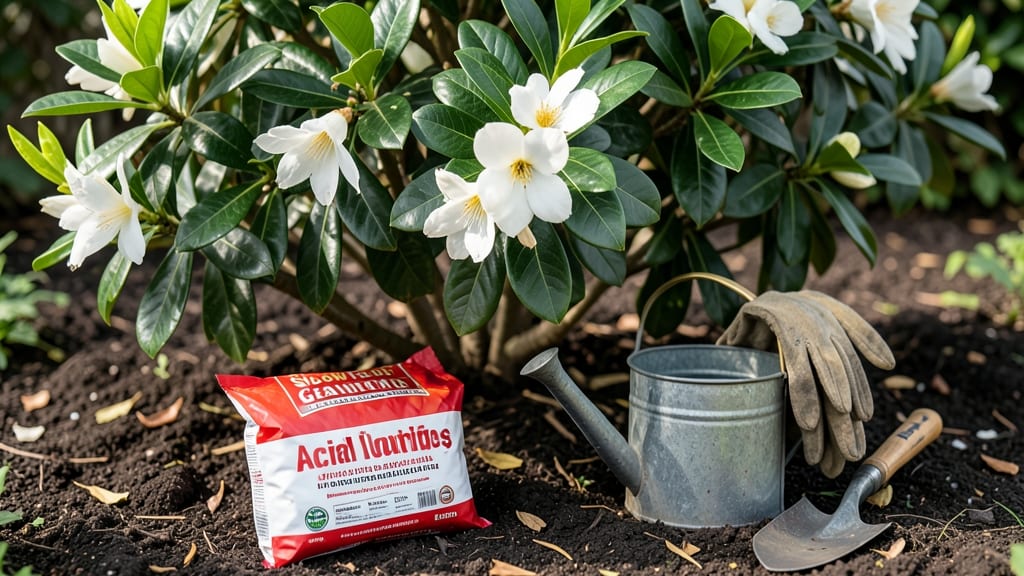
Fertilizing gardenias in Florida at the right time means the difference between year-round blooms 🌸 and struggling plants that barely put out a few flowers.
Picture this: you’ve spent hours nurturing your gardenia, only to watch it produce half the blooms you expected. The issue isn’t the soil—it’s the timing.
Florida’s warm climate means gardenias can bloom almost any month, but feeding them at the wrong time can lead to weak growth or even fertilizer burn.
Most gardeners focus on spring feeding, but in Florida, the real game-changer is understanding when to feed lightly in summer and ramp up again in fall. The key is matching fertilization with your gardenia’s natural growth cycles, not just the calendar.
Below, I’ll break down the exact months to fertilize, how to spot when your plants need a boost (or a break), and the best fertilizers for Florida’s sandy soil—so you can enjoy those intoxicating blooms all year.
🧪
Synthetic
Fast-acting chemical fertilizer
✓ Quick results
✓ Precise NPK
✗ Can burn plants
BEST
🍃
Organic
Natural, slow-release nutrients
✓ Soil health
✓ Safe for edibles
✓ Long-lasting
⏰
Slow-Release
Feeds over 2-3 months
✓ Less frequent
✓ Even feeding
✗ Higher cost
Florida gardenia fertilizing schedule by season: exact months for peak blooms
Florida’s warm climate lets gardenias bloom nearly year-round, but their fertilization needs shift dramatically with the seasons. Unlike northern climates, Florida gardenias don’t hibernate, so their feeding schedule must align with growth spurts and bloom cycles—not just spring.
The key is feeding before blooming peaks and tapering off during summer’s intense heat to prevent stress.
Your gardenia’s location matters too: South Florida (Zone 10-11) has longer bloom seasons than North Florida (Zone 9). South Florida plants may need monthly light feeds during summer, while northern plants can rest more in cooler months.
Always use an acid-loving plant fertilizer (pH 5.0-6.5)—regular garden fertilizers can burn roots.
Pro Tip: Test your soil before fertilizing. Florida’s sandy soils often lack nutrients, but over-fertilizing can cause leaf burn and fewer blooms. Aim for NPK ratios of 6-6-6 or 8-3-9 for balanced growth and flowering.
| Month |
Fertilizing Action |
Amount |
Purpose |
Notes |
| January |
Light Feed |
1 tbsp/plant |
Post-winter boost |
North FL: Skip if dormant |
| February |
Light Feed |
1 tbsp/plant |
Encourage buds |
South FL: Add iron if leaves yellow |
| March |
Full Feed |
2 tbsp/plant |
Pre-bloom growth |
Use slow-release granules |
| April |
Full Feed |
2 tbsp/plant |
Peak bloom support |
Water deeply after feeding |
| May |
Full Feed |
2 tbsp/plant |
Summer bloom prep |
Morning application only |
| June |
Light Feed |
1 tbsp/plant |
Heat stress prevention |
Avoid synthetic fertilizers |
| July |
Light Feed |
1 tbsp/plant |
Maintain blooms |
South FL: Monthly feeding |
| August |
Light Feed |
1 tbsp/plant |
Post-hurricane recovery |
Flush soil if salt damage |
| September |
Full Feed |
2 tbsp/plant |
Fall bloom cycle |
Increase potassium |
| October |
Full Feed |
2 tbsp/plant |
Winter prep |
Add sulfur to lower pH |
| November |
Full Feed |
2 tbsp/plant |
Holiday blooms |
North FL: Reduce to 1 tbsp |
Signs your gardenias need fertilizer (and when to avoid it)
Your Florida gardenias might be silently screaming for nutrients if their blooms are sparse or leaves look pale. Unlike many plants, gardenias thrive on a balanced feeding schedule—but too much fertilizer can burn roots in our sandy soils.
Learning to read their signals helps you avoid both under- and over-feeding.
Start by checking for yellowing leaves, especially between veins. This classic sign of nitrogen deficiency often appears first on older foliage. In Florida’s heat, gardenias also show stress through dropping buds before they open, a clear cry for phosphorus.
Slow growth or stems with weak, sparse foliage? That’s your cue to test soil pH—gardenias need acidic soil (5.0-6.5).
⚠️ WARNING: Over-Fertilizing in Florida’s Heat ⚠️
⚠️ CRITICAL MISTAKE: Applying high-nitrogen fertilizers during summer months (June-August) can cause root burn in Florida’s sandy, fast-draining soils. Wait until temperatures drop below 85°F (late summer/early fall) for safer feeding. Slow-release fertilizers are ideal—they prevent nutrient spikes that stress plants.
🌱 FLORIDA-SPECIFIC TIP: Test soil before fertilizing. Florida’s native soils often lack organic matter, so amend with peat moss or pine bark to improve moisture retention and acidity naturally.
Don’t ignore brown leaf edges or crispy tips—these often signal over-fertilization, especially if you’ve recently fed. In Florida’s humidity, excess salts from fertilizers can also cause white crusts on soil. Flush the root zone with 3-4 gallons of water per plant to dilute salts, then wait 4-6 weeks before reapplying fertilizer.
Timing matters too. In Florida’s warm winters (Dec-Feb), gardenias enter a natural dormant phase. This is the worst time to fertilize—focus instead on pruning dead wood and mulching with pine straw to protect roots. Resume light feeding in early spring (March) as new growth appears.
For potted gardenias, watch for roots circling the container—a sign they’re nutrient-starved. Repot with acidic potting mix and a time-release fertilizer pellet at the bottom. In-ground plants may need monthly feeding from April-September, but reduce to every 8 weeks in fall/winter.
Pro tip: Feed in the morning to prevent fungal issues from damp leaves at night. And always water deeply after fertilizing—Florida’s sandy soil washes nutrients away fast. With these cues, your gardenias will reward you with continuous blooms all year. 🌸
★★★★★5.0(9 reviews)