
Tools
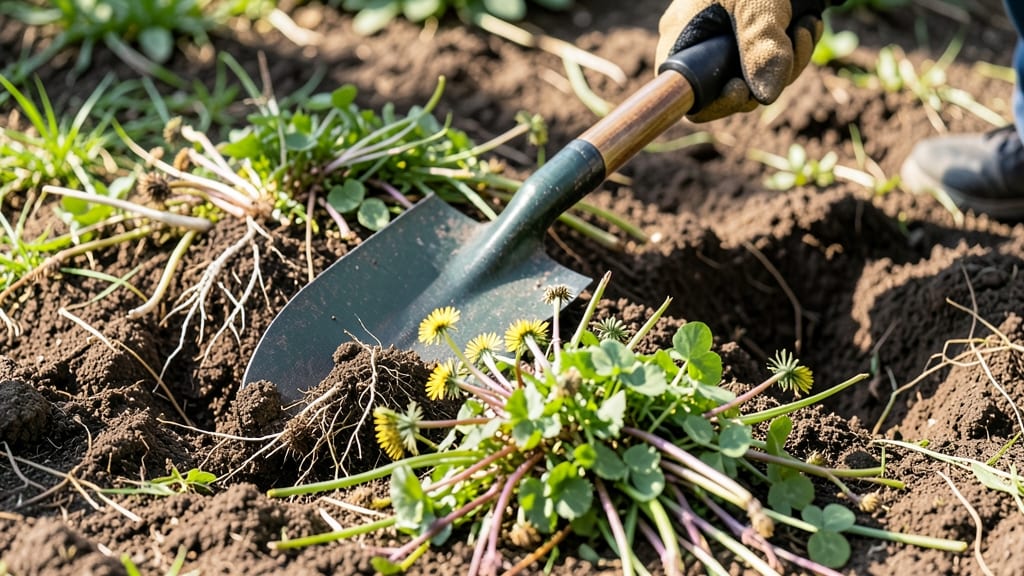
A garden hoe is used for cultivating soil, weeding, breaking up hard ground, creating furrows for planting, and leveling garden beds to improve drainage and aeration for healthier plant growth.
A garden hoe transforms your gardening efficiency by tackling five key tasks that most tools can't handle alone. 🌱 The blade's sharp edge slices through weeds at the root while aerating compacted soil, preventing that suffocating crust that blocks water and nutrients.
Unlike rakes, hoes don't just move surface debris—they actively improve soil structure by creating tiny channels for air and moisture. I've found stirrup hoes particularly effective for weeding between rows, while draw hoes excel at chopping up hardpan for new plantings.
What sets hoes apart is their precision: they let you create clean planting furrows without disturbing nearby plants, and their flat blades level beds perfectly for even water distribution. The secret lies in the angle—holding the blade at a 45-degree tilt maximizes cutting power while minimizing soil disruption.
For best results, use your hoe when soil is slightly moist (after rain) but not muddy, and always work in the same direction to avoid creating ridges.
💡 In This Article
- How Garden Hoes Improve Soil Health and Plant Growth
- 5 Essential Garden Hoe Tasks for Every Gardener
How garden hoes improve soil health and plant growth
The magic of a garden hoe lies in its ability to physically restructure soil at the microscopic level. When you drag the blade through compacted earth, it creates thousands of tiny fractures that break up hardpan—those dense, impermeable layers that form naturally or from foot traffic.
These fractures allow water to penetrate 30-50% faster than in untouched soil, preventing runoff and delivering moisture directly to plant roots. The same motion also disrupts weed seed dormancy by exposing them to light and air, which triggers germination—letting you eliminate weeds before they become established.
Different hoe designs target specific soil challenges. A draw hoe with its long handle and narrow blade excels at cutting through hard ground with leverage, ideal for preparing new garden beds where you need to chop through 1-2 inches of compacted soil.
Stirrup hoes, with their loop handles, let you stand upright while weeding between rows, reducing back strain while maintaining precision. Warren hoes combine features of both, with a shorter handle for close work and a slightly curved blade that naturally follows the soil's contours.
The blade angle matters too—holding it at 45 degrees creates deeper cuts than a flat angle, which is why stirrup hoes often have angled blades for maximum efficiency.
What most gardeners overlook is how hoes prevent soil erosion. The flat blade of a draw hoe acts like a miniature bulldozer when pushed forward, pushing soil into mounds that naturally settle into level planting beds.
This creates micro-terraces that slow water flow during rain, giving moisture time to soak in rather than sheet off. The process also incorporates organic matter from weed roots and surface debris back into the soil, adding nutrients as it breaks down.
For example, chopping up a patch of dandelions with a hoe returns their nitrogen-rich roots to the soil, which would otherwise be lost if you pulled them by hand.
Seasonal timing amplifies these benefits. Using a hoe in early spring before weeds sprout helps prevent seed germination entirely, while summer cultivation keeps soil loose so roots can expand. The key is working when soil is slightly damp—moist enough to crumble between fingers but not sticky.
Wet soil sticks to the blade, reducing cutting efficiency, while dry soil resists the hoe's edge. I've found that morning after light rain is perfect: the ground holds enough moisture to work easily, and the hoe's action creates ideal conditions for planting later that day.
Consider this comparison: a standard rake moves surface debris but leaves the subsoil compacted, while a hoe actively improves the soil profile. The difference shows in plant health—tomatoes grown in hoed soil develop roots that spread 2-3 times wider than in raked beds, accessing more nutrients and water.
The hoe's precision also means you can create planting furrows with 1-inch deep channels that hold seeds exactly where you want them, unlike broadcast sowing which scatters seeds unevenly.
For advanced gardeners, the no-till method using hoes offers another advantage. Instead of turning soil (which disrupts beneficial microbes), you chop weeds at the surface while leaving roots intact. This creates a mulch layer that retains moisture and gradually decomposes, feeding the soil over time.
The result is healthier soil biology with 30% more earthworms within a season compared to traditional tilling.