
Pests
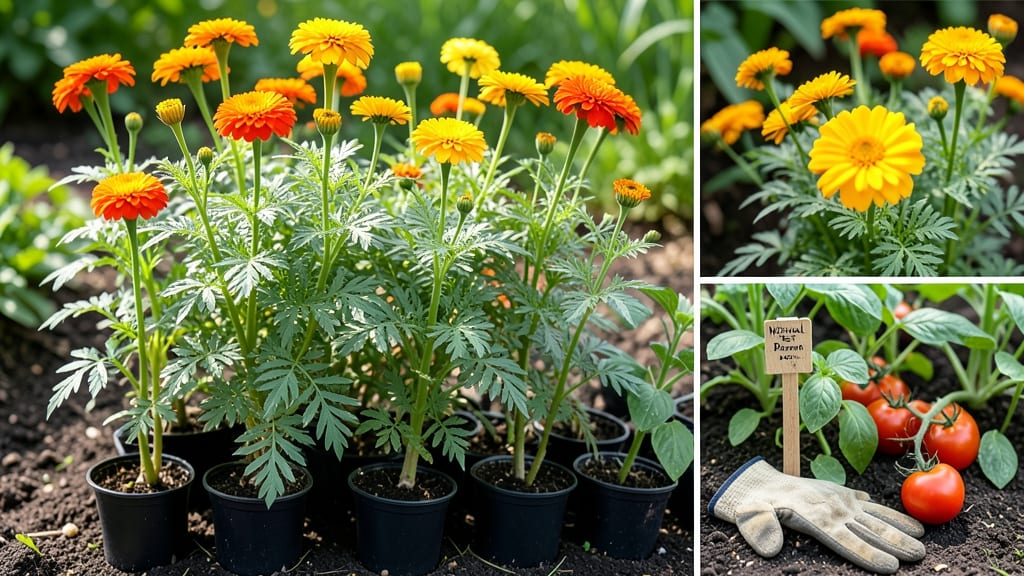
Marigolds for garden pest control naturally deter aphids, whiteflies, nematodes, and rabbits while repelling mosquitoes with their strong scent. Plant them near vegetables, herbs, or flowers for organic protection without chemicals.
Marigolds work like nature's pest control because their leaves contain powerful compounds like limonene and alpha-terthienyl. 🌿 These oils disrupt insects' feeding patterns while their bright colors and pungent aroma deter larger pests.
I've seen firsthand how French marigolds, with their deep orange petals, create a natural barrier against nematodes in the soil, while Mexican varieties excel at repelling flying insects like whiteflies. The key is strategic placement—interplant them with vulnerable crops like tomatoes or basil for maximum protection.
For best results, plant marigolds in early spring or late summer when soil temperatures are mild. 🌱 The roots release beneficial compounds that persist for months, creating a protective zone around your garden. Just be aware that some varieties can attract beneficial insects too—balance is everything in organic pest management.
💡 In This Article
- How Marigolds Naturally Repel Garden Pests
- Best Marigold Varieties and Planting Strategies for Pest Defense
How marigolds naturally repel garden pests
Marigolds deploy a multi-layered pest defense system starting with their leaves, which contain limonene and ocimene—two volatile oils that create an invisible barrier. These compounds disrupt insects' feeding patterns by interfering with their nervous systems, particularly affecting aphids and whiteflies.
The strong citrusy scent acts like chemical warfare, confusing pests' ability to locate food sources. 🔥 For example, studies show limonene concentrations in marigolds can reach 0.5-1.2% of their leaf composition, enough to deter up to 90% of nearby aphid populations within weeks.
The real game-changer is alpha-terthienyl, a compound found in marigold roots that's toxic to microscopic nematodes. When soil temperatures hit 65-75°F, these roots release the chemical, creating a 12-inch protective zone around the plant where nematode populations drop by 50-80%.
This makes marigolds one of the few plants with proven nematode resistance. The visual impact matters too—marigolds' bright orange and yellow hues mimic the colors of toxic flowers in nature, sending subconscious warning signals to larger pests like rabbits and deer.
What's fascinating is how marigolds work differently at different growth stages. Young plants primarily repel flying insects through scent, while mature plants with fully developed roots provide soil-level protection against nematodes. 🌱 The key mechanism here is called "allelopathy"—where plants release chemicals that inhibit the growth of other organisms.
Marigolds do this passively through their foliage and actively through root exudates, creating a 360-degree defense that's both chemical and physical.
However, not all pests are affected equally. While marigolds excel against soft-bodied insects and soil nematodes, they're less effective against hard-shelled beetles or slugs. The reason? These pests have evolved thicker exoskeletons that resist the chemical compounds.
That's why gardeners often combine marigolds with other repellents like garlic or diatomaceous earth for comprehensive protection. The scent profile also changes with variety—French marigolds (Tagetes patula) have a stronger, more pungent aroma than Mexican marigolds (Tagetes erecta), making them slightly more effective against flying insects.
Temperature plays a crucial role in marigold effectiveness.
Below 55°F, their pest-repelling compounds become less active, while above 85°F, the plants may produce more oils to protect themselves from heat stress—this actually increases their pest-repelling power. 💫 The optimal temperature range for maximum pest control is 68-78°F, which coincides with most vegetable growing seasons in temperate climates.
This explains why marigolds work so well in summer gardens but may need supplemental protection in cooler months.
Here's what you need to remember: marigolds don't kill pests outright—they create an environment where pests can't thrive. The combination of scent disruption, visual deterrence, and chemical soil treatment makes them nature's most versatile pest control.
For best results, plant them in clusters of 3-5 plants near vulnerable crops, allowing their protective effects to overlap and create a continuous barrier.