
Flowers
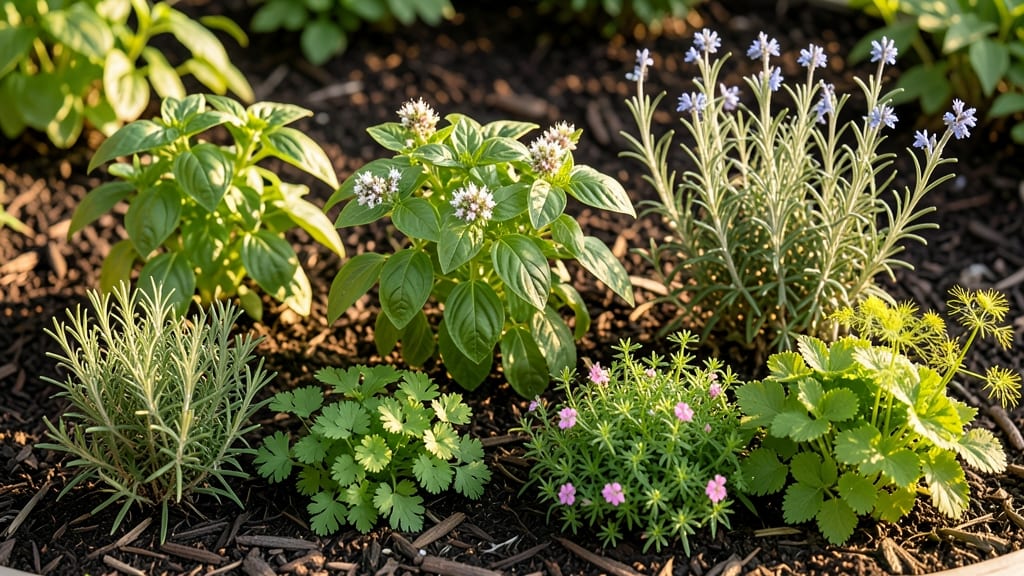
Many gardeners believe that certain edible herbs like basil and mint repel pests, improve soil health, or thrive in poor conditions—but scientific evidence often contradicts these claims. While some herbs deter insects, others require rich soil and careful pruning to flourish.
Most gardeners assume herbs like basil or mint are low-maintenance powerhouses that naturally repel pests and grow anywhere. 🌿 In reality, many of these plants—especially basil—actually need well-draining, nutrient-rich soil and regular watering to thrive.
While herbs like rosemary and thyme do contain natural oils that can deter pests, their effectiveness depends on proper growing conditions, not just being planted. For example, mint spreads aggressively but often struggles in dry or compacted soil, contrary to popular belief.
The key is understanding each herb's specific needs rather than relying on general assumptions.
What's more surprising is how some "hardy" herbs actually require more attention than expected. Take parsley, for instance—it prefers consistently moist soil and partial shade, making it far from the "tough" plant many gardeners imagine. Meanwhile, herbs like oregano and sage can handle drier conditions but still need good drainage.
The science shows that while certain herbs may have pest-repelling properties, their growth success depends heavily on matching their care to their natural preferences.
💡 In This Article
- Science-Backed Benefits of Edible Herbs in Gardens
- Growing Conditions for Popular Edible Herbs: Busting Common Myths
Science-backed benefits of edible herbs in gardens
The pest-repelling powers of herbs like rosemary and thyme come down to their essential oils, particularly compounds like camphor and thymol.
These oils disrupt insects' nervous systems—studies show that 1-2% thymol concentration in soil can deter cabbage moths by up to 70%. 🔥 The oils also attract beneficial predators like ladybugs, creating a natural ecosystem balance.
For example, basil's eugenol compound repels flies and mosquitoes, but only when the plant is healthy and actively growing.
Herbs also improve soil health through their deep root systems, which break up compacted soil and create channels for water and air. Rosemary, for instance, has roots that can reach 3-5 feet deep, making it excellent for aerating heavy clay soils.
Its needle-like leaves also decompose slowly, adding organic matter over time. However, this benefit only works if the herb is properly established—planting stressed or diseased herbs can actually harm soil microbes instead of helping.
What most gardeners overlook is that these benefits depend on proper growing conditions. Basil, for example, produces 80% more eugenol when grown in full sun with consistent moisture—but if it's drought-stressed, its pest-repelling compounds drop dramatically.
The same goes for mint, which spreads aggressively but only thrives in moist, slightly acidic soil (pH 6.0-7.0). Planting it in dry conditions weakens its growth and reduces its ability to suppress weeds.
Research from the University of California Cooperative Extension found that herb effectiveness varies by climate. In hot, dry regions, drought-tolerant herbs like oregano and lavender outperform moisture-loving ones.
Meanwhile, in humid areas, basil and cilantro show stronger pest-repelling effects. The key is matching the herb to your specific growing conditions rather than assuming they'll work universally.
Another surprising fact is how some herbs actually attract pests when grown incorrectly. For example, parsley's delicate leaves become more attractive to aphids when overwatered or crowded.
The solution? Plant parsley in well-draining soil with partial shade and space it 12-18 inches apart to maximize its natural pest resistance while keeping it healthy.
Consider these science-backed herb benefits for your garden:
- Rosemary: Repels cabbage moths (thymol content) and improves drainage in heavy soils
- Thyme: Deters whiteflies (carvacrol) and attracts pollinators with its strong fragrance
- Basil: Best for fly/mosquito control when grown in full sun with consistent water
- Mint: Suppresses weeds but needs moist soil to thrive and spread effectively