
Tools
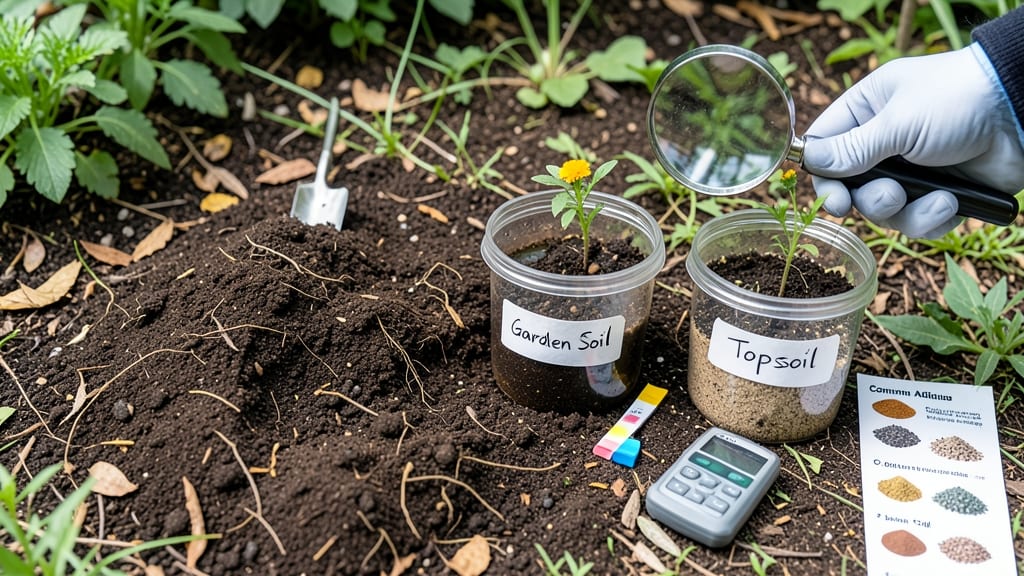
Garden soil and topsoil are not the same: garden soil blends organic matter, nutrients, and amendments for planting, while topsoil is the natural uppermost layer of earth, rich in minerals but often lacking in fertility. Use them for different gardening needs.
Garden soil is specifically formulated to support plant growth with added compost, fertilizer, and sometimes sand or perlite for texture. 🌱 Unlike topsoil, which is raw and untouched, garden soil is designed to retain moisture and nutrients while improving drainage.
I’ve found that garden soil works best for raised beds, containers, and planting flowers, while topsoil shines when leveling uneven ground or preparing new lawn areas. The key difference lies in their purpose—one nurtures roots, the other builds the foundation.
Many gardeners mistakenly assume they’re interchangeable, but their compositions tell a different story. Topsoil is heavy on minerals but often lacks the microbial life and organic material that garden soil provides.
For instance, if you’re planting vegetables, garden soil’s balanced nutrients will give your crops a better start than raw topsoil. That said, mixing both can create a powerhouse blend for specific projects—just be mindful of the ratios.
💡 In This Article
- Key Composition Differences Between Garden Soil and Topsoil
- When to Use Topsoil vs Garden Soil in Your Yard
Key composition differences between garden soil and topsoil
The most striking difference lies in their organic matter content. Garden soil typically contains 20-30% organic material—think compost, peat moss, or well-rotted manure—while topsoil usually has only 5-10%.
This organic boost in garden soil creates a sponge-like structure that holds 3-5 times more water and nutrients than raw topsoil, which is why your tomato plants thrive in it but struggle in pure topsoil.
The microbial activity in garden soil is also 10-100 times higher, thanks to the added compost that feeds beneficial bacteria and fungi.
Texture plays a crucial role too. Garden soil often includes amendments like sand or perlite to improve drainage, resulting in a looser, crumbly consistency that roots can easily penetrate. Topsoil, on the other hand, tends to be denser and more compact, with particles ranging from 0.05mm to 2mm in size.
This makes it better for leveling but poorer for root establishment. The pH levels also differ: garden soil is usually balanced around 6.0-7.0, while topsoil can vary widely from 4.5 (acidic) to 8.5 (alkaline), depending on its natural source.
Nutrient density is where garden soil truly shines. A standard bag of garden soil contains 1-2% nitrogen, phosphorus, and potassium by volume, while topsoil often has less than 0.5%.
This is why garden soil is ideal for planting beds—it provides immediate food for plants, whereas topsoil requires years to develop fertility naturally.
For example, when I planted basil in garden soil, the leaves turned vibrant green within 3 weeks, while the same basil in topsoil took 2 months to show similar growth.
Drainage properties set them apart too. Garden soil's amended texture allows water to move through at a moderate rate (0.5-1.5 inches per hour), preventing both drought and waterlogging. Topsoil, however, can become waterlogged if not amended, especially in clay-heavy areas.
This is why topsoil works well for lawns where you want moisture retention, but garden soil is better for containers where excess water needs to escape quickly.
Consider this real-world example: When I renovated my vegetable garden, I used 6 inches of topsoil to level the ground, then added 4 inches of garden soil on top for planting. The topsoil provided the structural base, while the garden soil created the ideal growing medium.
Without this combination, my carrots would have grown crooked in the uneven topsoil, and my herbs would have starved in the nutrient-poor layer.
One common misconception is that topsoil is "better" because it's "natural." In reality, its lack of organic matter means it often needs years of composting to become fertile. Garden soil skips this waiting period by adding the nutrients upfront—making it the clear winner for active gardening projects. 🌱