
Watering
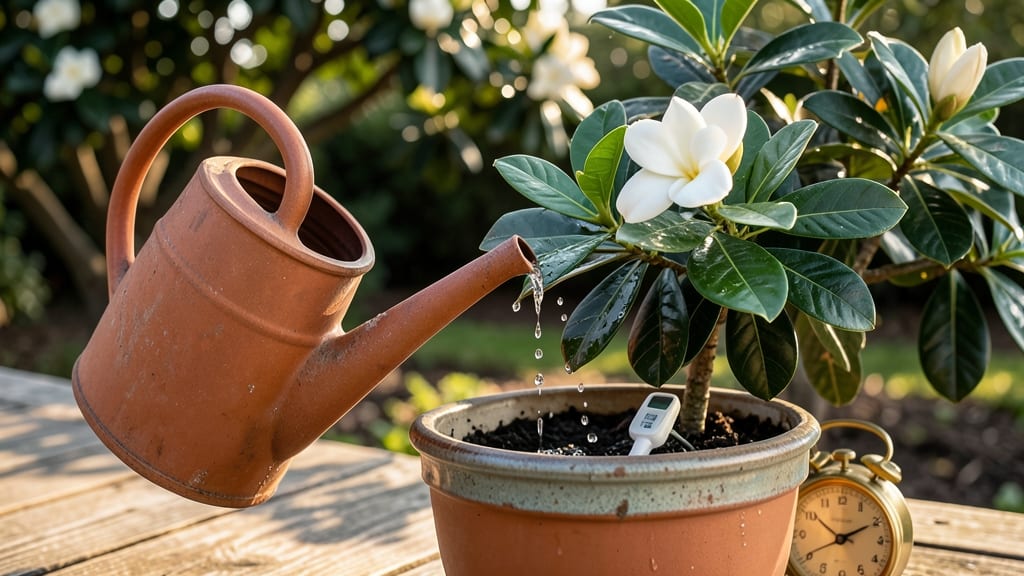
Watering gardenias the right way is the secret to those fragrant blooms you’ve been dreaming of—because even the most stunning 🌸 gardenias can’t survive if you drown or dry them out.
Picture this: You’ve spent months nurturing your gardenia, only to watch its leaves yellow or its buds drop before they open. That’s not a fluke—it’s usually water stress in disguise. Too much water suffocates the roots, while too little leaves the plant parched and struggling.
Here’s the good news: With the right technique, you can keep your gardenia thriving all season. We’re talking deep, consistent watering at the base (not overhead), adjusting for heat and humidity, and spotting the early signs of trouble before they become irreversible.
In this guide, I’ll walk you through the exact schedule, tools, and tricks to water your gardenia like a pro—so you can enjoy those intoxicating blooms from mid-summer right through fall.
The correct watering schedule for gardenias to maximize blooms
Gardenias thrive when their watering routine mimics their natural tropical habitat—consistent moisture without soggy roots. The key is deep, infrequent watering that encourages strong root growth and abundant blooms. Unlike drought-tolerant plants, gardenias wilt dramatically when thirsty, but they also suffer root rot from overwatering.
Let’s break down the science-backed schedule to keep your gardenias perfuming your garden all season.
First, understand that gardenias need about 1-1.5 gallons of water per plant during their active growing season (spring through summer). This isn’t just a light sprinkle—it’s a deep soak that penetrates 6-8 inches into the soil.
Think of it like giving your plant a long, refreshing drink instead of a quick sip. The goal is to moisten the entire root zone, not just the surface.
| Season | Frequency | Water Amount | Soil Check | Best Time |
|---|---|---|---|---|
| Spring | Every 3-4 days | 1 gallon per plant | Top 1-2 inches dry | Morning (6-9 AM) |
| Summer | Every 2 days | 1.5 gallons per plant | Top 2-3 inches dry | Early morning (before 10 AM) |
| Fall | Weekly | 1 gallon per plant | Top 1 inch dry | Morning |
| Winter | Bi-weekly | 0.5 gallons per plant | Top 3-4 inches dry | Mid-morning |
| Potted Gardenias | Every 2-3 days | Until water runs out drainage holes | Top 1 inch dry | Morning |
Seasonal adjustments are critical. In summer’s heat, gardenias may need watering every 1-2 days, especially in containers where soil dries out faster. I’ve seen gardenias in full sun wilt by noon if neglected—always check the soil before watering.
For winter care, reduce frequency to bi-weekly and cut watering in half. Cold roots are sluggish, and overwatering can lead to fungal issues.
Here’s how to check soil moisture like a pro: Stick your finger 2-3 inches deep into the soil. If it feels dry at this depth, it’s time to water. For a more precise test, use a moisture meter or grab a handful of soil—if it crumbles easily, it’s dry enough.
Gardenias hate sitting in wet soil, so always ensure your planting area has well-draining soil with a layer of organic mulch to retain moisture without suffocating roots.
Adjust your schedule based on your garden’s microclimate. Gardenias in shadier spots need less frequent watering than those basking in morning sun. I once had a gardenia in a north-facing bed that thrived on weekly watering, while its identical neighbor in full sun required daily checks.
Pay attention to your plant’s visual cues: drooping leaves signal thirst, while yellowing leaves or mushy stems warn of overwatering.
Pro tip: Water gardenias at the base of the plant, not overhead. This prevents fungal diseases like powdery mildew that can ruin those prized blooms.
Use a soaker hose or drip irrigation for even distribution, and always water in the early morning to allow foliage to dry before evening humidity sets in. I’ve found that gardenias watered at night often develop unsightly leaf spots.
If you’re unsure whether your gardenia needs water, observe its leaves and growth habit. Healthy gardenias have glossy, dark green leaves and produce buds consistently. Stressed plants may drop buds or develop brown edges on their leaves—a clear sign of either underwatering or overwatering.
The key is finding that sweet spot where the soil stays consistently moist but never soggy.
For potted gardenias, the rules change slightly. Containers dry out 3-5 times faster than in-ground plants, so check the soil daily in summer. I’ve lost count of how many gardenias I’ve revived by simply repotting them into a larger container with fresh, acidic potting mix.
If your gardenia’s roots are circling the pot or protruding from drainage holes, it’s time to upgrade its home.
Remember, gardenias are sensitive to water quality too. If your tap water is high in chlorine or has a high pH, use rainwater or distilled water instead. I’ve seen gardenias in areas with hard water struggle to bloom until I switched to filtered water.
The extra effort pays off with more fragrant flowers and fewer leaf problems.
By following this schedule and paying attention to your gardenia’s unique needs, you’ll reward yourself with lush foliage and intoxicating blooms from mid-summer through fall. Happy gardening—
How to water gardenias without damaging flowers or leaves
Watering gardenias the wrong way can turn their glossy leaves yellow and drop fragrant blooms before they open. The key is deep, targeted watering that keeps roots happy without drowning them.
I’ve learned the hard way—overhead watering leaves white spots on leaves, and shallow watering leads to weak stems. Let’s fix that with the right technique.
Start by watering at the base of the plant, not over the foliage. Gardenias hate wet leaves, which invites fungal diseases like powdery mildew. Use a soaker hose or drip irrigation for precision, or simply aim a watering can’s spout right at the soil.
This ensures water reaches the roots where it’s needed most.
- Overhead watering causes leaf scorch and fungal spots.
- Shallow watering stresses roots and reduces blooms.
- Nighttime watering keeps leaves damp too long, inviting disease.
Use your finger to check soil moisture before watering. Stick it 2 inches deep—if it feels dry, it’s time to water. Gardenias need 1-1.5 gallons per plant during summer heat, but cut back in winter.
Mulch around the base with 2-3 inches of organic mulch (like pine bark) to retain moisture and regulate soil temperature.
For potted gardenias, water when the top inch of soil feels dry. Pots dry out faster, so check daily in summer. Use a well-draining pot with drainage holes to prevent root rot. If water runs out the bottom, you’ve hit the sweet spot—roots are getting exactly what they need.
Watch for signs of stress: Wilting leaves mean underwatering, while yellow leaves signal overwatering. Adjust your schedule based on weather—more water in hot, dry spells and less when it rains. With this method, your gardenias will reward you with lush foliage and abundant blooms all season.
Remember, gardenias thrive on consistency. Stick to this routine, and you’ll avoid the heartbreak of drooping blooms or sad, brown leaves. Happy watering—your gardenias will thank you with perfumed perfection! 🌸