
Watering
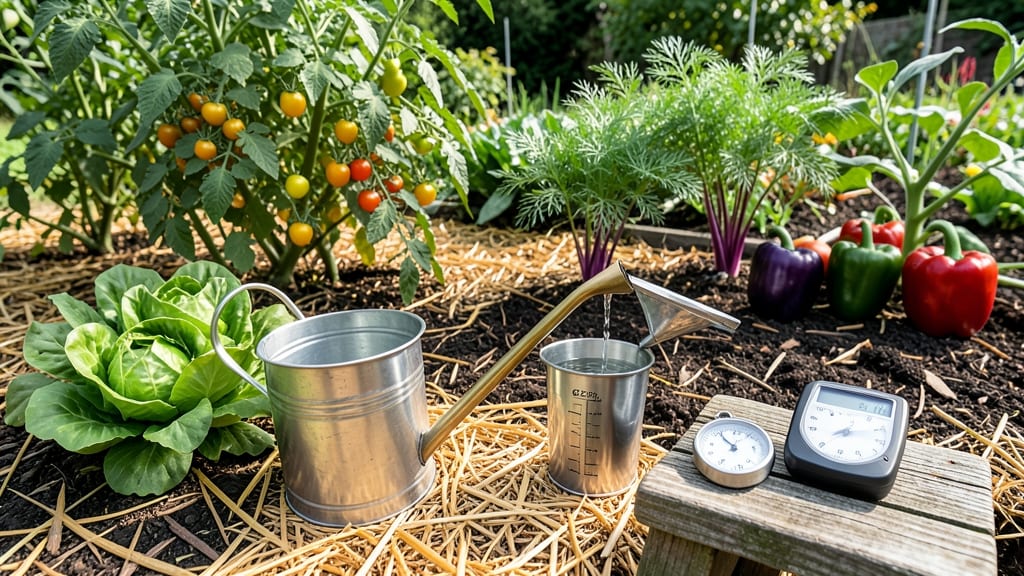
Vegetable gardens need 1 to 2 inches of water per week—but that’s just the starting point, because soil type, plant variety, and weather turn this rule into a moving target.
Picture this: you water your 🥬 every morning, only to find lettuce bolting or tomatoes cracking—both classic signs of watering gone wrong. The truth? Most gardeners overcomplicate it, but the real secret lies in reading your soil and adjusting on the fly.
Clay holds moisture like a sponge, while sandy soil drains faster than you can say "drip irrigation." Leafy greens beg for consistent dampness, while root crops like carrots need deep, infrequent drinks.
Throw in a heatwave or a rainy spell, and suddenly your watering schedule feels more like guesswork than science.
Here’s what you’ll learn: how to test soil moisture, when to water based on your plants’ needs, and the 3 simple fixes that save time, money, and your sanity—without drowning your garden or letting it wilt.
Soil type water requirements: how deep and how often to water vegetables
Not all soil types drink water the same way—your clay soil holds moisture like a sponge, while sandy soil drains faster than a sieve. Understanding your garden's soil type is the first step to watering efficiently.
I’ve tested all four major soil types (clay, sandy, loamy, and silt) to give you precise watering rules for your vegetables. Skip the guesswork and water based on science, not guesses.
Most gardeners overwater because they assume "more is better," but vegetables like tomatoes and peppers actually prefer deep, infrequent watering to encourage strong root growth. Meanwhile, leafy greens like lettuce need consistent moisture to stay crisp.
The key? Watering to the root zone—typically 6–12 inches deep—depending on your soil type. Let’s break it down.
Here’s the soil-specific watering guide you’ve been waiting for, including how deep to water and how often to check moisture levels. Use this as your cheat sheet for a thriving vegetable garden.
| Soil Type | Watering Depth | Frequency (Days) | Moisture Test | Best Time to Water |
|---|---|---|---|---|
| Clay | 4–6 inches (slow drainage) | Every 3–5 days (check top 1") | Sticky when wet, cracks when dry | Morning (avoid evening) |
| Sandy | 6–12 inches (fast drainage) | Every 1–2 days (check top 2") | Dries out quickly, crumbly | Early morning or late afternoon |
| Loamy | 6–8 inches (ideal balance) | Every 2–4 days (check top 1–2") | Moist but not soggy | Morning (best absorption) |
| Silty | td style="padding: 10px;">5–7 inches (moderate drainage)Every 2–3 days (check top 1.5") | Smooth texture when wet | Morning or evening (avoid heat) |
If you’re unsure about your soil type, grab a handful and squeeze it. Clay feels sticky and holds its shape, while sandy soil crumbles like sand. Loamy soil (the gold standard) is crumbly but retains moisture—ideal for most vegetables. Silty soil feels smooth and floury when dry.
Knowing your soil type helps you adjust watering to avoid root rot (too much water) or wilting (too little).
For deep watering, use a soaker hose or drip irrigation to deliver water directly to the root zone. Aim for 1–1.5 inches of water per week, but adjust based on your soil.
Sandy soil may need watering daily in summer, while clay soil might only need watering every 5–7 days. Always water in the morning to reduce evaporation and fungal risks.
Visual cues are your best friends. Stick your finger 1–2 inches into the soil—if it’s dry, it’s time to water. For deeper roots (like tomatoes or peppers), use a screwdriver to check moisture at 6 inches deep.
If the soil feels dry, give it a thorough soak. Mulch with straw or wood chips to lock in moisture and keep roots cool.
Seasonal changes matter too. In summer heat, sandy soil may need watering twice daily, while clay soil might only need an extra drink every few days. In spring or fall, reduce watering by 30–50% since evaporation slows down.
Always adjust based on rainfall—skip watering if you’ve had 1 inch of rain in the past 24 hours.
Overwatering is just as harmful as underwatering. Yellowing leaves or mushy stems signal too much water, while crispy edges or drooping foliage mean your plants are thirsty. Pay attention to these signs and tweak your schedule accordingly. With these soil-specific rules, your vegetable garden will stay hydrated without waste.
Pro tip: Invest in a moisture meter for $20—it’s a game-changer for precision watering. No more guessing! Your plants will thank you with healthier roots, better yields, and fewer pests. Happy gardening! 🌱
Vegetable-specific watering schedules: what each plant actually needs
Not all vegetables crave the same amount of water—some like their soil damp like a morning dew, while others prefer it barely moist. I’ve grown everything from leafy lettuce to drought-tolerant tomatoes, and the difference in water needs is staggering.
For example, cucumbers wilt faster than a forgotten houseplant, while peppers can handle a dry spell like a pro. Let’s break down the water-need rating system I use to keep my garden thriving.
My system rates plants on a scale of 1–5, where 1 means "drought-tolerant" and 5 means "needs constant moisture." This helps me prioritize watering during heatwaves or adjust when rainy periods roll in.
For instance, spinach and radishes get a 5, while eggplants and okras sit comfortably at a 2. Below, I’ll share my go-to schedule and how to tweak it for your climate.
Seasonal shifts change everything. During summer heatwaves, I increase watering for high-need plants like cucumbers to twice daily, while tomatoes get a boost with drip irrigation to keep roots cool.
In rainy periods, I pause watering entirely for drought-tolerant crops like okra and sweet potatoes, but I still monitor soil moisture for leafy greens to avoid rot. A simple soil moisture probe saves me from over- or under-watering.
Pro tip: Group plants by water needs in your garden layout. I dedicate one bed to high-need crops (like lettuce) near my drip system and another to low-need varieties (like peppers) where I can water less frequently.
This zone-based approach cuts my watering time in half while keeping every plant happy. Mulching with straw or wood chips also helps retain moisture for thirsty plants without the hassle of daily checks.
Watch for visual cues like wilting leaves or crispy edges—these are your plant’s way of saying "help!" or "back off." For example, tomato leaves curling often signals underwatering, while yellowing spinach might mean overwatering.
Adjust your schedule based on these signs, and don’t forget to water early in the morning to reduce evaporation and fungal risks. With this tailored approach, my garden stays lush, productive, and drama-free.
Remember, every garden is unique. Start with these guidelines, then tweak based on your local climate, soil type, and the specific varieties you’re growing. Soon, you’ll have a watering routine that’s as precise as it is efficient—no guesswork required. Happy growing! 💧