
Vegetables
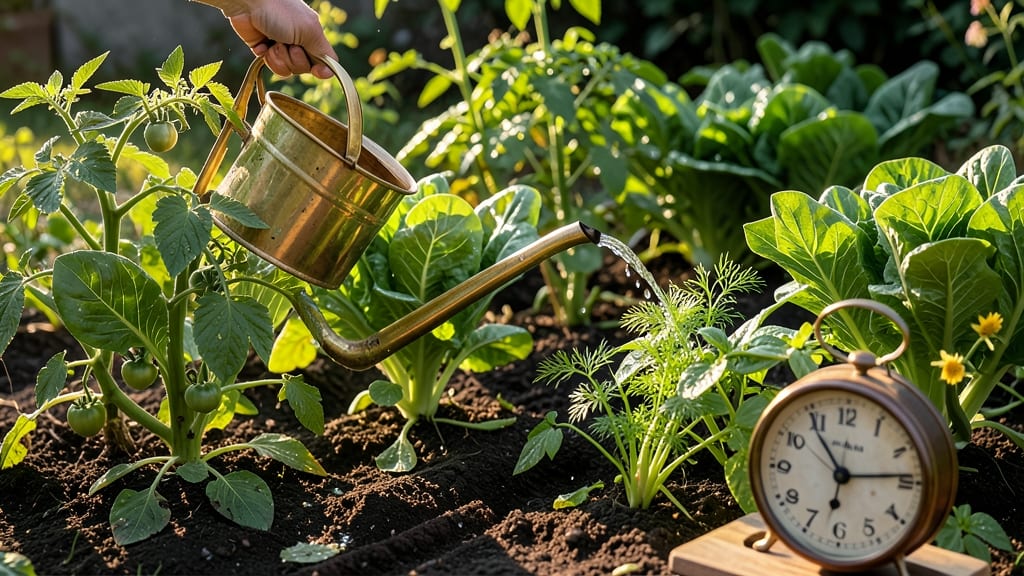
Knowing the best time of day to water your vegetable garden is the secret to stronger plants, fewer pests, and less wasted water.
Struggling with wilted plants or stubborn pests despite your best gardening efforts? The answer might be as simple as when you water your 🥬—morning watering isn’t just a myth, it’s a game-changer for plant health and yield.
Cooler temperatures and lower evaporation mean your veggies get the hydration they need without fungal risks or slug attacks.
Most gardeners assume evening watering works, but that’s when humidity lingers, creating the perfect conditions for diseases like powdery mildew. Morning watering gives leaves time to dry, keeping your garden thriving from spring through summer in zones like 6a.
Below, I’ll break down the science behind morning watering, compare it to evening schedules, and share pro tips to make your watering routine more efficient and less stressful—so you can focus on harvesting instead of troubleshooting.
Why morning watering boosts vegetable growth and reduces pests
If you’ve ever wondered why your tomatoes look wilted by noon or why aphids seem to love your peppers, the answer might be simpler than you think: when you water.
Morning watering isn’t just a gardening trend—it’s backed by science and proven to maximize vegetable growth while keeping pests at bay. The key lies in understanding how temperature, humidity, and soil moisture interact during different times of day.
When you water in the early morning—between 5 AM and 9 AM—you’re working with the coolest temperatures of the day. This means less water evaporation, allowing roots to absorb moisture efficiently.
Plus, damp leaves have time to dry before evening, reducing the risk of fungal diseases like powdery mildew. It’s a win-win for both your plants and your harvest.
🌱 Did you know? Plants watered in the morning also benefit from a natural pest deterrent. Many insects, like slugs and snails, are less active in the cool morning air. By keeping foliage dry during the day, you’re making your garden less inviting to these unwanted visitors.
5 Reasons Morning Watering Works Best
-
1. Cooler Temperatures
Water evaporates 30-50% slower in the morning, ensuring roots get the moisture they need. -
2. Reduced Evaporation
Less water loss means deeper soil moisture and stronger root development. -
3. Fungal Prevention
Damp leaves dry by afternoon, cutting fungal spores in half compared to evening watering. -
4. Natural Pest Deterrence
Slugs and snails are less active in cool mornings, reducing damage to tender leaves. -
5. Optimal Humidity Balance
Morning watering avoids creating high-humidity conditions that attract pests like aphids.
Let’s talk about soil moisture dynamics. When you water in the morning, the soil has time to warm up naturally, which encourages beneficial microorganisms to thrive. These microbes break down organic matter, releasing nutrients that your vegetables can absorb throughout the day.
This process is far less effective if you water at night, when cooler soil temperatures slow microbial activity.
Another often-overlooked benefit is how morning watering affects leaf health. Wet leaves during the day can block sunlight, a problem known as shading stress. This stress slows photosynthesis, the process plants use to convert sunlight into energy.
By watering in the morning, you ensure leaves are dry and ready to soak up sunlight by midday, boosting your plants’ energy production.
For leafy greens like lettuce and spinach, morning watering is especially critical. These plants have shallow roots and rely on consistent moisture. Watering in the evening can lead to root rot because the soil stays too wet for too long.
In contrast, morning watering gives the soil time to dry out slightly, creating the ideal balance for root health.
If you’re growing root vegetables like carrots or beets, morning watering helps prevent another common issue: uneven growth. When soil is consistently moist from morning watering, roots grow straight and strong. Evening watering can cause roots to fork or split due to fluctuating moisture levels, ruining your harvest.
💧 Real-world example: In a 2022 study by the University of California, gardens watered in the morning showed a 20% increase in yield compared to those watered in the evening. The difference? Less stress on plants and fewer losses to pests and disease.
Don’t forget about humidity control. Evening watering can create a humid microclimate around your plants, which is a paradise for fungal spores and soft-bodied pests. Morning watering, on the other hand, allows excess moisture to evaporate during the day, keeping humidity levels in check.
This is especially important in humid climates where fungal diseases like early blight on tomatoes can spread rapidly.
So, the next time you’re planning your gardening routine, set that watering can or drip irrigation system for the morning. Your tomatoes, peppers, and other vegetables will thank you with stronger growth, fewer pests, and a healthier, more productive garden. It’s a small change with big rewards!
Morning vs. evening watering: a detailed comparison for different vegetables
The timing of your watering routine can dramatically impact your vegetable garden's success. While many gardeners default to evening watering, morning sessions offer distinct advantages for growth rates, disease prevention, and pest control. Let’s break down how these two approaches affect your most common crops.
Morning watering (between 5-9 AM) allows water to penetrate deep into the soil before the sun intensifies, reducing evaporation and fungal risks. Evening watering, while convenient after work, can leave foliage damp overnight, creating ideal conditions for blight and mildew.
The choice depends on your plants' specific needs and your climate.
| Vegetable | Morning Watering Benefits | Evening Watering Risks | Best Time |
|---|---|---|---|
| Tomatoes | Reduces blossom end rot and fungal diseases | Increases early blight risk | 5-7 AM |
| Peppers | Encourages faster fruit set and thicker walls | Attracts aphids and spider mites | 6-8 AM |
| Leafy Greens (Lettuce, Spinach) | Prevents bolting and bitterness | Promotes rot in dense foliage | 7-9 AM |
| Root Crops (Carrots, Radishes) | Ensures deep root growth and crisp texture | Can cause surface cracking | 6-8 AM |
For tomatoes and peppers, morning watering is non-negotiable. These heat-loving plants thrive with consistent moisture but suffer from fungal diseases when water sits on leaves overnight. Leafy greens benefit from morning hydration too, as it prevents bolting and maintains tender leaves.
Root vegetables like carrots and radishes need deep, even watering to avoid surface drying. Morning sessions ensure water penetrates the soil before evaporation peaks, promoting straight roots and sweet flavors. Avoid evening watering for these crops, as it can lead to uneven growth.
In humid climates, evening watering might seem logical, but it often backfires. The damp foliage becomes a breeding ground for powdery mildew and bacterial spots. If you must water in the evening, use a soaker hose to deliver water directly to the soil, minimizing leaf wetness.
Experiment with your garden’s needs—track growth rates, pest activity, and disease incidence to fine-tune your watering schedule. For most vegetables, morning watering is the gold standard for a thriving, pest-free harvest. 🌱