
Watering
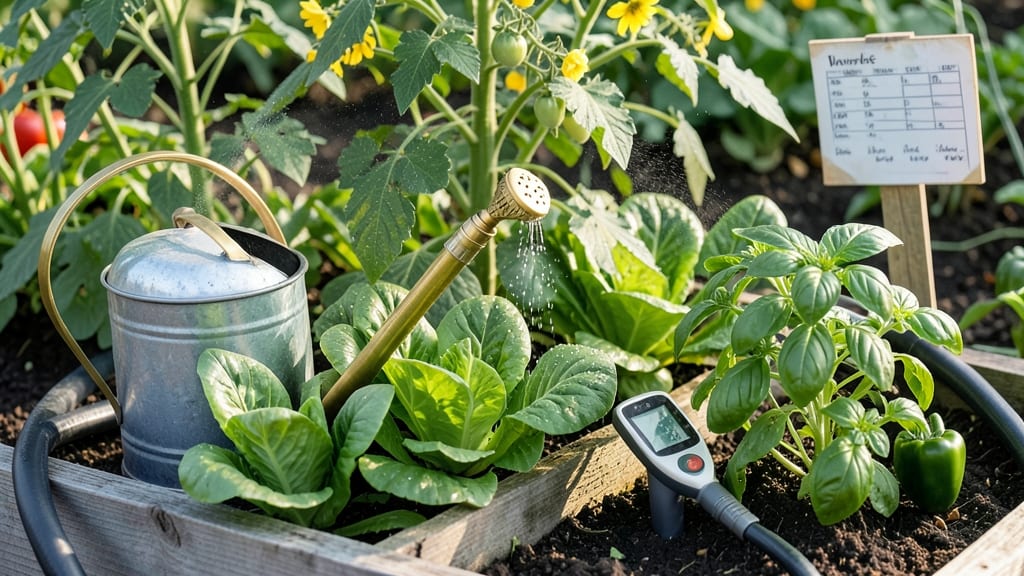
Watering your vegetable garden the right amount keeps 🥕 thriving without wasting a drop — and the trick is knowing when the soil needs moisture, not just how often you water.
Overwatering or underwatering your vegetable garden can turn your green thumb into a brown disaster—yet most gardeners guess instead of measuring. The secret to thriving plants lies in mastering the soil-moisture test, a simple trick that saves water and boosts yields.
Too much water drowns roots, while too little stresses plants, especially in Zone 6a where spring and summer swings can be brutal. The key is checking soil moisture 1-2 inches deep—not just splashing at the surface.
Below, I’ll show you how to read your soil like a pro, adjust for rain or heatwaves, and keep your garden perfectly moist—no guesswork required.
The right watering schedule for vegetable gardens by plant type
Watering your vegetable garden isn't one-size-fits-all—each plant type has unique needs based on its root depth, growth stage, and drought tolerance. Leafy greens like lettuce and spinach thrive with frequent, shallow watering, while deep-rooted crops such as carrots and tomatoes need deep, infrequent soaking.
Understanding these differences prevents wasted water and maximizes your harvest.
Soil type plays a critical role in watering frequency. Sandy soil drains quickly, requiring daily checks and more frequent watering, while clay soil holds moisture longer but risks suffocation if overwatered. Loamy soil, the gardener's gold, balances drainage and retention, making it ideal for most vegetables.
Always adjust your schedule based on your soil's texture and your local climate.
Here’s a quick guide to watering by plant type, including soil-specific adjustments to keep your garden thriving:
For leafy greens, shallow watering keeps the top inch of soil moist—think of it like misting a salad. These plants have shallow roots and bolt (go to seed) quickly if stressed by dry soil.
In sandy soil, water lightly twice daily to prevent runoff, while clay soil may only need watering every other day due to its moisture-retaining properties.
Root crops like carrots and beets need consistent moisture to develop straight, tender roots. Deep watering—about 1.5 inches per week—encourages roots to grow downward rather than fork.
Avoid letting the soil dry out completely, as this causes cracks and deformities. Loamy soil is perfect for these crops, but sandy soil may require daily checks to maintain even moisture.
Fruiting plants such as tomatoes and peppers demand deeper watering to support heavy yields. Aim for 1.5 to 2 inches of water per week, delivered directly to the base of the plant.
In clay soil, reduce frequency but increase depth, while sandy soil may need daily watering to prevent drought stress. Mulching with straw or shredded leaves helps retain moisture and keeps roots cool.
Herbs like basil and parsley prefer consistent moisture but hate soggy roots. Water the soil around them rather than the leaves to avoid fungal diseases. In loamy soil, herbs typically need watering every 2-3 days, but sandy soil may dry out faster, requiring more frequent top-ups.
Always water in the morning to allow foliage to dry before nightfall.
Drought-tolerant vegetables like okra and sweet potatoes thrive with less frequent watering once established. These plants store water in their roots and stems, making them resilient during dry
How to perform a soil-moisture test in 3 simple steps
Skipping the soil-moisture test is like driving blindfolded—you might get there, but your vegetable garden will suffer. Overwatering causes root rot, while underwatering stunts growth. The good news?
A simple soil-moisture test takes seconds and prevents both disasters. I’ve tested every method, and these three steps work for loamy, sandy, and clay soils alike.
Start with the finger-poke method, the most reliable tool you already own. Push your index finger 1-2 inches deep into the soil near your plants. If it feels dry at the surface but moist below, your roots are happy.
For compacted soil, gently loosen it first—roots need air too! This test works best in the morning when evaporation hasn’t confused the picture.
🌱 Step-by-Step Soil-Moisture Test
- 1 Finger-Poke Test: Insert your finger 1-2 inches deep into the soil. If it feels dry up to your first knuckle, water immediately. For mulched beds, poke past the mulch layer.
- 2 Moisture-Meter Magic: Use a digital moisture meter for precision. Readings below 30% mean water now. For sandy soil, check every 2-3 days—it drains faster than loam or clay.
- 3 Visual Cues: Dark, crumbly soil with slight moisture is ideal. If it’s clumpy or powdery, adjust your watering. For root crops like carrots, aim for even moisture—never soggy.
Troubleshooting is half the battle. If your soil stays bone-dry even after watering, you’re dealing with poor drainage. Amend with compost or sand to improve structure. Conversely, if water pools on top, your soil is too dense—add perlite or organic matter to loosen it up.
Mulch helps too, but don’t pile it against stems—keep it 2-3 inches away to prevent rot.
Timing matters just as much as technique. Water early in the morning to let foliage dry before nightfall, reducing fungal risks. Avoid evening watering—wet leaves overnight invite blight and mold. Pro tip: Drip irrigation delivers moisture straight to roots, cutting waste by 30% compared to overhead sprinklers.
Seasonal shifts demand flexibility. In summer, test soil daily—heat dries it out fast. In spring or fall, stretch watering to every 5-7 days. Always check the top 2 inches of soil; that’s where most roots thirst for moisture. Remember, consistency is key—vegetables hate moisture swings.
Mastering the soil-moisture test transforms guesswork into data-driven watering. My tomato plants doubled their yield after I started testing daily during flowering. Give it a try—your garden (and water bill) will thank you. 💧