
Light Requirements
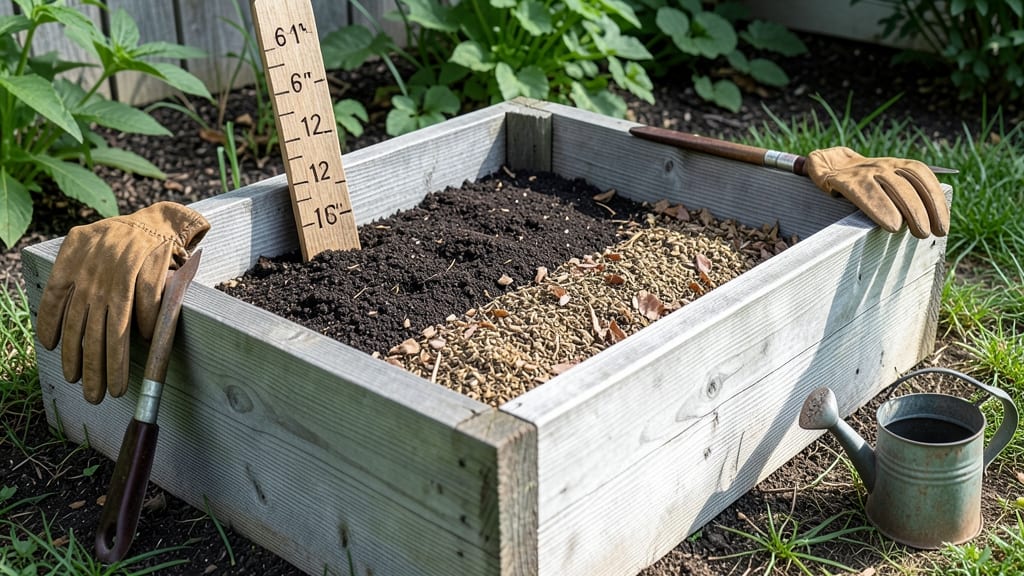
Filling a raised garden bed with the right amount of soil means calculating depth for your plants' roots while avoiding waste or poor drainage.
Picture this: you’ve spent hours building your perfect raised bed, only to realize halfway through filling it that you’ve either overbought soil or left too little room for roots to stretch.
That’s why getting the depth right is half the battle—and it all starts with knowing how much soil your bed truly needs.
For most vegetables, 6 to 12 inches of soil is ideal, but herbs and shallow-rooted plants can thrive in just 4 to 6 inches. Meanwhile, deep-rooted crops like tomatoes or carrots demand the full 12-inch depth to avoid stunted growth.
The key? Matching your soil volume to your plants’ needs—and avoiding common pitfalls like compacted layers or drainage issues.
In this guide, I’ll walk you through calculating soil volume for your bed’s dimensions, breaking down depth requirements by plant type, and sharing pro tips to keep your soil healthy and your harvests bountiful.
Raised garden bed soil depth requirements by plant type
Choosing the right soil depth in your raised garden bed depends entirely on what you’re growing. Root vegetables like carrots and potatoes need deep, loose soil to prevent forking, while shallow-rooted herbs like basil thrive in just 6 inches.
Understanding these needs ensures your plants grow strong and healthy from the start.
The minimum soil depth for most raised beds is 6 inches, but many gardeners opt for 12 inches to accommodate deeper roots. For perennials like asparagus, you’ll need even more—up to 18 inches—to support their long-term growth.
Let’s break down the specifics so you can plan your bed like a pro.
| Plant Type | Minimum Soil Depth | Ideal Depth | Notes |
|---|---|---|---|
| Root Vegetables | 12 inches | 18-24 inches | Carrots, beets, potatoes, parsnips |
| Leafy Greens | 6 inches | 8-12 inches | Lettuce, spinach, kale, Swiss chard |
| Herbs | 6 inches | 8-10 inches | Basil, parsley, thyme, chives |
| Perennials | 12 inches | 18-24 inches | Asparagus, rhubarb, strawberries |
| Flowers | 6 inches | 8-12 inches | Marigolds, zinnias, sunflowers |
| Fruiting Plants | 12 inches | 18 inches | Tomatoes, peppers, blueberries |
For root vegetables, prioritize loose, stone-free soil to prevent root damage. A 12-inch minimum is non-negotiable—anything less risks stunted growth or forking. I once grew carrots in a bed with only 8 inches of soil, and they turned into misshapen nubs. Lesson learned!
If you’re growing shallow-rooted plants like lettuce or herbs, you can get away with 6-8 inches of soil. These plants focus their energy above ground, so deeper soil isn’t critical. However, adding a 2-inch layer of compost on top still boosts nutrient availability without breaking the bank.
Perennials like asparagus are the exception—they need 18 inches of soil to establish their deep root systems. If your bed isn’t tall enough, consider planting them in containers or deeper beds. I’ve seen asparagus crowns rot when buried too shallowly, so always plan ahead for these long-term investments.
Don’t forget to account for drainage layers if your bed lacks them. A 4-inch layer of gravel or coarse sand at the bottom improves aeration and prevents waterlogging. This is especially important in clay-heavy soils, where water can pool and suffocate roots.
When mixing your soil, aim for a 60-30-10 blend of topsoil, compost, and perlite/sand. This ratio ensures fertility, drainage, and structure—three critical factors for root development. I test my soil’s texture by squeezing a handful; it should hold shape but crumble easily when tapped.
For container-grown plants like tomatoes or peppers, a 12-inch depth is ideal, but you can supplement with container-specific mixes if space is limited. Just avoid heavy, compacted soil—it restricts root expansion and leads to poor yields. Always fluff the soil before planting to encourage root penetration.
Pro tip: Label your bed sections based on depth requirements. This prevents mix-ups when rotating crops or adding new plants. I use stakes with plant names and their ideal soil depths—it’s saved me from costly mistakes more than once.
Finally, remember that soil settles over time. After planting, top off your bed with an extra 1-2 inches of compost to maintain depth. This small step makes a big difference in long-term plant health and reduces the need for constant replenishment.
How to calculate soil volume for your raised garden bed
Figuring out how much soil to fill your raised garden bed can feel like solving a puzzle—but it doesn’t have to be complicated. The key is understanding your bed’s dimensions and the soil depth your plants need.
Whether you’re building a 4x8 ft bed for tomatoes or a 3x6 ft bed for herbs, knowing the exact volume ensures you buy the right amount without over- or under-filling.
Most raised beds should have 6 to 12 inches of soil depth, depending on what you’re growing. Deep-rooted plants like carrots or potatoes need the full 12 inches, while shallow-rooted herbs like basil or thyme thrive in just 6 inches.
The formula to calculate soil volume is simple: multiply the length × width × depth (in feet) to get cubic feet of soil needed.
For example, a 3x6 ft bed filled to 10 inches (0.83 ft) depth requires 15 cubic feet of soil (3 × 6 × 0.83). If you’re planting deep-rooted vegetables, aim for 12 inches (1 ft) of soil, which would require 18 cubic feet for the same bed.
Always round up to account for soil settling over time.
Don’t forget to consider your soil mix. A balanced blend of topsoil, compost, and perlite improves drainage and fertility.
For instance, a 4x8 ft bed with 12 inches of soil might need 32 cu ft total, broken down into 19.2 cu ft topsoil, 9.6 cu ft compost, and 3.2 cu ft perlite. Buying in bulk or ordering online can save you time and money.
Pro tip: Use a soil calculator or spreadsheet to automate these calculations for multiple beds. Label your bags or note the mix ratios to avoid confusion when filling. Once you’ve got the numbers, you’re ready to create a nutrient-rich environment where your plants will flourish!
Remember, proper soil volume isn’t just about fitting your bed—it’s about giving your plants the root space they need to grow strong and healthy. Happy gardening! 🌱