
Light Requirements
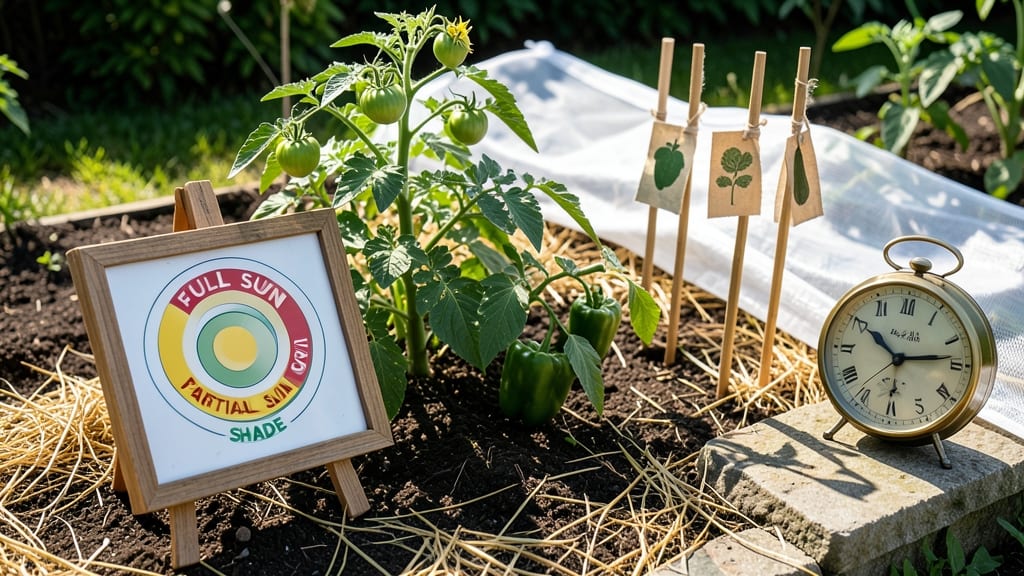
A vegetable garden needs 6 to 8 hours of sunlight daily to produce strong, healthy crops—yet many gardeners unknowingly sabotage their harvests by placing plants in the wrong spots.
Picture this: you’ve spent hours tilling the soil, planting with care, and watering faithfully, only to watch your tomatoes struggle or your lettuce bolt too soon. The culprit? Too little—or too much—sunlight.
Some plants, like peppers and eggplants, demand full sun to thrive, while others, like leafy greens, can handle partial shade. Without knowing these ranges, you risk wasted effort and poor yields.
In this guide, I’ll break down the exact sunlight hours your most common vegetables need, how to measure sunlight in your garden, and smart tricks to maximize growth even in shady spots.
Whether you’re working with a sun-drenched backyard or a dappled shade garden, you’ll learn how to give every plant the perfect light conditions for peak harvests.
From full-sun lovers to shade-tolerant varieties, you’ll discover which crops to pair together, how to adjust for seasonal changes, and even how to stretch sunlight with reflective surfaces or vertical gardening. Let’s turn your garden into a high-yielding powerhouse—starting with the right light.


Sunlight requirements by vegetable type: full sun vs. partial shade needs
Understanding how many hours of sunlight your vegetable garden needs is the foundation of a thriving harvest. Vegetables fall into three main categories based on sunlight needs: full sun (6+ hours), partial sun (3-6 hours), and partial shade (less than 3 hours).
Getting this wrong can mean the difference between a bountiful harvest and stunted growth or even crop failure.
I’ve seen gardeners struggle when their tomatoes produce tiny fruits or their lettuce bolts to seed because they didn’t match the plant’s sunlight needs. The key is knowing which crops thrive in direct sunlight versus those that prefer dappled shade.
Let’s break it down by vegetable type so you can plan your garden layout with confidence.
Full sun lovers like tomatoes, peppers, and cucumbers need at least 6 hours of direct sunlight daily to produce well. These fruiting vegetables rely on sunlight to set flowers and develop fruit, so cutting their exposure short will lead to fewer harvests. On the other hand, leafy greens like spinach and kale often do better with 3-5 hours of sunlight, as too much can cause them to bolt or become bitter.
Root vegetables like carrots and beets typically fall into the partial sun category, needing 4-6 hours of sunlight to grow properly. They prioritize soil quality over sun exposure, but they still need enough light to develop sweet, edible roots. Herbs like basil and cilantro also thrive in partial sun, making them ideal for gardeners with limited sunlight.
The tradeoff between high-yield potential and marginal sunlight is real. For example, tomatoes in 5 hours of sun will produce fruit, but it’ll be smaller and fewer than in 8 hours. Similarly, peppers may not ripen fully if they don’t get enough heat from sunlight.
On the flip side, leafy greens grown in full sun can become tough and bitter, while herbs like basil may turn leggy and lose their flavor.
If your garden has limited sunlight, focus on partial sun vegetables like bush beans, green onions, and radishes. These crops are more forgiving and can still produce a decent harvest in 3-4 hours of sun.
Pair them with shade-tolerant herbs like mint or parsley to maximize your space without sacrificing yield.
For container gardening, prioritize compact varieties of sun-loving plants, like cherry tomatoes or bush cucumbers. These can thrive in containers with 6+ hours of sun, even on balconies or patios. Just ensure your containers have good drainage and you’re using a lightweight potting mix to avoid overwatering.
One common mistake I see is overcrowding sun-loving plants in hopes they’ll share sunlight. Tomatoes, for example, need space to spread and won’t perform well if shaded by neighboring plants.
Always check plant spacing guidelines and avoid planting tall crops near shorter ones that need partial shade, like lettuce or spinach.
Pro tip: Use reflective surfaces like white mulch or light-colored containers to bounce extra sunlight onto shade-prone areas. This can add 1-2 extra hours of effective light to your garden, making a noticeable difference for partial sun plants. Just avoid dark mulches, which absorb heat and can stress plants.
Finally, remember that sunlight needs change with the seasons. A spring planting of lettuce might get 6 hours of sun in June, but only 4 hours in September. Plan accordingly by rotating crops or using seasonal shade cloth to protect delicate plants from too much mid
How to measure and optimize sunlight for your garden layout
Measuring sunlight accurately is the first step to creating a thriving vegetable garden. Most gardeners assume they know their garden's sun exposure, but shadows from trees, buildings, and even neighboring plants can drastically alter sunlight patterns throughout the day.
I’ve learned that even a 1-hour difference in sunlight can mean the difference between a bountiful harvest and struggling plants.
Start by observing your garden from sunrise to sunset over a week to account for seasonal variations. Use a simple sunlight tracker or even a whiteboard to mark where shadows fall at different times.
This helps identify microclimates—areas that might receive more or less sun than the rest of your garden. For example, my north-facing garden bed gets only 3 hours of morning sun, which is perfect for leafy greens but terrible for tomatoes.
⚠️ callout-warning ⚠️
Most vegetable gardens need 6-8 hours of direct sunlight daily for optimal growth, but many gardeners assume partial shade means "enough light." In reality, tomatoes, peppers, and cucumbers will bolt or produce poorly with less than 6 hours. Even leafy greens like spinach thrive with 4-6 hours—not the 8+ hours some assume.
Pro Tip: Use a sunlight meter app (like Sun Surveyor) to track exact hours. My garden’s west-facing bed got logged as "partial shade," but the app revealed it only received 4 hours of direct sun—explaining why my zucchini struggled.
Once you’ve mapped your garden’s sunlight, group plants by their needs. Full-sun lovers like tomatoes, peppers, and eggplants should go in the sunniest spots, while partial-shade crops such as lettuce, kale, and radishes can thrive in areas with 3-6 hours of sun.
I rearranged my garden last year, moving my basil and Swiss chard to a shadier spot, which actually improved their flavor and growth.
Don’t forget to adjust for seasonal changes. In summer, your garden might get longer daylight hours, but winter sun is often weaker and lower in the sky. Use seasonal sun calculators to plan ahead.
For instance, my south-facing raised bed gets 8 hours of sun in June but only 5 in December—so I plant winter squash in summer and spinach in fall to match the light.
If your garden has limited sunlight, maximize space with vertical gardening or reflective surfaces like white mulch or mirrors to bounce light onto plants. I added a reflective panel behind my herb spiral, which increased light exposure by 20% without moving plants.
Even small tweaks, like removing overhanging branches, can make a big difference in your garden’s productivity.
Finally, avoid the common mistake of overcrowding sun-loving plants. Too many tomatoes or peppers competing for light will lead to smaller yields and more pests. Space them properly—18-24 inches apart for tomatoes—and interplant with shade-tolerant herbs like thyme or oregano to utilize space efficiently.
My square-foot gardening layout now balances sun and shade perfectly, and my harvests have never been better!