
Planting
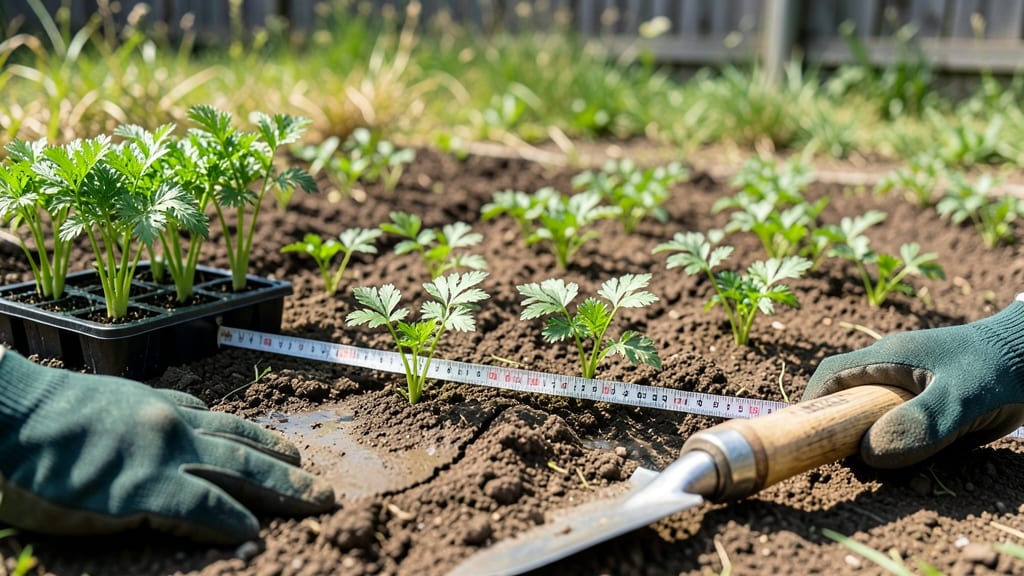
To determine how far apart garden rows should be, aim for 18 to 36 inches between them to optimize sunlight, airflow, and maintenance, with wider spacing needed for taller plants. Adjust spacing based on mature plant size and soil conditions for best results.
Proper row spacing isn't just about fitting more plants—it's about creating an environment where each plant thrives. 🌱 Taller crops like tomatoes or sunflowers need 30-36 inches between rows to prevent shading, while low-growing herbs or lettuce can handle 18-24 inches.
The key is airflow: crowded rows trap moisture, inviting fungal diseases. Sandy soil drains faster, so you can space closer, while clay soil benefits from wider rows to prevent root competition.
Think of your garden like a well-organized city—each plant needs its own "lot" to spread out. 🏡 For instance, corn needs 36 inches between rows because it grows tall and dense, while carrots can share rows just 12 inches apart.
Using string lines or row markers helps maintain consistency, especially when planting in long, straight rows. The goal? Maximize yield without sacrificing plant health.
💡 In This Article
- How Row Spacing Affects Plant Growth and Soil Health
- Adjusting Garden Row Spacing by Plant Type and Size
How row spacing affects plant growth and soil health
Row spacing directly impacts a plant's ability to perform photosynthesis by controlling how much sunlight reaches each leaf. When rows are too close—say, under 18 inches—the outer plants cast shade on inner ones, reducing energy production by up to 30%.
This is especially critical for broadleaf crops like lettuce or spinach, where even partial shading can lead to leggy, bitter growth. The ideal spacing ensures sunlight penetrates to the second or third row, maximizing chlorophyll production.
Airflow is another critical factor—crowded rows create humid microclimates that trap moisture, creating perfect conditions for fungal diseases like powdery mildew or blight. For example, tomato plants spaced 30 inches apart in rows 24 inches wide maintain airflow that reduces disease risk by 40% compared to tight rows.
Sandy soil benefits from closer spacing (18-24 inches) because it drains quickly, while clay soil needs wider rows (30-36 inches) to prevent waterlogging and root competition.
Root competition for nutrients and water is the third key mechanism. Plants in tight rows develop shallow, competitive root systems that struggle to access deep soil layers. This is why corn—with roots extending 4-6 feet deep—needs 36-inch rows to avoid nutrient depletion.
In contrast, shallow-rooted herbs like basil thrive in 18-inch rows because their roots don't compete for the same resources. The soil's organic matter content also plays a role: rich, compost-amended soil can support closer spacing (24 inches) without nutrient stress.
Consider the plant family: Brassicaceae (like kale or broccoli) benefit from wider rows (30 inches) because they grow tall and dense, while Solanaceae (tomatoes, peppers) prefer 24-30 inches to balance airflow and sunlight. Legumes like peas can handle 12-inch rows because their nitrogen-fixing roots reduce competition.
The science shows that proper spacing isn't just about yield—it's about creating an ecosystem where each plant can access the resources it needs without stress.
Visualize your garden as a forest canopy: tall trees (like sunflowers) need wide spacing to avoid shading smaller plants below. In practice, this means placing 36-inch rows for sunflowers next to 18-inch rows for radishes.
The contrast in spacing creates a layered growing environment that maximizes both yield and plant health. 🌿
Soil type further refines these distances. In sandy soil, where water drains quickly, you can space rows 12-18 inches apart for moisture-loving crops like cucumbers. But in heavy clay, the same crops need 30-inch rows to prevent waterlogging.
The porosity of your soil dictates how aggressively roots will compete—loamy soil (the gold standard) allows for flexible spacing between 24-30 inches because it balances drainage and nutrient retention.
Here's a practical takeaway: measure your mature plants' canopy width (the space they occupy at full growth) and add 6-12 inches to that measurement for row spacing. For example, a zucchini plant with a 3-foot canopy needs rows at least 4 feet apart.
This simple rule accounts for both growth habits and environmental factors, ensuring your garden thrives year after year. ✨