
Planting
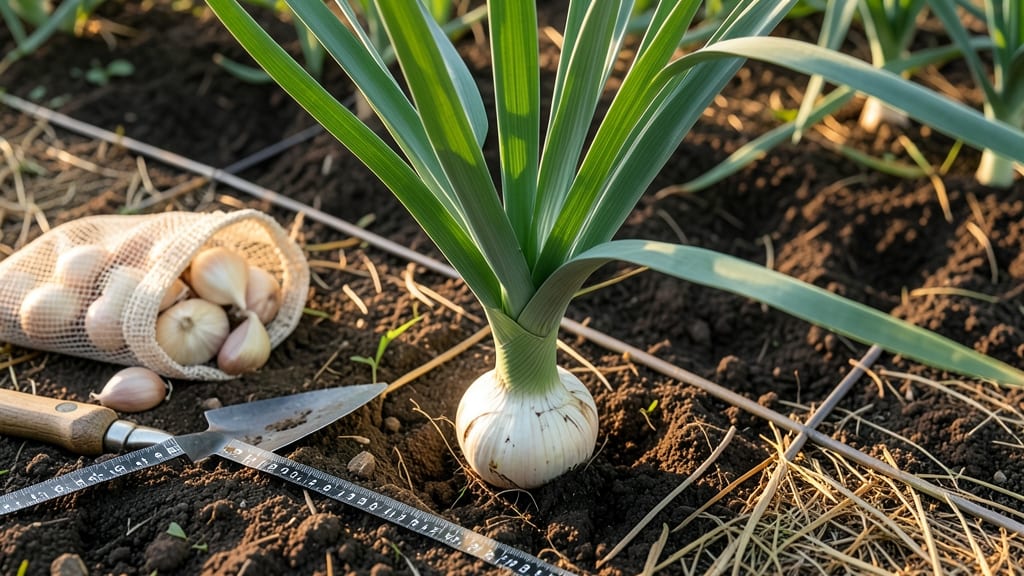
Growing massive garlic bulbs starts with the right spacing in your garden 🧄—and most gardeners get this step completely wrong.
Picture this: you’ve prepped the soil, planted your cloves with care, and waited patiently for harvest. But when you pull them up, you’re left with tiny, underdeveloped bulbs—or worse, a tangled mess that’s impossible to separate.
The issue? Too many cloves fighting for space, or rows that are either too cramped or too spread out.
Proper garlic spacing isn’t just about fitting more plants in—it’s about giving each clove room to grow into a plump, disease-resistant bulb.
Whether you’re working with hardneck or softneck varieties, the distance between plants (and rows) directly impacts your yield, bulb size, and even how easy they are to harvest.
In this guide, I’ll walk you through the exact spacing rules for your garlic, plus how to adjust for your soil type, garden layout, and even common mistakes that sabotage your harvest. Ready to turn those small cloves into giant, flavor-packed bulbs?
Optimal garlic spacing by variety: hardneck vs softneck guidelines
Garlic spacing isn't a one-size-fits-all approach—it varies dramatically between hardneck and softneck varieties. I've learned that proper spacing determines whether you'll harvest giant bulbs or tiny, underdeveloped cloves.
Hardneck varieties like rocker and artichoke need more room for their upright scapes, while softneck types such as silverskin and creole can handle slightly tighter spacing. Let's break down the science behind these differences to maximize your harvest.
Why does spacing matter so much? Airflow and nutrient access are critical. Crowded garlic plants compete for resources, leading to smaller bulbs and increased susceptibility to fungal diseases like white rot. I've seen firsthand how proper spacing can transform a mediocre harvest into a bounty of plump, flavorful bulbs.
The right distance between plants also makes harvesting easier and reduces damage to the bulbs.
For hardneck garlic, which produces those prized scapes, you'll need more space—typically 6-8 inches apart—because their upright growth habit requires room to develop. Softneck varieties, on the other hand, can handle closer spacing of 4-6 inches apart since they grow more compactly.
The row spacing also differs: hardnecks need 12-18 inches between rows, while softnecks can manage with 10-12 inches. These differences might seem small, but they make a huge impact on yield and bulb size.
| Variety Type | Plant Spacing | Row Spacing | Bulb Size Impact | Disease Risk |
|---|---|---|---|---|
| Hardneck (Rocker, Artichoke) | 6-8 inches apart | 12-18 inches apart | Larger bulbs, better scape development | Lower (better airflow) |
| Softneck (Silverskin, Creole) | 4-6 inches apart | 10-12 inches apart | Smaller but consistent bulbs | Moderate (tighter spacing) |
| Raised Beds | 4-6 inches (both types) | 8-10 inches (both types) | Uniform bulb size | Lowest (optimal drainage) |
When planting hardneck garlic, I always space the cloves 6-8 inches apart in rows that are 12-18 inches apart. This gives their upright scapes room to grow without competing for sunlight or nutrients.
The extra space also reduces the risk of botrytis blight and other fungal issues by improving airflow around the foliage. I've found that hardnecks thrive with this spacing, producing larger bulbs and more robust scapes that you can harvest for cooking or braiding.
For softneck varieties, I tighten the spacing to 4-6 inches apart with rows 10-12 inches apart. Softnecks are more forgiving when it comes to spacing because they don't produce scapes and grow more compactly.
This closer spacing allows you to fit more plants in a smaller area, which is ideal if you're growing garlic in containers or small garden plots. However, be cautious—too little space can still lead to smaller bulbs and increased disease pressure.
If you're growing garlic in raised beds, you can adjust the spacing slightly to 4-6 inches apart for both types, with rows 8-10 inches apart. Raised beds provide better drainage and warmer soil, which can help garlic grow more vigorously.
The improved airflow in raised beds also reduces disease risk, allowing you to plant more closely without sacrificing bulb size. I've had great success with this method, especially for softneck varieties like creole garlic.
One common mistake I see is overcrowding garlic, which leads to small, weak bulbs and poor yields. I once planted garlic too closely, and by harvest time, the bulbs were barely larger than the original cloves.
Proper spacing ensures that each plant has enough nutrients and water to develop fully. Additionally, well-spaced garlic is easier to harvest—you won't have to dig around multiple bulbs to extract a single one.
Another key factor is planting depth. While spacing is critical, planting cloves too shallow or too deep can also affect bulb development. I always plant garlic cloves 2 inches deep, with the pointy end facing upward.
This ensures that the roots have enough room to establish while the shoot can emerge without struggling. Combine proper depth with the correct spacing, and you'll set your garlic up for success from the start.
To make the most of your garlic harvest, consider staggered planting. By planting hardneck and softneck varieties in separate rows or sections, you can extend your harvest season. Hardnecks typically mature slightly earlier than softnecks, giving you a two-phase harvest.
This strategy also helps prevent cross-contamination of diseases between varieties, as each type has slightly different susceptibility levels.
Finally, remember that soil quality plays a role in how spacing affects your garlic. Well-draining, fertile soil allows plants to access nutrients more efficiently, reducing the need for extreme spacing. If your soil is heavy or clay-like, you might need to increase spacing slightly to compensate for slower drainage.
Amending your soil with compost before planting can also help improve bulb development, even with tighter spacing.
Common garlic spacing mistakes that shrink your harvest
Even experienced gardeners accidentally sabotage their garlic harvests with spacing mistakes. Overcrowded cloves compete for nutrients, while uneven planting creates weak spots in your garden layout. These errors don't just shrink bulb size—they invite diseases like white rot and reduce your total yield by up to 40%.
The good news? Fixing these mistakes is simple once you know what to watch for.
I’ve seen gardens where garlic cloves were planted just 2 inches apart—far too close for healthy growth. Others had rows spaced 12 inches apart but cloves packed too tightly within them.
Both approaches steal sunlight, air circulation, and soil nutrients from your plants. Let’s break down the five most common spacing mistakes and how to correct them for a bountiful harvest.
⚠️ Warning: Overcrowding Kills Garlic Yield
Mistake: Planting cloves closer than 4 inches apart forces bulbs to compete for nutrients, resulting in small, misshapen cloves and higher disease risk. Fix: Space cloves 4-6 inches apart in rows 12-18 inches apart for optimal airflow and bulb development.
First, let’s tackle crowding within rows. Many gardeners assume garlic needs tight spacing like onions, but garlic bulbs actually need room to expand. When cloves are planted too close—say, 2-3 inches apart—they’ll produce tiny bulbs with 1-2 cloves instead of the 8-12 cloves you’d get with proper spacing.
Measure your spacing before planting to avoid this trap.
Next, uneven row spacing creates another problem. If your rows are less than 12 inches apart, you’ll struggle to reach the center plants for weeding or harvesting. On the flip side, rows wider than 18 inches waste garden space and make it harder to maintain consistent soil moisture.
For raised beds, aim for 12-inch rows with 6-inch spacing between cloves to maximize your small footprint.
Don’t overlook soil type and drainage either. Heavy clay soils compact easily, which can stunt root growth even with perfect spacing. If your soil is dense, amend it with compost or sand before planting.
In containers, use a well-draining potting mix and space cloves 3-4 inches apart to prevent root rot. Always plant with the pointy end up—this ensures straight, healthy growth.
Finally, seasonal timing mistakes can throw off your entire harvest. Planting garlic too early in fall or too late in spring gives it either too much time to bolt or insufficient root development before winter.
For most climates, aim to plant 4-6 weeks before your first frost (typically October-November) or in early spring when soil temps hit 40°F. Adjust spacing slightly in cooler climates—6-inch spacing gives roots more room to establish.
By fixing these five spacing mistakes, you’ll see larger bulbs, higher yields, and fewer diseases next season. Start with your soil prep, then measure carefully before planting. Your garlic will thank you with plump, flavorful cloves ready for harvest! 🧄