
Picking
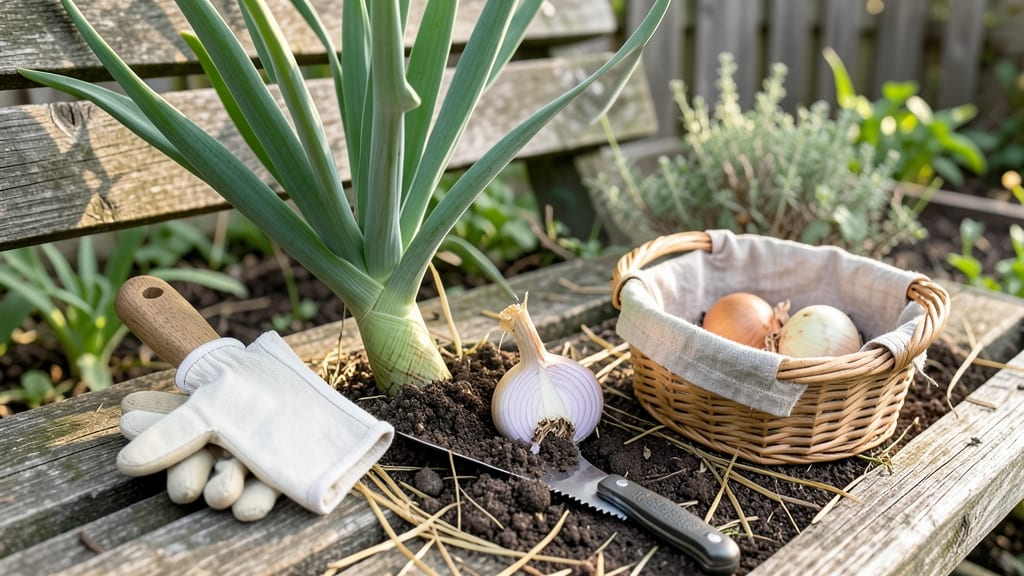
To pick onions from your garden at the perfect time means catching them when they’re fully mature but still fresh—before they bolt or split into worthless bits.
Picture this: you’ve spent months tending to your 🧅 crop, only to pull them too early and end up with tiny, pithy bulbs that won’t store—or worse, leave them in the ground too long and watch them turn to mush.
The difference between a disappointing harvest and a pantry full of sweet, pungent bulbs often comes down to knowing exactly when to pull them.
In this guide, I’ll walk you through the three key visual cues that tell you your onions are ready—from yellowing tops to firm bulbs—and how to adjust for your region’s growing season.
You’ll also learn how to handle green onions differently from storage onions, plus what happens if you miss the window (and how to fix it).
By the end, you’ll never second-guess harvest time again—just a perfectly timed pull, a quick cure, and onions that last all winter. Let’s get started.

3 Visual cues to determine when onions are ready for harvest
Harvesting onions at the perfect moment ensures maximum flavor, size, and storage potential. Unlike many vegetables, onions don't ripen after picking, so timing is everything. Miss the window, and you'll end up with small, pithy bulbs that won't store well—or worse, let them bolt and become bitter.
The key lies in three simple but critical visual cues that tell you when your onions are ready to pull.
I've learned through years of gardening that ignoring these signs often leads to disappointment. For example, last season I waited too long with my Yellow Granex onions, and they split open before I could harvest them.
That's why mastering these three visual benchmarks will save you from similar frustrations and ensure a successful harvest every time.
Whether you're growing storage onions for long-term keeping or green onions for fresh use, these cues apply. The difference lies in how you respond once you spot them. For storage onions, you'll want to cure them properly, while green onions can go straight to the kitchen.
Let's break down each visual clue so you can confidently harvest your onions at their peak.
🌱 Onion Harvest Readiness Checklist
-
1. Leaf Color Change
Mature onions show yellowing tops that begin to flop over. For storage onions, the entire plant should collapse. Green onions stay green but develop tender white bulbs. -
2. Bulb Size & Firmness
Gently squeeze the bulb—it should feel firm and round, about 1-2 inches in diameter. For green onions, harvest when the white base reaches ½ inch thick. -
3. Neck Shrinkage
The stem (neck) between bulb and leaves should shrink to ½ inch or less. This signals the bulb has stopped growing and is ready for harvest. -
Bonus: Papery Skins
Outer layers should feel dry and papery, not slick or green. This is especially critical for storage onions.
💡 Pro Tip: Use a gardening knife to gently lift onions—never pull by the tops to avoid breaking bulbs.
The first visual cue to watch is the color of the onion tops. When your onions are ready, their green leaves will start turning yellow or brown and begin to flop over.
This is nature's way of telling you the bulb has reached maturity and redirected its energy from leaf growth to storage. For storage onions, this collapse is a clear signal that it's time to harvest.
For green onions, the tops stay green but develop a thicker white base that's perfect for cutting. The key difference is that green onions are harvested before the bulb fully matures, while storage onions need that full maturity cycle.
I often grow both types in my garden—green onions for frequent kitchen use and storage onions for long-term keeping.
Next, focus on the size and firmness of the bulb. A mature onion should feel firm and round when you gently squeeze it. If it's still small and soft, it needs more time.
Aim for bulbs that are about 1-2 inches in diameter for storage onions. For green onions, harvest when the white base reaches about ½ inch thick—this ensures tenderness without bitterness.
One mistake I made early in my gardening journey was harvesting onions based solely on size, ignoring the neck shrinkage between the bulb and leaves. This neck should shrink to about ½ inch or less when the onion is ready.
A thicker neck means the bulb is still growing. This is a subtle but crucial detail that separates experienced gardeners from beginners.
Don't overlook the papery texture of the outer skins, which is another key indicator. Mature onions develop dry, papery outer layers that protect the bulb during storage. If the skins still feel slick or green, your onions aren't ready yet.
This is especially important if you plan to store your harvest—properly dried skins help prevent spoilage.
To test readiness, I recommend checking a few onions from different parts of your garden. Some varieties, like Red Baron or Candy onions, mature faster than others. If you're unsure, harvest one and cut it open—if the layers are thick and the center is dry, it's ready.
If it's still moist or the layers are thin, give them a few more days.
Timing your harvest correctly also depends on your climate and variety. In cooler regions, onions may take longer to mature, while warmer climates can accelerate growth. Always refer to your seed packet for specific days to maturity, but use these visual cues as your final guide.
They're foolproof once you know what to look for!
Remember, onions won't improve after harvest, so don't wait too long. Once the tops turn completely brown and the bulbs start splitting, your window has closed.
With these three visual cues—leaf color, bulb firmness, and neck shrinkage—you'll never miss the perfect harvest moment again. Happy digging! 🧅
Green onions vs. storage onions: when to pick each type
Not all onions are created equal—and neither are their harvest times. Green onions (or scallions) and storage onions require completely different approaches. Picking green onions too late turns them bitter, while harvesting storage onions prematurely ruins their storage potential.
Let’s break down the key differences so you never waste a single bulb.
The biggest mistake I see? Treating all onions the same. Green onions are all about the leaves, while storage onions depend on bulb maturity. One wrong move, and you’ll end up with either limp greens or shriveled, flavorless bulbs. Here’s how to get it right every time.
Green Onions (Scallions)
✅ Pros
- Harvest early for tender greens
- Cut-and-come-again method
- Milder flavor when young
❌ Cons
- Bitter if overgrown
- No bulb development
- Short-lived storage
📅 When to Pick
Harvest time: 60-70 days after planting
Signs: 6-8" tall, white base visible, no bulb
Storage Onions
✅ Pros
- Long-term storage (6+ months)
- Fully developed bulbs
- Strong flavor when mature
❌ Cons
- Overripe = poor storage
- Bolting risk if too late
- Requires curing
📅 When to Pick
Harvest time: 100-120 days after planting
Signs: Tops yellow, bulbs 1-2" diameter, papery skins
For green onions, I recommend harvesting when the white base is 4-6 inches tall. Simply snip the outer stalks with scissors, leaving the roots intact. They’ll regrow in 2-3 weeks—perfect for continuous harvests all season.
Storage onions, however, need patience. Wait until the tops yellow and flop over—this signals the bulb is fully mature. If you harvest too early, the bulbs won’t store well.
If you wait too long, they’ll split or bolt, ruining your crop. Aim for 1-2 inches in diameter for ideal storage.
Pro tip: Cure storage onions for 2-3 days in a dry, shaded spot before storing. This hardens the skins and extends shelf life. Store in a cool, dark place with good airflow—like a mesh bag in the pantry—to keep them fresh for months.
Now you’ve got the perfect timing for both types—no more wasted onions! Just remember: green onions = early and often, while storage onions = wait for full maturity. Happy harvesting! 🧅