
Picking
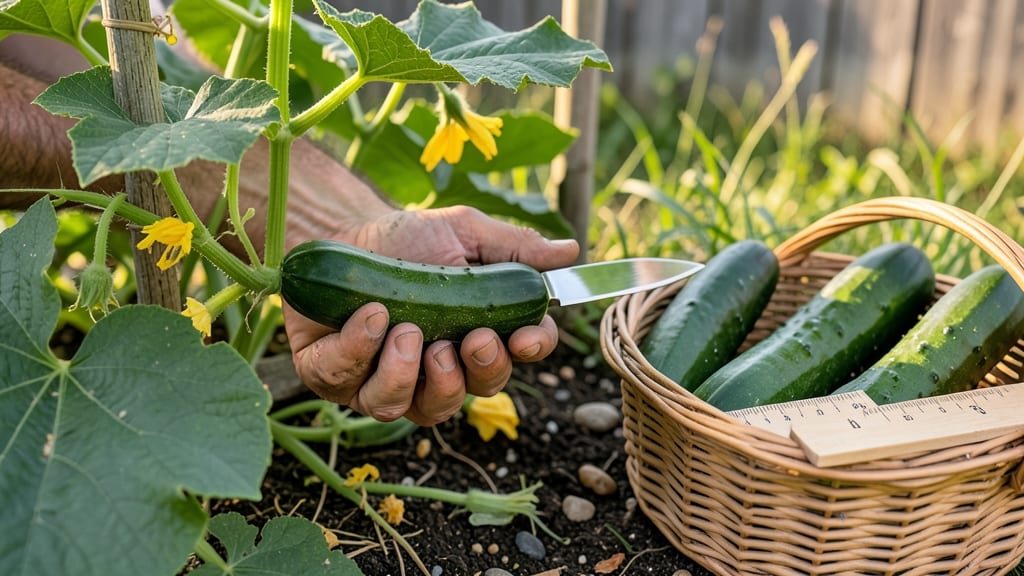
Harvest cucumbers from your garden when they reach 6–8 inches for slicing types or 4–6 inches for pickling varieties—this is the sweet spot for crisp, seedless flavor.
Nothing beats the crunch of a homegrown cucumber—unless it’s the disappointment of overripe, seedy harvests. Timing your pick perfectly ensures maximum flavor, texture, and yield, but most gardeners miss the window by days (or even hours).
Look for firm skin that yields slightly when pressed with your thumbnail, a vibrant color, and a stem that snaps easily when bent. These cues tell you the cucumber is ready, not overripe. Ignore them, and you’ll end up with bitter, watery fruit that’s past its prime.
In this guide, I’ll break down the exact size, color, and texture signals to watch for, plus regional tips for Zone 6a and beyond. You’ll also learn how often to pick cucumbers to keep your plants producing all summer long.

How to tell when cucumbers are ready for harvest (by size, color, and texture)
Harvesting cucumbers at the right time transforms your garden into a crisp, flavorful treasure trove. The key lies in watching for three critical signals: size, color, and texture.
Slicing cucumbers like Marketmore or Straight Eight reach peak flavor at 6-8 inches, while pickling varieties such as Boston Pickling shine at 4-6 inches. Ignoring these cues can lead to oversized, seedy, or bitter harvests that ruin salads and pickles alike.
Color is your second clue—vibrant, even green means business for most varieties. Look for no yellowing or mottling, as these signs indicate overripeness. Dark green cucumbers with smooth, glossy skin are prime candidates for harvest.
However, some heirloom varieties like Armenian cucumbers stay light green even when ripe, so always cross-reference with size and texture.
Texture reveals the final secret. Gently press a cucumber with your thumbnail—slight give (like a ripe avocado) signals readiness, while rock-hard skin means it’s too early. Overripe cucumbers become soft and spongy, losing their signature crunch. This simple test takes seconds but saves you from bitter disappointments later.
Don’t overlook the stem end, a hidden harvest indicator. When a cucumber is ready, its stem end turns yellow or white, signaling it’s stopped growing. A green stem end means more time in the vine—check back in 2-3 days.
This trick works for both slicing and pickling varieties, saving you from guessing games.
Climate plays a subtle but critical role in timing. In hot, dry regions (like Arizona or California), cucumbers mature faster—harvest every 2-3 days to prevent overripeness. Conversely, cooler climates (such as Pacific Northwest or Alaska) may require weekly checks due to slower growth.
Adjust your schedule based on your local USDA zone and summer temperatures.
Pro tip: Use a sharp harvest tool (like pruning shears) to avoid damaging vines. Cut cucumbers 1 inch from the vine to prevent disease entry points. This small habit extends your plant’s productivity by 20-30% over the season. Plus, it keeps your garden looking tidy and professional.
For bush varieties (like Bush Champion), focus on smaller, frequent harvests to encourage bushier growth. Vining types (such as Straight Eight) reward you with larger yields when you pick consistently.
Label your plants at planting time to track which varieties need attention—color-coded stakes work wonders for busy gardeners.
Ever wondered why some cucumbers taste watery or bland? Overripe cucumbers develop excessive seeds and hollow centers, diluting flavor. Harvest at the right time, and you’ll enjoy crisp, sweet cucumbers straight from the vine.
Store them in the crisper drawer of your fridge for up to 1 week to preserve freshness.
Now that you’re armed with these visual and tactile cues, your cucumber harvests will be consistently perfect. Start checking your plants daily once they begin flowering—early detection is the secret to garden success. Happy harvesting! 🥒
Common harvest mistakes that ruin your cucumbers (and how to avoid them)
Even the most attentive gardeners can fall into harvesting traps that turn crisp cucumbers into bitter, seedy disappointments. I’ve seen overripe cucumbers develop yellowing skin and hard seeds just because they sat too long on the vine. The key is recognizing these early warning signs before your entire harvest suffers.
One of the biggest mistakes is waiting until cucumbers reach their maximum size for your variety. For slicing cucumbers, this means harvesting at 6-8 inches—not waiting for them to swell to 12 inches or more.
Letting them grow too large drains the vine’s energy and leads to uneven ripening across the plant.
⚠️ CALLOUT-WARNING ⚠️
🚨 Harvest Too Late = Game Over
Cucumbers stop growing when their stem end turns yellow. If you ignore this color change, your cucumber will:
- 🔹 Develop bitter, seedy flesh (thanks to cucurbitacin buildup)
- 🔹 Shrivel or over-ripen on the vine, attracting pests
- 🔹 Drain nutrients from new blooms, reducing future yield
Pro Tip: Check cucumbers every 2-3 days—morning harvests prevent afternoon wilting.
Another common pitfall is harvesting inconsistently, which throws off your plant’s rhythm. Cucumbers produce female flowers (the ones that bear fruit) after male flowers pollinate them. If you skip harvests, the vine gets overwhelmed, leading to small, misshapen fruits or even flower drop.
I’ve seen gardeners go weeks without picking, only to find their vines covered in tiny, underdeveloped cucumbers.
Pest damage is another silent harvester. Cucumber beetles and squash bugs don’t just chew leaves—they transmit diseases like bacterial wilt. If you notice holes in leaves or yellowing vines, act fast by handpicking pests or using row covers.
I once lost a 10-foot vine because I ignored early beetle signs until the damage spread.
Storage mistakes can also ruin your harvest. Never store cucumbers in the refrigerator until they’re fully ripe—their skin softens and they absorb odors. Instead, keep them in a cool, dark place (like a paper bag) for up to a week.
For longer storage, pickle them immediately or ferment them to preserve their crunch.
Finally, avoid the temptation to harvest only the largest cucumbers. Smaller cucumbers (especially 4-6 inch pickling types) often ripen faster and prevent the vine from getting overloaded. I’ve found that mixed-size harvesting keeps my plants productive all season long.