
Picking
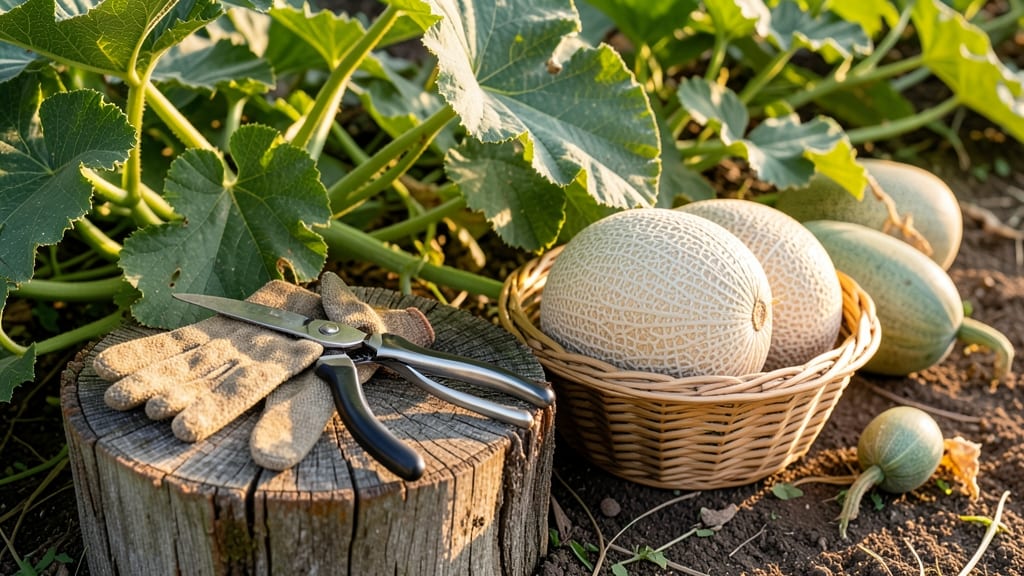
Knowing when to harvest cantaloupe from the garden means the difference between a sweet, juicy reward and a bland disappointment — and the secret is in knowing exactly when your 🍈 is ready to pick.
Picture this: you’ve nurtured your cantaloupe plants all season, watching those vines spread and the fruit swell, only to cut into a melon that’s still hard or mealy. That’s the frustration of harvesting too early or too late, and it happens more often than you’d think.
But here’s the good news: with just a few simple checks — like the color of the rind, the way the stem feels, and that unmistakable sweet scent — you can tell when your cantaloupe is at its peak.
Below, I’ll walk you through the three foolproof signs that guarantee you’ll never miss harvest season again.
Whether you’re a first-time gardener or a seasoned pro, these tips will help you pick your cantaloupe at the perfect moment, ensuring the sweetest, most flavorful fruit straight from your garden to your table.


3 Visual signs your cantaloupe is ready for harvest
There’s nothing worse than biting into a cantaloupe that’s either too hard and bland or overripe and mushy. The good news? Your garden’s cantaloupes will give you clear visual cues when they’re perfectly ripe.
Learning these 3 key signs ensures you harvest at peak sweetness every time. I’ve grown cantaloupes for years, and these tricks have saved me from countless disappointments.
Most gardeners focus on just one clue—usually the rind color—but ripe cantaloupes actually show three distinct visual and physical changes. Ignoring any of these can mean missing the sweetest window.
Let me show you exactly what to look for, so you can confidently pick cantaloupes that burst with flavor.
-
1. Rind Turns Creamy Yellow with a Defined Net Pattern
Look for a smooth, creamy yellow hue (not green or dull) with a prominent net pattern near the stem. The spots should be tan or brownish, not white or patchy. -
2. Stem Slips Easily When Twisted
Gently grasp the stem between your thumb and forefinger and twist slightly. If it slips free with minimal effort, the cantaloupe is ready. A stubborn stem means it’s not ripe yet. -
3. Sweet Aroma Near the Stem
Sniff the blossom end (stem side)—ripe cantaloupes emit a powerful, sweet musky scent. If it smells neutral or sour, wait a few days before harvesting.
Paying attention to the rind color is the easiest way to spot ripe cantaloupes from a distance. When the fruit transitions from green to creamy yellow, it’s a major red flag that harvest time is near.
But here’s the catch: some varieties (like ‘Athena’ or ‘Hale’s Best’) stay partially green even when ripe. That’s why you must combine this clue with the stem test—it’s your backup plan for accuracy.
The stem separation test is my favorite trick because it’s foolproof. Many gardeners skip this step and end up with cantaloupes that are hard on the outside but bland inside.
A ripe cantaloupe’s stem should detach with just a firm twist, almost like it’s begging to be picked. If you’re using force, the fruit isn’t ready yet. Pro tip: Do this test in the morning when fruits are cool—it’s easier to feel the slight give.
Don’t underestimate the power of smell. A ripe cantaloupe’s aroma is unmistakable—it’s like a sweet, floral perfume that hits you as soon as you get close. If you’re harvesting in a hot, humid climate, the scent might be even stronger.
But if your cantaloupe smells like nothing or tastes sour, it’s either underripe or overripe. Trust your nose—it’s your best quality control.
Here’s a common mistake I see: gardeners wait until the cantaloupe is too big before harvesting, thinking bigger means sweeter. Wrong! Oversized cantaloupes often split or develop hollow centers because they’ve outgrown their nutrients.
Aim for a medium-sized fruit (4-6 pounds) that meets all three ripe signs. Overripe cantaloupes also lose their firm texture and turn mushy—so timing is everything.
If you’re growing cantaloupes in cooler climates (USDA Zone 4-5), the ripening process might slow down. In these areas, focus extra attention on the stem slip test and aroma, as the rind might not yellow as dramatically.
Some gardeners even use a black plastic mulch to speed up ripening—it warms the soil and encourages faster color change. Just remember: patience is key—don’t rush the harvest!
Once you’ve confirmed ripeness, pick your cantaloupes with a sharp knife or pruners, leaving a 1-inch stem attached. This helps the fruit ripen evenly if you need to store it for a few days.
Store ripe cantaloupes at room temperature (not in the fridge) to preserve their sweetness. And if you’re worried about overharvesting, remember: one ripe cantaloupe is better than three underripe ones.
Now that you know these three foolproof signs, you’ll never second-guess your cantaloupe harvest again. The next time you’re in your garden, take a minute to check for these clues—your taste buds will thank you! 🍈
How to test cantaloupe ripeness beyond the obvious clues
Even experienced gardeners sometimes miss the subtle signs that a cantaloupe is truly ripe. While color and aroma are classic indicators, advanced techniques like the thumb pressure test and vine inspection can reveal hidden clues.
These methods help you avoid overripe or underripe fruit—common pitfalls with store-bought melons that rarely ripen on the vine.
Store-bought cantaloupes are often harvested green and shipped to stores, where they never fully ripen. That’s why garden-grown melons taste dramatically better when you use these pro-level ripeness tests. I’ve used these tricks for years, and they’ve saved me from bitter, seedy disappointments.
⚠️ callout-warning
If you wait past peak ripeness, cantaloupes become overripe—their flesh turns grainy and seedy, with a fermented taste. The creep test (below) catches this before it happens.
Pro Tip: Harvest in the morning when sugars are highest and temperatures are cooler.
The thumb pressure test is my favorite trick. Press your thumb firmly into the blossom end (the flat side where the stem meets the fruit). If the flesh gives slightly but doesn’t dent deeply, the melon is ripe.
A hard, unyielding feel means it’s underripe, while a deep dent signals overripeness.
Next, inspect the vine near the fruit. A ripe cantaloupe will have a dry, brown stem that separates easily from the vine with a gentle twist. If the stem resists or the vine still looks green and plump, the melon needs more time.
This is called the slip test, and it’s foolproof.
Here’s where things get fun: the creep test. Place the melon on a flat surface and give it a tiny nudge. If it rolls slightly (like a creeping motion), it’s ready to pick.
A melon that stays put is underripe, while one that rolls too easily is overripe. I swear by this—it’s like a cantaloupe balance test!
Finally, combine all three methods for 100% accuracy. A melon that passes the thumb test, slip test, and creep test is guaranteed to be sweet, juicy, and perfectly ripe. Store-bought cantaloupes? They’ll never pass these checks—so grow your own for the best flavor!