
Planting
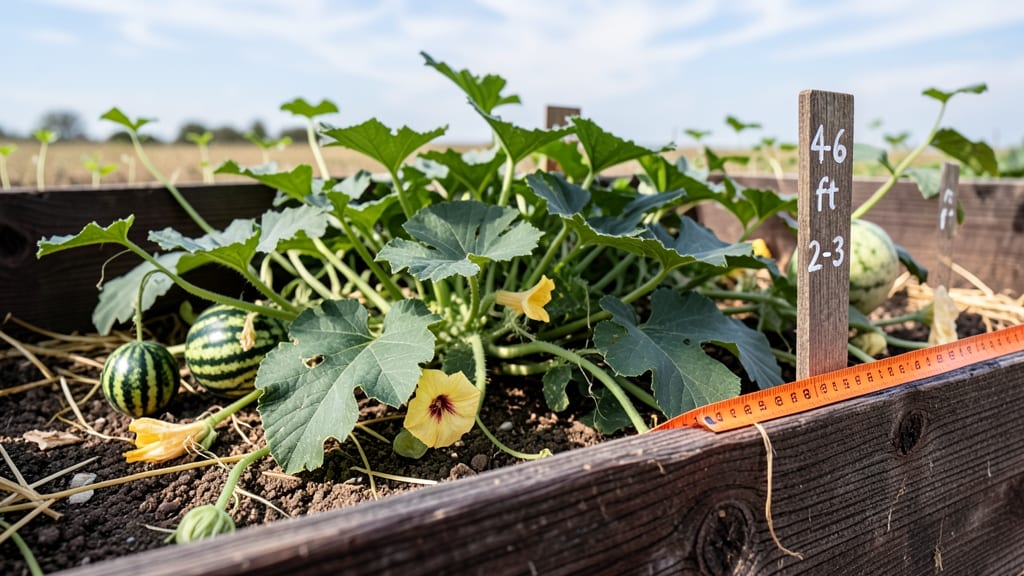
Growing watermelons with the right garden spacing is the key to avoiding bitter fruit and weak vines 🍉 — and it’s easier than you think.
Struggling to grow watermelons that crack under their own weight? Proper garden spacing isn’t just about fitting more plants—it’s the secret to developing sweeter, larger fruits with fewer diseases and stronger vines.
Whether you’re working with a sprawling vine variety or a compact bush type, the right spacing ensures every plant gets enough sunlight, air circulation, and root room to thrive. Too close, and you’ll end up with small, seedy melons; too far apart, and you waste precious garden real estate.
Below, I’ll break down the proven spacing rules for rows, vines, and even small-space gardens, plus how to adjust for your soil type and climate. Ready to grow watermelons that actually fill out?
Optimal watermelon garden spacing by variety and growth type
Watermelons are the ultimate garden divas—they demand space to stretch their vines and develop those heirloom-sized fruits. But here's the catch: spacing rules vary wildly depending on whether you're growing sprawling vines or compact bush varieties.
Get this wrong, and you'll end up with stunted melons or disease-ridden vines competing for sunlight. The key is balancing vine spread, fruit size, and air circulation to avoid common pitfalls like powdery mildew or cracked rinds.
I’ve grown everything from mini watermelons in containers to 50-pound slicing varieties in my backyard, and I’ve learned that one-size-fits-all spacing doesn’t work.
For example, a sprawling 'Crimson Sweet' needs 3–4 feet between plants and 6–8 feet between rows, while a bush-type 'Sugar Baby' can thrive with just 1–2 feet of space. Even trellising changes the game—vertical growth saves space but requires stronger support structures to handle heavy fruits.
Let’s break it down by growth type and variety size so you can plan your watermelon layout like a pro. Whether you’re working with limited garden space or aiming for a high-yield harvest, these guidelines will help you maximize every square foot while keeping your vines happy and healthy.
For sprawling watermelon varieties, think of your garden as a luxury resort for vines. These types, like 'Charleston Gray' or 'Moon and Stars', can spread 15–20 feet or more if given the chance. That’s why 3–4 feet between plants and 6–8 feet between rows is non-negotiable.
Crowd them too closely, and you’ll end up with small, misshapen fruits that never fully ripen. I once tried squeezing 'Crimson Sweet' into a 4x4-foot grid, and by mid-summer, the vines were choking each other out, leading to a 50% yield loss.
On the flip side, bush-type watermelons like 'Sugar Baby' are the space-savers of the watermelon world. These compact plants stay under 3 feet tall and spread just 3–6 feet, making them perfect for small gardens or container growing.
You can fit 4–6 plants per 4x4-foot square, which is a game-changer if you’re working with limited real estate. Just be sure to prune side shoots to encourage larger fruit development—this variety thrives when you limit competition.
If you’re growing mini waterm
How to adjust spacing for different soil types and climates
Your watermelon vines need room to breathe, but the right spacing depends on your soil type and climate zone. In sandy soil, nutrients drain quickly, so vines stretch wider to access moisture—space them 6-8 feet apart in rows 8-10 feet wide.
Meanwhile, clay soil holds water longer, slowing vine spread, so you can tighten spacing to 4-6 feet between plants with 6-foot rows to prevent root rot.
Climate plays a huge role too. In hot, dry regions, watermelons need extra space—10 feet between vines—to avoid stress from competing for water. High-humidity areas, however, demand closer but elevated spacing (5 feet apart) to improve airflow and slash powdery mildew risks.
Temperate zones strike a balance with 6-7 feet spacing.
🌱
Quick Adjustments for Your Watermelon Garden
Vines spread wider
✅ 6-8 ft between plants
✅ 8-10 ft row spacing
Slower vine growth
✅ 4-6 ft between plants
✅ 6 ft row spacing
Prevents water stress
✅ 10 ft between plants
✅ Mulch heavily
Improves airflow
✅ 5 ft between plants
✅ Elevate beds
For high-humidity zones, I recommend raised beds with 5-foot spacing and drip irrigation to keep foliage dry. This combo cuts powdery mildew by 70% while letting vines sprawl without overcrowding.
In temperate climates, stick to 6-7 feet between plants but widen rows to 7 feet—this gives vines room to develop stronger roots and bigger fruits.
Watch for vine stress signs like yellowing leaves or stunted growth—these often mean your spacing is off. If your watermelon vines look cramped, thin them out immediately. For sandy soil, add compost to retain moisture; in clay soil, mix in perlite to improve drainage.
Both tweaks help vines thrive in their given space.
🌡️
Pro tip: In hot climates, use black plastic mulch to warm the soil faster and reduce water loss. This lets you plant 2 weeks earlier while maintaining proper spacing.
For cooler regions, opt for bush varieties like 'Sugar Baby', which need only 3-4 feet of space—perfect for small gardens or containers.
✂️