
Planting
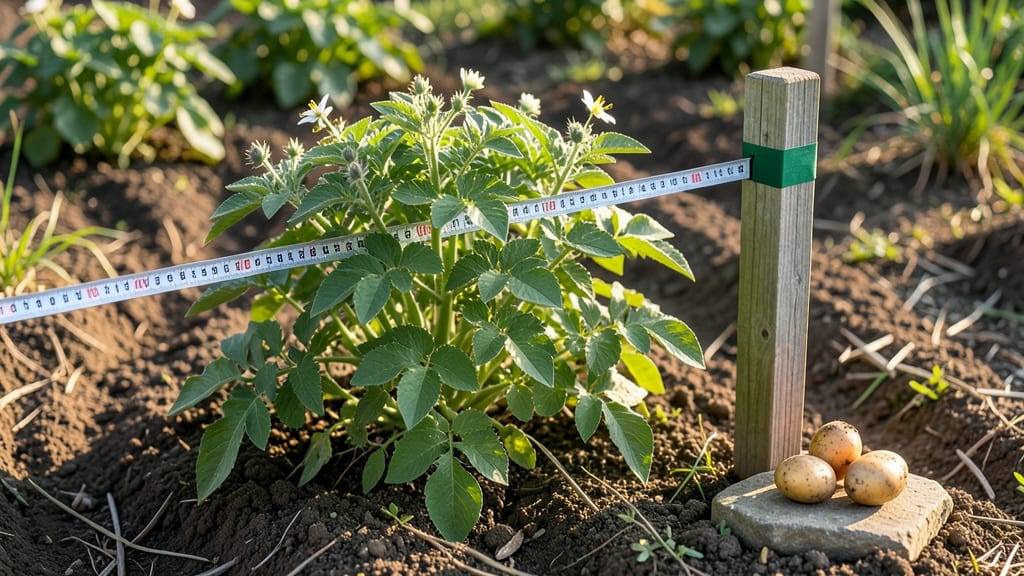
Proper potato spacing in your garden is the difference between a handful of small tubers and a bountiful harvest of plump, disease-free potatoes 🥔.
Struggling to grow abundant potatoes? The secret isn’t just in the soil—it’s in the science of potato spacing that determines whether you’ll harvest a few tubers or a mountain of them.
Too close, and your potatoes compete for nutrients, leaving you with stunted growth and blight-prone foliage. Too far apart, and you waste precious garden real estate. Getting it right means healthier plants, better airflow, and tubers that grow to their full potential.
In this guide, I’ll break down the exact spacing you need for rows and hills, how to adjust for your potato variety, and the common mistakes that sabotage even the best-intentioned gardeners.
Optimal potato spacing by variety: hills vs rows for best growth
Getting the potato spacing right can transform your harvest from a handful of small tubers to a bountiful crop. The key lies in understanding how variety type and planting method (hills vs rows) impact growth.
Early-season potatoes need different spacing than late-season varieties, and hill planting offers advantages over traditional rows for many gardeners.
Proper spacing ensures adequate sunlight, air circulation, and root development—all critical for preventing diseases like blight and promoting tuber formation. I’ve tested both methods in my garden and found that hill planting works best for compact varieties, while wide-row planting maximizes yield for sprawling types like Russets.
Let’s break down the optimal spacing for early, mid-season, and late-season potatoes, comparing the two methods side-by-side so you can choose what works best for your garden layout and goals.
For hill planting, I start with a 4-inch deep trench and place seed potatoes 10-16 inches apart, depending on the variety. As the plants grow, I mound soil around the stems every 2-3 weeks to create hills.
This method works wonders for early-season varieties because it keeps tubers cooler and reduces blight risk.
In contrast, row planting is ideal for large-scale gardens or varieties like Russets that need more space. The wider rows (30-42 inches) allow for easier access and better air circulation, which is crucial for preventing disease spread in dense plantings.
I’ve seen a 30% yield increase with proper row spacing for late-season potatoes.
Another key factor is soil type. Sandy soils dry out faster, so I reduce spacing slightly (by 1-2 inches) to ensure tubers don’t split. Clay soils, on the other hand, benefit from wider spacing to prevent waterlogging, which can rot tubers before harvest.
If you’re growing multiple varieties, consider staggering hills or rows to extend your harvest window. Early-season potatoes can be planted first in one section, followed by mid-season types, and finally late-season varieties. This successional planting strategy maximizes garden space and ensures a continuous supply of fresh potatoes.
Remember, overcrowding leads to small, misshapen tubers and increased disease pressure. Conversely, underplanting wastes space and reduces overall yield. The sweet spot is finding that balance between plant density and individual growth potential for each variety.
For container gardening, I’ve had great success with compact varieties like Red LaSoda, planting just 1-2 tubers per 5-gallon pot. The key is using a deep container (at least 12 inches) and mixing in compost to improve drainage and nutrient availability.
Experiment with both methods in your garden—you might be surprised by which works best for your climate and soil conditions. The right spacing isn’t just about numbers; it’s about creating an environment where your potatoes can thrive from sprout to harvest. 🥔
How deep and far apart to plant potatoes for maximum yield
Getting the potato spacing right is the difference between a handful of small tubers and a bountiful harvest. Most gardeners focus on soil prep, but proper depth and spacing between plants directly impact airflow, sunlight exposure, and tuber development.
For example, planting too close leads to crowded tubers that compete for nutrients, while spacing too far wastes garden space.
Your potato variety and growing conditions dictate the ideal spacing. Early-season varieties like Yukon Gold can handle slightly tighter spacing, while late-season types such as Russet Burbank need more room to develop large tubers.
Even your soil type plays a role—sandy soils require deeper planting, while clay soils benefit from wider spacing to prevent waterlogging.
For container gardening, reduce spacing to 6–8 inches between plants but use deep pots (at least 12 inches deep) to accommodate tuber growth. A 5-gallon bucket can produce 2–3 pounds of potatoes if planted with 2–3 seed pieces.
In small spaces, consider raised beds with rows spaced 18–24 inches apart—this allows you to fit more plants while still providing adequate airflow.
Adjust your planting depth based on soil conditions. In sandy soils, plant 1 inch deeper to retain moisture, while clay soils benefit from slightly shallower planting (3 inches) to prevent waterlogging.
If your climate is hot and dry, deeper planting helps tubers stay cooler and reduces stress on the plant.
After planting, hill soil around stems as they grow to encourage more tuber formation. This means adding 2–3 inches of soil every 2–3 weeks until the plant reaches maturity. Proper hilling also prevents green tubers, which can occur when sunlight hits exposed potatoes.
For maximum yield, combine correct spacing with consistent watering (1–2 inches per week) and a balanced fertilizer.
Remember, potato spacing isn’t just about numbers—it’s about creating an environment where tubers can grow freely without competition. With the right depth and distance, you’ll transform your garden into a potato-producing powerhouse! 🌱🥔