
Watering
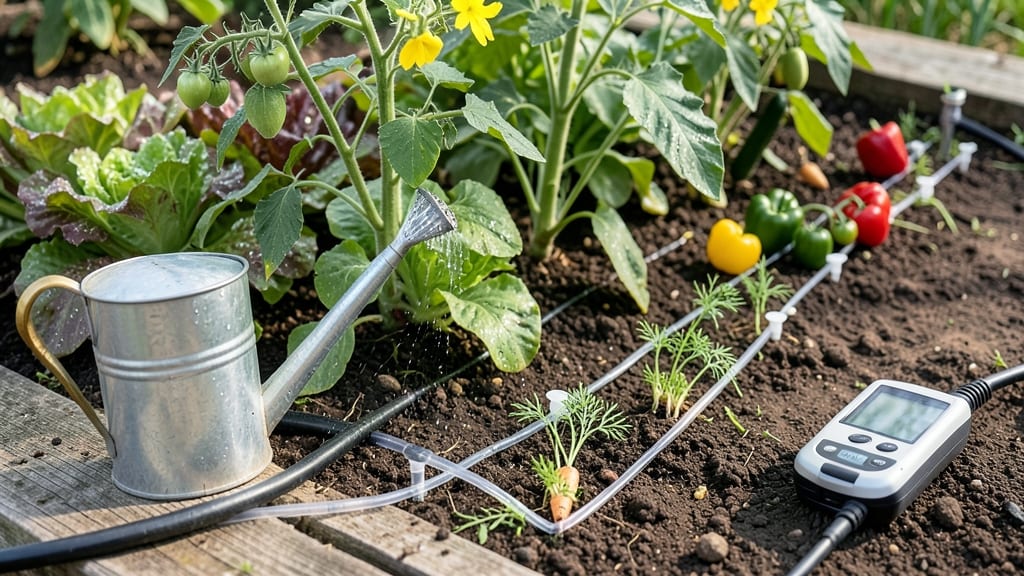
To water your veg garden correctly, check soil moisture every 1-3 days—not on a calendar, but by feeling the top inch of soil with your fingers.
Overwatering or underwatering your 🥬 garden can turn your green thumb into a brown disaster—yet most gardeners guess rather than measure. The secret to thriving plants lies in a simple, science-backed method that adjusts watering to your soil’s actual needs.
Why does this matter? Because consistent moisture is the difference between lush tomatoes and wilted lettuce. Too much water drowns roots; too little stresses plants during heatwaves. The key is learning your soil’s thirst signals.
Here’s how to master watering frequency—from the soil-moisture check method to adjusting for seasonal shifts and plant types, so you never over- or under-water again.
The soil-moisture check method: how to water veg plants perfectly
Mastering the art of watering your vegetable garden isn’t about following a rigid schedule—it’s about reading your soil’s signals. I’ve learned the hard way that guessing watering needs leads to wilted lettuce or blossom-end rot in tomatoes. The key?
Testing soil moisture at the right depth for each plant type. Root crops like carrots need deep, infrequent watering, while leafy greens prefer consistent surface moisture. Let’s dive into the foolproof method I use to keep my veggies thriving.
Start by understanding that soil type changes everything. Sandy soil drains fast, requiring daily checks, while clay holds moisture longer, needing every-other-day attention. Even in my USDA Zone 6a garden, summer heat demands different care than spring’s gentle rains.
The soil-moisture check method eliminates the guesswork by giving you tangible data—no more brown leaves or sad, drooping plants.
- Leafy greens (spinach, kale): 1 inch deep – Surface moisture matters most
- Root crops (carrots, beets): 3-4 inches deep – Encourages deep root growth
- Fruiting plants (tomatoes, peppers): 2 inches deep – Balances root and fruit needs
- Herbs (basil, cilantro): 1.5 inches deep – Prevents shallow root stress
- Insert your finger or meter to the target depth (see Step 1)
- If soil feels dry but crumbly, water immediately
- If soil feels moist but not soggy, wait 1-2 days
- If soil is waterlogged or muddy, skip watering and improve drainage
- Spring: Water every 2-3 days (soil warms up)
- Summer: Water daily or every other day (intense heat)
- Fall: Reduce to every 3-5 days (cooling temps)
- Seedlings: Keep soil consistently moist (water daily)
- Established plants: Water when top 1-2 inches dry (2-3x/week)
- Fruiting stage: Increase water to 1-2 inches per week (critical for yield)
- Harvest time: Reduce water slightly to prevent splitting (e.g., tomatoes)
Don’t overlook the time of day you water—morning is ideal because it allows foliage to dry before evening, reducing fungal risks like powdery mildew.
I’ve seen my zucchini plants thrive when watered at 7 AM versus struggling when watered at 7 PM. Even the container garden on my patio follows this rule, though potted plants need daily checks since they dry out faster.
For sandy soil, I’ve added organic mulch (straw or wood chips) to slow moisture loss, cutting watering needs by nearly 30%. In clay soil, I’ve improved drainage with compost to prevent root rot.
Both adjustments make the soil-moisture check method even more effective. The goal is to mimic nature—deep, infrequent rains for roots and light, frequent showers for leaves.
Watch for visual cues that confirm your method is working: vibrant green leaves, sturdy stems, and no wilting by midday. If you notice yellowing between veins, it’s often overwatering; if leaves curl upward, it’s underwatering.
These signs help fine-tune your approach. For example, my pepper plants always perk up after a deep watering during their flowering stage.
Remember, the soil-moisture check method isn’t set-and-forget—it’s a dynamic process. I adjust my schedule weekly based on rainfall, temperature swings, and even the phase of the moon (yes, really!).
Keep a gardening journal to track what works best for your specific veggies. Over time, you’ll develop an intuition that makes watering feel like second nature.
Start today by testing your soil’s moisture at the right depth for your top 3 veggies. You’ll see the difference in just a few days—healthier plants, better yields, and no more wasted water. Happy gardening! 💧
Watering frequency chart: how often to water common vegetables by type
Not all vegetables thirst the same way—root crops like carrots and potatoes store water differently than fruiting plants such as tomatoes or leafy greens like spinach. Container gardens also demand more frequent watering than in-ground beds because pots dry out faster.
Let’s break down the science so you can water with confidence, not guesswork.
Your soil type plays a huge role too: sandy soil drains quickly (water daily), while clay holds moisture longer (water every 3-4 days). The chart below shows general guidelines for mature plants in USDA Zone 6a—adjust for your climate by checking soil moisture 1-2 inches deep before watering.
For young seedlings, water lightly every 1-2 days to keep the top inch of soil moist—overhead watering can wash them away.
Once plants establish roots (usually 2-4 weeks after transplanting), switch to deeper watering to encourage stronger growth. Mulching with straw or wood chips retains moisture and cuts down on watering frequency by 30-50%.
Pro tip: Use a moisture meter or the finger test—stick your index finger 1-2 inches into the soil. If it feels dry, water; if damp, wait. Container gardens often need daily checks in hot weather, while in-ground beds might only need watering every 4-5 days.
Adjust based on rainfall and temperature—summer heat means more frequent watering, while cooler months slow evaporation.
Remember, overwatering is just as damaging as underwatering—it causes root rot and fungal diseases. Always water in the early morning to let foliage dry before nightfall, reducing the risk of mildew. With this chart as your guide, your veg garden will thrive without the guesswork.