
How To
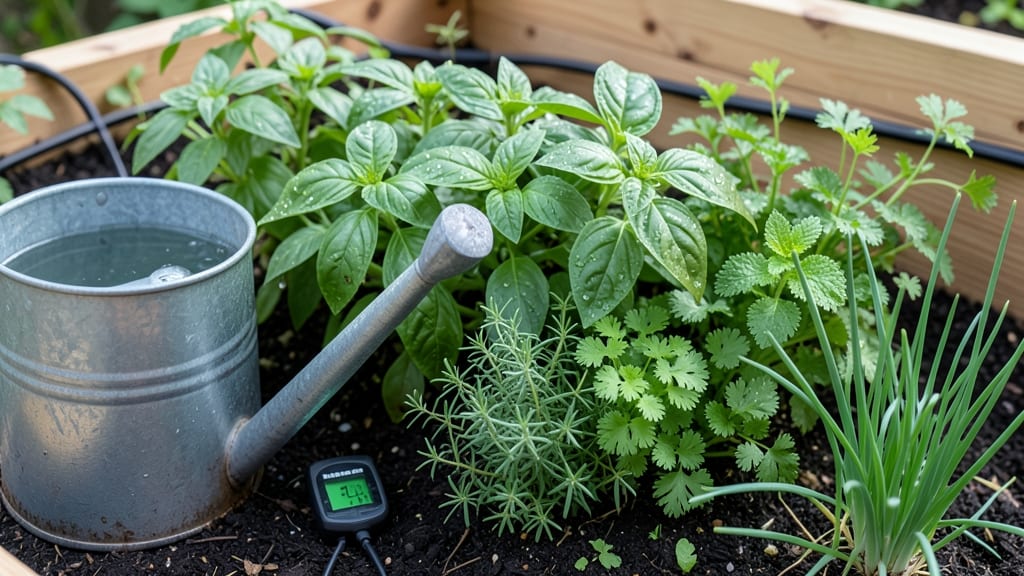
Watering your herb garden the right way keeps your basil, parsley, and thyme thriving instead of turning them into sad, wilted relics.
Struggling to keep your herb garden thriving? Overwatering or underwatering can kill your basil, mint, and cilantro faster than pests can—so timing your watering schedule just right is everything.
Most herbs need about 1 to 1.5 inches of water per week, but that changes with the season, your soil, and whether you’re growing in pots or in the ground. The key is checking moisture levels daily with a simple finger-dip test.
Below, I’ll break down exactly how often to water each type of herb, how to spot overwatering or drought stress, and the best times to water for perfect results—no guesswork required.
The finger-dip test: how to check herb garden moisture levels daily
Mastering the art of watering herbs starts with understanding their soil moisture needs. Unlike vegetables, herbs hate soggy roots but also wilting from thirst. The finger-dip test is my go-to method—simple, accurate, and works for basil, parsley, thyme, and more.
It takes just 10 seconds per plant and eliminates guesswork.
Here’s why this test beats the stick-in-the-soil approach: Your fingers detect subtle moisture changes that tools miss. Plus, it’s free, reusable, and works for both potted herbs and in-ground beds. Ready to save your herb garden from over/under-watering? Let’s dive in.
🌱 Step-by-Step Finger-Dip Test for Herb Gardens
- 1 Wash and dry your hands first—clean fingers prevent bacterial transfer to tender herb roots.
- 2 Insert your index finger 1–2 inches deep into the soil. For potted herbs, go halfway down the pot.
- 3 Press gently—if soil feels dry or crumbly, it’s time to water. If damp (like a wrung-out sponge), wait 1–2 days.
- 4 Adjust for pot size: Small pots (6-inch diameter) dry faster—check daily. Large containers or in-ground herbs may only need testing every 2–3 days.
- 5 Water deeply until moisture reaches 6 inches down for in-ground herbs or drains from pot holes. Shallow watering encourages shallow roots.
Pro tip: Test multiple spots in large herb beds—soil moisture varies by sun exposure. For container gardens, focus on the center of the pot, where roots cluster. If your finger comes out clean, your herbs are thirsty!
Herbs like basil and cilantro need consistent moisture, while rosemary and thyme tolerate slightly drier soil. Use the finger-dip test to customize watering based on your herb’s native climate. Mediterranean herbs (e.g., oregano) prefer drier conditions, while tropical herbs (e.g., mint) crave moisture.
Morning is the best time to test soil moisture. Why? Cooler temps mean less evaporation, and you’ll avoid fungal issues from evening watering. Plus, morning light helps dry dew off leaves, giving you an accurate read.
Watch for visual cues that confirm your finger-dip results: Wilted leaves signal thirst, while yellowing or moldy stems mean overwatering. Combine the test with these quick checks for foolproof herb care. Over time, you’ll anticipate needs without testing—like knowing your basil needs water every 2 days in summer.
For new gardeners, keep a watering journal. Note when you water, weather conditions, and how quickly soil dries. This helps you predict patterns and adjust your schedule. For example, clay pots dry slower than terracotta, and south-facing beds evaporate moisture faster.
Remember: Herbs hate soggy roots but also struggle with drought stress. The finger-dip test keeps your herb garden thriving by mimicking nature’s rhythm—watering only when the soil truly needs it. Once mastered, you’ll harvest lush, flavorful herbs all season long.
💧 Ready to try it? Grab your herbs and give the finger-dip test a shot—your basil and parsley will thank you!
Watering frequency chart for 15 most common herbs (with climate adjustments)
Not all herbs play by the same watering rules—Mediterranean herbs like rosemary and thyme practically beg for dry spells, while tropical herbs like cilantro and mint demand consistent moisture. Throw in climate variations (arid deserts vs. humid rainforests), and you’ve got a recipe for confusion.
But fear not: this chart breaks down the ideal watering schedules for 15 popular herbs, adjusted for three key climates—so you can keep your basil perky in Phoenix and your mint thriving in Miami.
First, let’s clarify the three climate zones we’re targeting: arid (low humidity, high evaporation), humid (high rainfall, poor drainage risks), and temperate (moderate conditions). For example, rosemary in Arizona’s heat might need watering once every 10–14 days, while the same plant in Florida’s humidity could require weekly checks.
The key? Soil moisture—not a calendar.
Below, you’ll find a side-by-side comparison of Mediterranean herbs (drought-tolerant) vs. tropical herbs (moisture-loving), with adjustments for each climate. Pro tip: Morning watering is non-negotiable—it reduces fungal risks and gives roots time to absorb moisture before the heat of the day.