
Watering
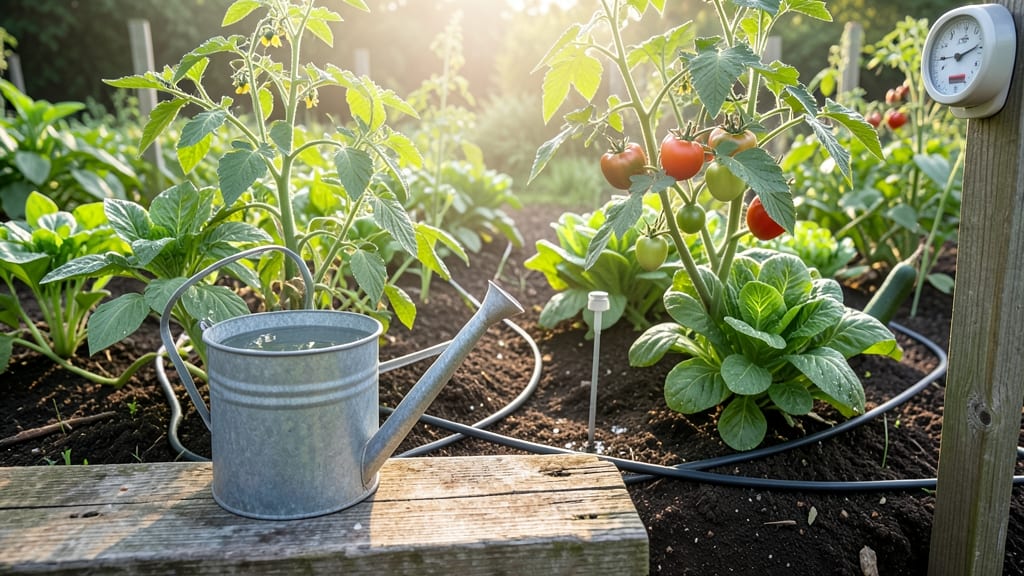
Watering a veggie garden often enough keeps your plants thriving, but too much or too little can ruin your harvest.
Overwatering or underwatering your vegetable garden can mean the difference between a bountiful harvest and wilted disappointment—so how do you get the moisture balance just right?
Most gardeners guess, but the truth is that soil type, plant needs, and weather all play a role. Sandy soil drains fast and needs frequent, shallow watering, while clay holds moisture longer and may only need deep watering every few days.
In this guide, I’ll break down the perfect watering schedule for your garden, including soil test tricks, plant-specific tips, and how to spot when you’re over- or under-doing it.
How often to water vegetable gardens: soil type and plant-specific guidelines
Watering your vegetable garden isn't a one-size-fits-all task—it depends on your soil type and the specific needs of your vegetable plants. Sandy soil drains quickly, while clay holds moisture longer, and loamy soil strikes the perfect balance.
Understanding these differences helps prevent overwatering or underwatering, both of which can ruin your harvest. Let's break down the best watering schedules for each soil type and plant category.
For leafy greens like lettuce and spinach, consistent moisture is key—they prefer daily watering in hot weather but can handle slightly less in cooler months. Root vegetables such as carrots and potatoes, on the other hand, need deep, infrequent watering to encourage strong root development.
Meanwhile, fruiting plants like tomatoes and peppers thrive with steady moisture to prevent blossom-end rot and cracking.
Soil type plays a massive role in how often you should water. Sandy soil drains water within hours, requiring frequent, light watering to keep roots hydrated. Clay soil holds moisture for days, so you’ll need deep watering every 3-4 days to avoid soggy roots. Loamy soil, the gold standard for gardens, retains moisture well but still benefits from weekly deep watering. Let’s dive into a detailed breakdown to help you tailor your watering schedule.
When it comes to leafy greens, think of them like a sponge—they need frequent hydration to stay crisp and tender. Plants like lettuce, kale, and spinach should receive about 1 inch of water per week, split into multiple sessions to prevent runoff.
If your soil is sandy, you might need to water twice daily during heatwaves, while clay soil may only need watering every other day. Always water in the early morning to reduce evaporation and fungal risks.
Root vegetables like carrots, radishes, and beets demand a different approach. These plants thrive with deep, infrequent watering to encourage long, straight roots. Aim for 1-2 inches of water per week, delivered in one or two sessions.
Overwatering can cause these veggies to split or rot, so consistency is key. Use a soaker hose or drip irrigation to deliver water directly to the root zone without disturbing the soil.
Fruiting plants, including tomatoes, peppers, and cucumbers, require steady moisture to produce high-quality yields. These plants need about 1.5 inches of water per week, especially during flowering and fruiting stages. Avoid wetting the leaves to prevent diseases like powdery mildew. Instead, focus on watering at the base of the plant and consider using mulch to retain moisture and regulate soil temperature.
One of the biggest mistakes gardeners make is watering at the wrong time of day. Watering in the evening can lead to fungal diseases because moisture lingers on leaves overnight. Instead, water in the morning so plants have time to dry out.
Another common error is uneven watering, which can cause stress and poor growth. Use a rain gauge or tuna can to measure water output and ensure consistent coverage across your garden beds.
To make watering easier, invest in mulch—it helps retain moisture, suppress weeds, and regulate soil temperature. Organic mulches like straw or wood chips break down over time, adding nutrients to the soil.
For container gardens, ensure pots have drainage holes and water when the top inch of soil feels dry. Remember, deep watering encourages stronger root systems, while shallow watering promotes weak, shallow roots.
Adjust your watering schedule based on weather conditions. During heatwaves, you may need to water daily, while cooler months might only require watering every few days. Always check the soil moisture before watering—stick your finger 2 inches deep.
If it feels dry, it’s time to water. If it’s moist, hold off until the next check. This simple trick saves water and keeps your plants thriving.
By tailoring your watering routine to your soil type and the specific needs of your vegetable plants, you’ll create the perfect environment for a bount
5 Soil test tricks to determine when your veggie garden needs water
Figuring out when your vegetable garden needs water doesn't require fancy tools—just your hands and eyes. I've used these simple soil tests for years to keep my tomatoes and peppers thriving without guessing.
The key is understanding what your soil feels and looks like when it's perfectly moist for root growth. Let's explore five easy methods that work for any garden bed.
First, remember that deep watering is always better than frequent shallow watering. It encourages roots to grow downward where they'll find moisture naturally. Most vegetables need about 1 inch of water per week, but this varies based on your soil type and local climate.
Start with these tricks to fine-tune your watering schedule for your specific garden conditions.
- 1 Finger Test: Stick your index finger 1-2 inches deep into the soil. If it feels dry at the first knuckle, it's time to water. For sandy soil, check the top inch—it dries faster.
- 2 Visual Inspection: Lift a small clump of soil. If it crumbles easily when dry, water immediately. For clay soil, look for cracks—this means it's desperately thirsty.
- 3 Weight Test: Pick up a handful of soil. If it feels light like dry sand, water thoroughly. Healthy soil should feel slightly damp but not soggy—like a wrung-out sponge.
- 4 Leaf Check: Gently tug on leaves. If they resist, the plant has enough water. Wilting leaves by midday are normal, but crispy edges or drooping by morning means you're underwatering.
- 5 Weather Adjustment: During heatwaves, check soil moisture daily. In droughts, water deeply every 2-3 days rather than light daily doses. Mulch helps retain moisture—always keep 2-3 inches around plants.
For container gardens, the rules change slightly. Potted plants dry out faster, so check soil moisture at the 1-inch depth every 1-2 days during hot weather.
I keep a small notebook near my raised beds to track when I water and how the soil feels—it's become my garden's moisture diary. This helps me spot patterns, like how my zucchini always needs water after three sunny days.
Remember that morning watering is ideal because it gives plants a full day to absorb moisture before evening. Watering at night can lead to fungal diseases like powdery mildew.
If you're using a drip irrigation system, set it to run for 20-30 minutes twice a week during normal conditions, then adjust based on these soil tests.
Pro tip: If your soil feels too wet after watering, it might be compacted. Loosen the top 2 inches with a fork to improve drainage. For sandy soil, consider adding compost to help retain moisture longer.
These tricks have saved my carrots from drying out and my lettuce from bolting too early—all without spending a dime on fancy gadgets. 💧