
Watering
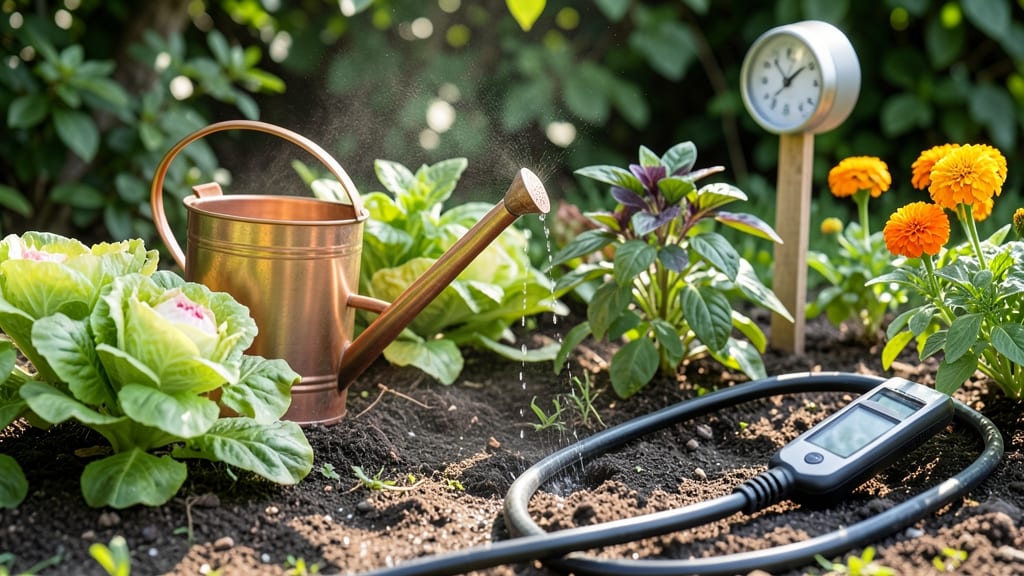
Watering your garden the right amount means knowing how much to water without drowning roots or leaving plants thirsty—it’s the difference between a thriving plot and wasted effort.
Most gardeners guess, and that’s how you end up with soggy soil one day and crispy leaves the next. The truth? Your plants are already telling you exactly what they need—you just have to check the soil first.
This method cuts water waste by half while keeping roots happy, whether you’re growing tomatoes in full sun or herbs in containers. No more schedules, no more overwatering—just a simple soil check that works for every plant in your 6a zone.
Below, I’ll walk you through the exact steps to read your soil like a pro, adjust for clay vs. sandy ground, and save water without stressing your 🌱 General Garden.
The 5-Step soil check method to water garden plants perfectly
Forget rigid watering schedules—they’re a one-size-fits-none disaster. Instead, let your soil and roots guide you. This 5-step finger test reveals exactly when to water, saving water and keeping plants thriving. The secret? Checking moisture at the root zone, where plants drink most deeply. No guesswork, just science-backed precision.
Start by understanding your soil type. Sandy soil drains fast and dries out quickly, while clay holds moisture like a sponge. Loamy soil (the gold standard) balances both.
Your watering needs will shift based on these textures. For example, tomatoes in sandy soil may need daily checks, while lavender in clay can go weeks between drinks.
Here’s the game-changer: depth matters. Most garden plants have roots extending 6-12 inches deep. Shallow-rooted herbs like basil only need 2-3 inches, while deep-rooted trees go 3 feet or more. The soil check method adjusts for these differences, so you’re never over- or under-watering.
🌱 The 5-Step Soil Check Method
-
Step 1: Choose the Right Time
Test soil in the morning (after evening dew evaporates) or late afternoon (before evening watering). Avoid checking after rain or watering—wait 4-6 hours for accurate results. -
Step 2: Pick Your Tool
Use a clean finger (for small pots) or a soil probe (for garden beds). For sandy soil, use your index finger; for clay, a wooden skewer works best. -
Step 3: Check Depth
Insert your tool to the root zone depth:- Herbs/vegetables: 2-3 inches
- Flowers/shrubs: 4-6 inches
- Trees: 12+ inches
-
Step 4: Assess Moisture
Gently squeeze soil. If it feels:- Dry and crumbly = Water now.
- Slightly damp = Wait 1-2 days.
- Wet or sticky = Skip watering.
-
Step 5: Water Deeply
If dry, water until moisture reaches the entire root zone. Use a slow, deep soak (10-15 minutes) to encourage roots to grow downward. Avoid shallow puddles—they waste water and promote root rot.
Pro tip: Mulch your garden beds to slow moisture loss. A 2-3 inch layer of straw or wood chips keeps soil cool and retains water, reducing how often you need to check. This is especially critical in hot climates, where soil can dry out in hours.
Watch for visual cues that confirm your soil check. Wilted leaves that perk up after watering? You’re on track. Yellowing leaves or mushy stems? You’ve overdone it. Adjust your checks based on these signals—your plants will thank you with healthier growth and bigger yields.
This method works for containers too. Lift pots to gauge weight—dry pots feel light, while moist ones feel heavier. For succulents and cacti, wait until the soil is completely dry before watering. Their shallow roots need less frequent drinks, but deep soaks when dry.
Remember: consistency is key. Check the same spot each time to track patterns. Over time, you’ll recognize when your roses need water every 3 days in summer vs. every 10 days in winter. No more wasted water, no more stressed plants—just perfectly hydrated gardens.
Start today with just one plant. Master the soil check method there, then expand. Before you know it, your entire garden will thrive on zero-waste watering, and your plants will reward you with lush, vibrant growth. 🌿
How often to water based on plant type and climate
Not all plants thirst the same way—your succulents might beg for water once a month, while your leafy greens demand hydration every other day.
Climate plays a huge role too: in hot/dry zones, even drought-tolerant plants need more frequent deep watering, while cool/humid climates can stretch watering intervals by 50%. The key? Understanding your plant categories and adjusting for local weather patterns.
Mulch changes everything—adding 2-3 inches of organic mulch (like straw or wood chips) can cut water needs by 30-50% by locking in moisture. But skip mulch for succulents and cacti, which rot in soggy conditions.
Below, we break down science-backed watering schedules for common garden types, so you can stop guessing and start growing with confidence.
Your local climate dictates the baseline, but soil type tweaks the formula. Sandy soil drains fast—water 2-3 times weekly in summer—while clay holds moisture longer, needing water only when the top 2 inches feel dry.
Pro tip: Use a moisture meter for accuracy, especially with high-value crops like tomatoes or strawberries.
Seasonal shifts matter too. In summer, double your watering frequency but water deeply at dawn to prevent evaporation. Winter? Cut back to monthly checks unless you’re growing winter greens like kale. Always adjust for rainfall: skip watering if you’ve had ½ inch of rain in the past 24 hours.
Mulch isn’t just for looks—it’s a water-saving superpower. A 3-inch layer of straw can reduce evaporation by 70% in summer heat. For container gardens, switch to coco coir or peat moss to retain moisture without compacting roots.
And remember: overwatering is the #1 killer of garden plants—always let the top 1-2 inches dry between waterings.
Start with these plant-specific guidelines, then fine-tune based on your yard’s microclimates. Shady spots stay moist longer, while sunny areas dry out faster. With this approach, you’ll save water, reduce waste, and grow healthier plants—no guesswork required.