
Light Requirements
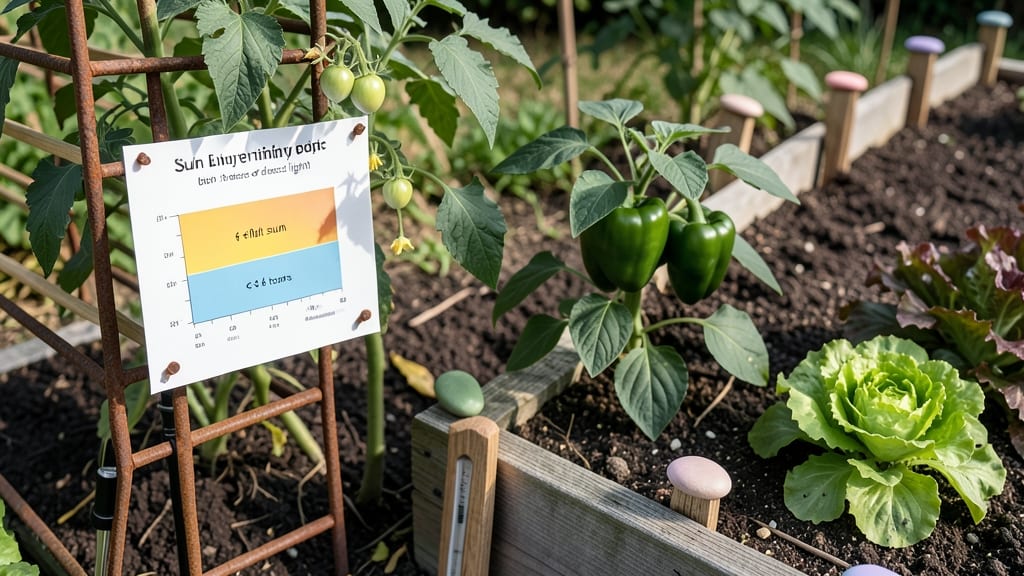
To grow a thriving vegetable garden, you’ll need to know how much sun for vegetable garden—6 to 8 hours of direct sunlight daily—but not all crops demand the same amount, and getting this wrong can mean the difference between a lush harvest and struggling plants.
Picture this: your tomatoes, peppers, and cucumbers wilted because they sat in partial shade, while your lettuce and spinach bolted into flower from too much sun. That’s why understanding sunlight needs isn’t just about hours—it’s about matching each plant to the right spot in your yard.
In this guide, I’ll break down exactly how much sun your vegetable garden needs, from full-sun lovers like tomatoes to shade-tolerant greens, plus how to tweak your layout for the best results—no matter where you live.
You’ll learn how to measure sunlight in your space, adjust for seasonal changes, and even salvage a shady patch without sacrificing your harvest.

Sunlight requirements for vegetable gardens: full sun vs partial shade explained
Understanding your garden's sunlight exposure is the first step to growing thriving vegetables. Most gardeners assume "full sun" means any sunny spot, but 6+ hours of direct sunlight is the real threshold for true full-sun crops.
Without this, even heat-loving plants like tomatoes and peppers will struggle to produce fruit. The good news? Even partial shade gardens (3-6 hours of sun) can yield bountiful harvests with the right crop selection.
Sunlight isn't just about hours—it's about light intensity and seasonal variations. Morning sun creates gentler conditions than harsh afternoon rays, while summer sunlight lasts longer than spring or fall.
I've learned through trial and error that microclimates in your yard can create dramatic differences in sun exposure, even just a few feet apart. Always measure your garden's sunlight patterns before planting.
Let me show you how these categories play out in real gardens. In my full-sun beds, tomatoes and peppers receive 7-8 hours of direct sunlight daily, producing bushels of fruit that ripen evenly. The key difference between 6 hours and 8 hours?
With 6 hours, you'll get fewer, smaller tomatoes—sometimes none at all. I've tested this with heirloom varieties that need intense light to develop their signature flavors.
For partial shade gardens, I focus on crops like bush beans and kale that thrive with 4-5 hours of morning sun. These plants grow faster and produce more tender leaves than their full-sun counterparts.
The trade-off? You'll rarely get large fruiting vegetables in these spots. My Swiss chard in partial shade grows to twice the size of the same variety in full sun, but produces fewer edible stalks.
Even full shade gardens (under 3 hours of sun) can be productive if you choose wisely. I've grown spinach and arugula under large oak trees with only dappled sunlight, harvesting tender greens all summer.
The challenge? These crops bolt quickly in heat, so I use shade cloth to extend their growing season. Never assume shade means failure—it just means different crop selection.
Seasonal shifts complicate things further. That 6-hour sun spot in June might only get 4 hours in December. I've learned to plant winter crops like kale and carrots in these areas, while reserving summer for sun-loving zucchini and cucumbers.
Your garden's sunlight map changes monthly, and adapting your planting schedule is the key to year-round success.
One common mistake I see is assuming reflective surfaces count as sunlight. A white fence might reflect light, but it doesn't replace direct rays. My south-facing raised beds get true full sun, while identical beds just 5 feet away on the east side get only 4 hours.
Always measure with a sunlight meter or observe your garden for a full week before planning.
For container gardens, the stakes are even higher. A 5-gallon pot of basil needs 6+ hours of sun to thrive, but the same pot in partial shade will produce leggy, flavorless leaves.
I've moved my herb containers multiple times during the day to ensure they get adequate light, especially in early spring when sunlight is weaker. Positioning is everything in small-space gardening.
Remember that soil temperature works hand-in-hand with sunlight. Full-sun areas heat up faster, while shaded spots stay cooler. This affects everything from seed germination to pest pressure.
My tomato plants in full sun need more frequent watering to prevent blossom-end rot, while my lettuce in partial shade stays crisp without extra care. Balance both factors when designing your garden layout.
Start by auditing your garden's sunlight patterns this week. Place a white board in potential planting spots and mark the sun's movement every hour. You'll be amazed at how quickly you can identify true full-sun, partial shade, and full-shade areas.
This simple exercise will save you from costly planting mistakes and ensure your vegetables get exactly what they need to thrive. 🌿
Best vegetables for low-sun gardens: thriving crops under 4-6 hours of light
If your garden only gets 4-6 hours of sunlight daily, don't despair—many vegetables thrive in partial shade and can still produce bountiful harvests. The key is choosing the right crops and optimizing growing conditions.
I've grown shade-tolerant vegetables in my own low-light garden with great success, and I'll share my top performers with you.
Leafy greens, herbs, and certain root vegetables are perfect for shady spots because they prioritize leaf production over fruit development. Even in partial shade, these plants can grow vigorously if given proper care. Let's explore my favorite low-sun vegetables that consistently deliver in my 4-6 hour sun garden.
For maximum productivity in low-sun gardens, focus on soil fertility and consistent moisture. Amend your soil with compost before planting, and use mulch to retain moisture. I've found that drip irrigation works best in shady areas, delivering water directly to roots without wetting foliage—reducing disease risk.
Remember that morning sunlight is more beneficial than afternoon sun in shady gardens. Position your shade-tolerant vegetables to receive direct morning light and filtered afternoon shade. This sunlight balance helps prevent bolting in leafy greens while still promoting healthy growth.
With the right shade-loving vegetables and proper care, you can enjoy a productive low-sun garden that rivals sun-drenched plots. Start with these top 5 low-light crops, and don't hesitate to experiment with other partial-shade vegetables like arugula or mustard greens for variety.