
Plants
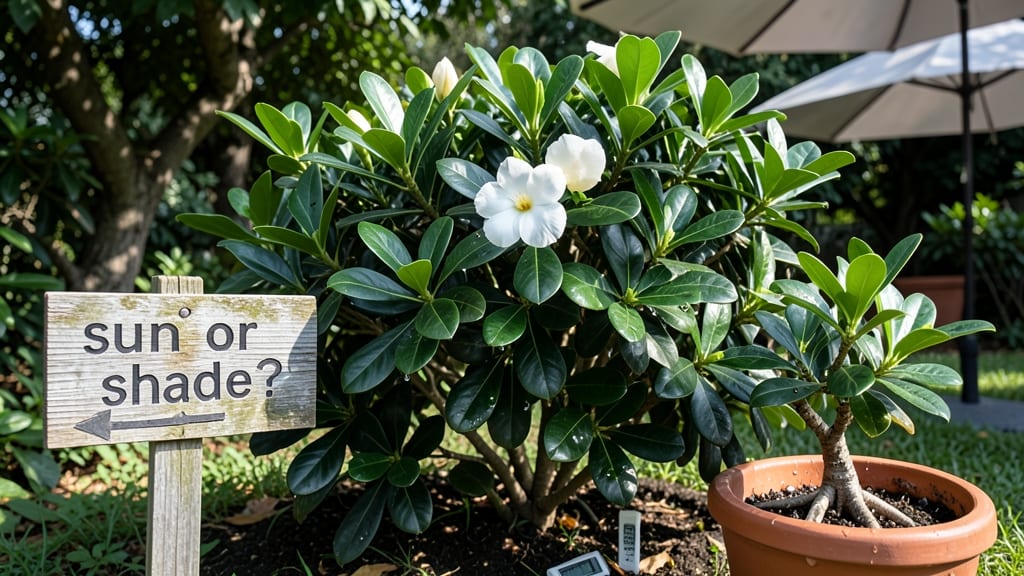
Gardenia plants thrive in partial shade with morning sun or filtered light, a balance that keeps their leaves lush and blooms abundant.
Struggling to get your gardenia plant to bloom? The battle between sun and shade might be the key—and getting it wrong could mean fewer fragrant flowers.
Too much direct sun can scorch those glossy leaves, while too little light leaves your plant stretching weakly toward the sky, never quite reaching its full potential.
In hotter climates like Zone 6a, afternoon shade is a must to protect your gardenia from wilting. Meanwhile, cooler areas can handle a few hours of morning sun without stress.
The trick is finding that sweet spot where your plant gets just enough light to fuel its growth without burning out.
Below, I’ll show you how to read your gardenia’s light needs, adjust its position for the best blooms, and troubleshoot common issues like leaf burn or sparse flowering. With the right light balance, your gardenia will reward you with glossy foliage and intoxicating blooms year after year.
 Best Window Placement
Optimal sunlight requirements for gardenia plants: how much light do they need?
Gardenia plants thrive when given just the right amount of sunlight—a balance that feels like a gentle hug from the sun rather than a scorching kiss.
These tropical beauties need bright, indirect light for most of the day, but too much direct sun can turn their leaves crispy, while too little shade will leave them struggling to bloom. Think of it as finding that perfect morning coffee spot where you get enough energy without burning out.
In nature, gardenias grow under the dappled shade of taller trees, where they receive filtered sunlight that mimics their ideal growing conditions.
This means they’re not fans of harsh afternoon rays, especially in hot climates where temperatures can soar. 4-6 hours of morning sun followed by afternoon shade is the golden rule for most gardenia varieties, but let’s break it down further for different climates.
Science note: Gardenias have a unique photosynthesis efficiency—they prioritize energy for flower production over leaf growth when light conditions are just right. Too much direct sun triggers photoinhibition, where the plant’s ability to convert light into energy shuts down, leading to leaf burn. Conversely, insufficient light causes etiolation, where stems stretch and leaves pale as the plant desperately reaches for more energy.
Here’s how to tailor sunlight for your gardenia based on where you live, whether you’re in a tropical paradise, a temperate zone, or a Mediterranean climate. The key is adapting to your local sun intensity and seasonal shifts.
In tropical climates, where the sun is relentless, gardenias need protection from midday intensity. I’ve seen gardenias thriving under the eaves of patios or near lattice screens that filter sunlight like a sheer veil.
Even in these warm zones, 3-4 hours of morning sun is plenty—any more risks leaf scorch, especially during peak summer months.
For temperate zones, like much of the U.S., gardenias love a morning sunbath followed by afternoon shade. Position your plant near an east-facing window or under a light canopy that blocks harsh afternoon rays.
In cooler months, you might notice your gardenia slowing down—this is normal, but if leaves start yellowing, it’s a sign it needs more light, not less.
In Mediterranean climates, where summers are hot and dry, gardenias appreciate a longer morning sun exposure—up to 5-6 hours—but must retreat into full shade by early afternoon. I’ve used whitewashed walls or reflective surfaces to bounce light gently onto the plant while keeping direct rays at bay.
This trick mimics the natural filtered light they’d get under a tree canopy.
If you’re growing gardenias indoors, grow lights are a game-changer. These plants need 12-14 hours of light daily to mimic their tropical origins. A full-spectrum LED bulb placed 12-18 inches above the plant will do the trick.
Rotate the plant weekly to ensure even growth, as indoor gardenias can become lopsided if they lean toward the light source.
Pro tip: Pay attention to your gardenia’s leaves. Healthy foliage should be deep green and glossy. If you see yellowing between veins, it’s often a sign of too much direct sun.
Conversely, pale or sparse leaves mean it’s not getting enough light. Adjust gradually—sudden changes can shock the plant, especially during its blooming season.
Remember, gardenias are not low-maintenance plants, but they’re worth the effort. With the right light balance, you’ll be rewarded with fragrant, creamy-white blooms that’ll make your garden smell like a tropical paradise.
Start with these guidelines, observe your plant’s response, and tweak as needed—your gardenia will thank you with lush growth and stunning flowers.
Signs your gardenia isn’t getting the right light: troubleshooting leaf burn, yellowing, OR no blooms
If your gardenia plant is struggling with leaf burn, yellowing leaves, or no blooms, light exposure is likely the culprit. Gardenias thrive in bright indirect light but can suffer when given too much direct sun or insufficient light.
These issues often signal your plant is either stressed from overheating or stretched and weak from lack of light.
First, observe your gardenia’s leaves. Brown patches or crispy edges on leaves exposed to harsh afternoon sun are classic signs of leaf scorch. Meanwhile, pale yellow leaves or elongated stems reaching toward light sources indicate etiolation, a condition where the plant stretches unnaturally to seek light.
Both problems can lead to bud drop or fewer flowers, leaving you with a less fragrant garden.
⚠️ WARNING: Light Shock in Gardenias ⚠️ Moving your gardenia from low-light conditions to full sun too quickly can cause irreversible damage. Gardenias are sensitive to sudden changes, leading to leaf drop or wilting.
If you’re adjusting light exposure, do it gradually over 1-2 weeks by increasing sunlight exposure by 1 hour per day. For indoor plants, rotate the pot quarter-turns weekly to ensure even light distribution and prevent lopsided growth.
Diagnosing the exact issue starts with leaf color and placement. Leaves turning yellow between veins often signals overwatering or poor drainage, but if the yellowing is paired with leaf drop, it’s likely a light deficiency.
Check the plant’s stem thickness—thin, leggy stems are a red flag for insufficient light. Meanwhile, dark brown spots on leaves exposed to direct sun are a clear sign of sunburn.
Seasonal adjustments are key to keeping your gardenia healthy year-round. In summer months, provide afternoon shade between 12 PM and 4 PM to prevent leaf burn, especially in hot climates. Use a lightweight sheer curtain or lattice screen to diffuse harsh rays.
In winter, supplement natural light with a grow light for 12-14 hours per day if your gardenia isn’t receiving enough sunlight, particularly in north-facing windows.
To fix etiolation, move your gardenia to a brighter spot but avoid direct midday sun. If outdoors, plant it where it receives morning sun and afternoon shade, such as under a dappled tree canopy or near a north-facing wall.
For indoor plants, an east-facing window is ideal, providing gentle morning light without the intensity of afternoon rays. If your gardenia is already showing signs of leaf burn, trim the damaged leaves with sterilized pruners and move it to a shadier location immediately.
Encourage blooming by ensuring your gardenia gets 4-6 hours of bright indirect light daily. If buds form but drop before opening, it’s often due to temperature fluctuations or inconsistent light.
Use a thermometer to monitor temperatures—gardenias prefer 65-75°F and can drop buds if exposed to cold drafts or direct heat sources. Pair proper light with consistent watering and acidic fertilizer to revive your gardenia and restore its fragrant blooms.