
Flowers
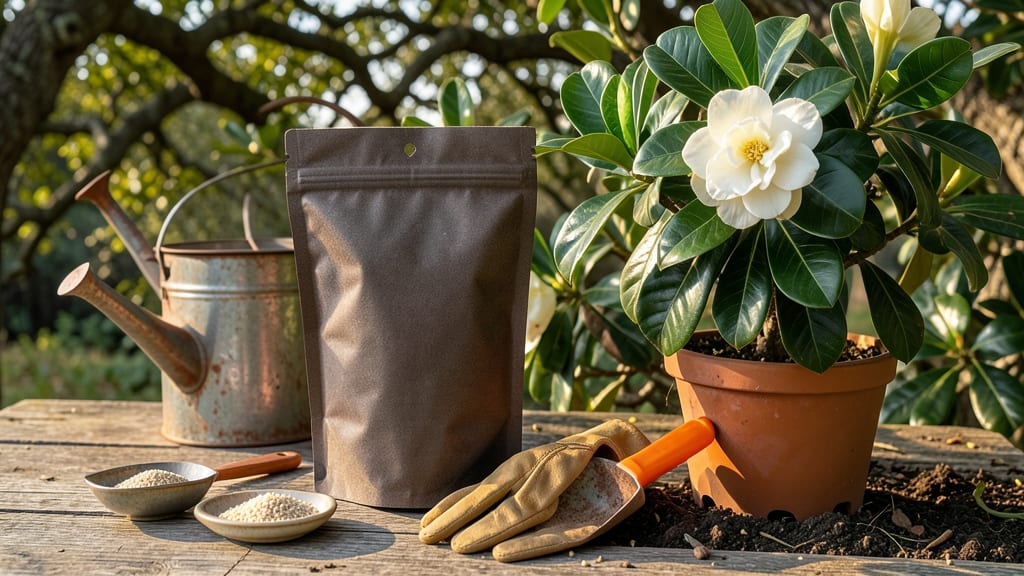
Fertilizing gardenia flowers with the right gardenia flower fertilizer is the key to those heavy, fragrant blooms you’ve been dreaming of.
Picture this: You’ve pruned, watered, and even pruned again, but your gardenia still throws out sparse, weak flowers—or worse, none at all. The problem might not be your green thumb but the fertilizer you’re using (or not using correctly).
Gardenias are picky eaters, craving a slightly acidic soil mix with just the right NPK ratio to fuel their blooms without burning their roots.
In this guide, I’ll walk you through the best fertilizers for gardenias—organic and synthetic options—plus the exact feeding schedule to avoid over- or under-feeding. You’ll also learn how to spot signs of nutrient stress and adjust your approach for lush, fragrant blooms all season long.
Ready to turn your gardenia into the star of your yard? Let’s get started with the pH-balanced fertilizer secrets that make the difference between a shrub and a showstopper.
How to choose the best pH-balanced fertilizer for gardenia flowers
Gardenia flowers are famous for their intoxicating fragrance and glossy, dark green leaves—but achieving those showstopping blooms starts with the right pH-balanced fertilizer. These acid-loving plants thrive when soil pH sits between 4.5 and 6.0, and their nutrient needs shift dramatically from leafy growth to bloom production.
Without the correct balance, you might end up with lush foliage but fewer flowers or even yellowing leaves. Let’s break down how to choose a fertilizer that delivers vibrant blooms and rich fragrance year after year.
First, understand that gardenias are heavy feeders but sensitive to over-fertilization. A high-nitrogen fertilizer (like 30-10-10) will produce lots of leaves but fewer flowers, while a phosphorus-rich formula (like 10-20-10) encourages blooming.
The ideal NPK ratio for gardenias is around 8-3-9 or 10-10-10, with extra micronutrients like iron and magnesium to prevent yellowing leaves. Pair this with an acid-forming fertilizer to maintain that critical pH range.
🌸
| Factor | Ideal Specification | Why It Matters |
|---|---|---|
| NPK Ratio | 8-3-9 or 10-10-10 | Balances growth and blooms; avoids leafy overgrowth. |
| Soil pH | 4.5–6.0 | Acidic soil unlocks nutrient absorption for vibrant blooms. |
| Micronutrients | High iron, magnesium, zinc | Prevents yellowing leaves and promotes fragrance. |
| Organic vs. Synthetic | Both (e.g., fish emulsion or 10-10-10 granular) | Organic slow-releases nutrients; synthetic offers precise ratios. |
| Application Time | Early spring & early fall | Encourages root growth and bloom production. |
When selecting a fertilizer, you’ll encounter two main types: organic and synthetic. Organic options like fish emulsion, composted manure, or bone meal release nutrients slowly, improving soil structure over time. They’re ideal if you prioritize long-term soil health and want to avoid nutrient spikes that can burn roots.
On the other hand, synthetic fertilizers like 10-10-10 or 8-3-9 offer precise nutrient ratios and faster results, which is great if you’re correcting a deficiency quickly.
For gardenias, I recommend starting with a synthetic acid-loving plant fertilizer in spring, then switching to an organic compost tea in fall to feed roots without overloading the plant.
One of the biggest mistakes gardeners make is ignoring micronutrients. Gardenias are particularly sensitive to iron and magnesium deficiencies, which show up as yellowing leaves (a condition called chlorosis).
Look for fertilizers labeled with "acid-loving plant" or "azalea/camellia" formulas, as these typically include the extra iron chelates and micronutrients your gardenias crave. For example, Miracle-Gro Azalea, Camellia, and Rhododendron Food is a popular synthetic choice, while Dr. Earth Acid-Loving Plant Fertilizer is a top organic pick.
If your gardenias are already struggling, a soil pH test is your first step. You can grab a digital pH meter or send a soil sample to your local cooperative extension office for a professional analysis.
If the pH is too high (alkaline), amend the soil with elemental sulfur or peat moss to lower it gradually. For potted gardenias, use rainwater or distilled water instead of tap water, as many municipal water supplies are alkaline and can raise soil pH over time. 🌱
Timing your fertilizer applications is just as critical as the product itself. Feed gardenias every 4–6 weeks during active growth (spring through early fall), but reduce feeding in summer to avoid stressing the plant during peak heat.
In late summer, switch to a low-nitrogen, high-phosphorus fertilizer to signal the plant to focus on bloom production rather than leafy growth. Always apply fertilizer in the early morning to prevent leaf burn from the sun’s intensity.
Water the soil thoroughly before and after applying fertilizer to help nutrients penetrate the root zone.
For potted gardenias, use a water-soluble fertilizer diluted to half-strength to avoid salt buildup in the soil. Flush the pot with water every 3–4 months to prevent root damage from excess salts.
If you notice crusty white residue on the soil surface, this is a sign of over-fertilization—rinse the pot immediately and reduce future applications. 💧
Finally, don
Step-by-step guide: when and how to fertilize gardenias for optimal blooms
Gardenia flowers thrive when fed with the right nutrients at the right time. Unlike many plants, they hate high-nitrogen fertilizers—those encourage leafy growth but stunt blooms. Instead, focus on a balanced formula with phosphorus to boost flowers and micronutrients like iron for vibrant color.
Timing is everything: fertilize too late, and you’ll delay next year’s blooms.
Your gardenias need a seasonal feeding schedule tailored to their growth cycle. Start in early spring when new growth appears, reduce in summer’s heat, and give a final boost in early fall.
Over-fertilizing in winter stresses the plant, while under-fertilizing in spring means fewer blooms. Let’s break it down step by step for healthy, fragrant gardenias all season.
🌱 Step-by-Step Fertilizing Guide for Gardenias
-
Step 1: Test Soil pH
Gardenias love acidic soil (pH 5.0–6.5). Use a soil test kit to check—if pH is too high, amend with sulfur or peat moss before fertilizing. -
Step 2: Early Spring Feeding (March–April)
Apply a balanced acid fertilizer (8-3-9 or 10-10-10) at 1 tbsp per plant. Water deeply to activate roots. Repeat every 6 weeks until June. -
Step 3: Summer Light Feeding (July–August)
Switch to a low-nitrogen, high-phosphorus formula (e.g., 5-10-5). Feed every 8 weeks to avoid burning. Water morning-only to prevent fungal issues. -
Step 4: Early Fall Boost (September)
Use a slow-release fertilizer with micronutrients (like Miracle-Gro Shake ‘n Feed Azalea) to strengthen roots before dormancy. Stop by October. -
Step 5: Foliar Feed for Extra Shine
Mix 1 tsp liquid iron chelate in 1 gallon of water and spray leaves every 4 weeks in spring/summer. This fixes yellowing (chlorosis) and enhances bloom color. -
Step 6: Winter Rest (No Fertilizer)
Gardenias dormant in winter. Skip feeding entirely—resume in early spring when buds form. Over-fertilizing now causes root burn.
Watch for signs of over-fertilization, like brown leaf tips or yellowing between veins—this means too much salt or nitrogen. Flush the soil with water to correct it. Conversely, pale leaves or stunted growth signal under-fertilization. Adjust your schedule or switch to a more soluble fertilizer for better absorption.
For potted gardenias, use half the recommended dose since roots have less soil to absorb nutrients. Container plants also need more frequent watering to leach excess salts. Mulch with pine bark to maintain acidity and retain moisture—this mimics their natural tropical habitat.
Consistency is key: stick to your 6-week spring/summer schedule and early fall boost. With the right timing and nutrients, your gardenias will reward you with glossy leaves and intoxicating blooms from spring through fall. 🌸