
Light Requirements
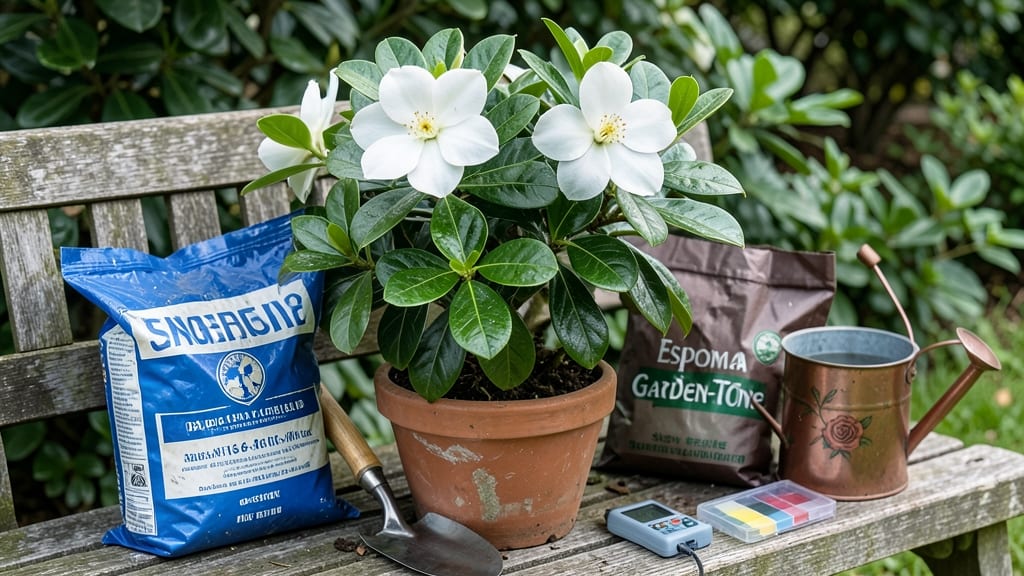
Your gardenia’s fertilizer requirements are the key to those fragrant, glossy blooms 🌸 — but get it wrong, and you’ll end up with leafy stems and zero flowers.
If you’ve ever poured on the fertilizer hoping for more gardenias, only to watch buds drop or leaves yellow, you’re not alone. The issue isn’t just what you feed it—it’s when, how much, and the right NPK ratio for acid-loving plants like yours.
Gardenias thrive on a precise balance of nutrients, especially phosphorus for blooms and potassium for root strength. Too much nitrogen, and you’ll get lush leaves but no flowers. Too little, and your plant struggles to recover.
In this guide, I’ll break down the exact fertilizer types, seasonal schedules, and troubleshooting tips to keep your gardenia blooming like a tropical paradise—without the guesswork.
Optimal nitrogen-phosphorus-potassium ratios for gardenia blooms
Gardenia plants thrive on precise NPK ratios that balance their need for vibrant foliage growth and stunning flower production. Unlike many flowering plants, gardenias prefer a slightly lower nitrogen ratio to prevent leafy overgrowth at the expense of blooms.
Understanding these ratios—like 8-3-9 or 10-10-10—will help you choose the right fertilizer for your gardenia’s current growth phase.
The key to gardenia blooms lies in phosphorus-rich fertilizers during flowering seasons. Phosphorus (the middle number in NPK) encourages strong root development and bud formation, while potassium (the last number) boosts disease resistance and flower longevity.
However, too much nitrogen (the first number) can lead to lush leaves but fewer blooms, which is why gardenias often do best with a balanced or phosphorus-heavy formula.
Here’s how to decode fertilizer labels to pick the best NPK ratio for your gardenia’s needs:
For houseplant gardenias, opt for a water-soluble fertilizer with a 10-10-10 ratio diluted to half-strength. These plants benefit from monthly feedings during their active growing months (spring and summer), but avoid fertilizing in winter when growth slows.
Always water your gardenia thoroughly before applying liquid fertilizer to prevent root burn.
If your gardenia’s leaves turn yellow with brown edges, it may be getting too much nitrogen. Switch to a low-nitrogen, high-phosphorus fertilizer like 3-12-6 to encourage blooming. Conversely, if buds form but fail to open, your plant might need more potassium.
A 5-5-10 ratio can help remedy this common issue while supporting overall plant health.
Organic options like composted pine bark or fish emulsion (with a 5-3-2 ratio) are excellent for gardenias, as they slowly release nutrients and maintain the soil’s acidic pH (5.0–6.5).
Mix organic amendments into the top 2-3 inches of soil in early spring to give your gardenia a steady nutrient supply throughout the growing season.
Pro tip: Pair your NPK fertilizer with a micronutrient boost like Epsom salt (magnesium sulfate) every 2 months. This helps prevent yellowing between leaf veins, a sign of magnesium deficiency that’s common in gardenias.
Dissolve 1 tbsp of Epsom salt in a gallon of water and apply it as a foliar spray or soil drench for best results.
Remember, gardenias are sensitive to salt buildup, so always flush the soil with water after fertilizing. This prevents root damage and ensures your plant absorbs nutrients efficiently. With the right NPK balance and consistent care, your gardenia will reward you with abundant, fragrant blooms all season long.
Step-by-step guide to fertilizing gardenias for continuous blooms
Your gardenia’s fragrant blooms depend on precise fertilization timing and methods. Unlike many plants, gardenias thrive on low-nitrogen, high-phosphorus feedings to encourage flowers over foliage. The key? A spring feeding to kickstart growth and summer feedings to sustain blooms—never overdoing it.
I’ve learned the hard way that too much nitrogen leads to lush leaves but fewer flowers, while skipping phosphorus starves your plant of the energy it needs to produce those iconic white blooms.
Start by testing your soil’s pH level—gardenias demand acidic soil (5.0-6.5). If your soil is alkaline, amend it with sulfur or peat moss before fertilizing. I use a slow-release granular fertilizer in spring and switch to liquid feeds during summer for quick nutrient absorption.
The goal is to mimic nature’s gradual nutrient release while avoiding salt buildup that can burn roots.
🌱 Step-by-Step Fertilizing Schedule for Gardenias
-
Step 1: Early Spring (March-April)
Apply 1 tbsp granular fertilizer (8-3-9 or 10-10-10) per plant after pruning. Water deeply to activate nutrients.
-
Step 2: Mid-Summer (June-July)
Switch to liquid fertilizer (diluted to half-strength) every 4-6 weeks. Feed in the early morning to prevent leaf burn.
-
Step 3: Foliar Feeding (Optional)
Spray seaweed extract or iron chelate on leaves every 4 weeks for instant nutrient absorption. Ideal for plants showing yellowing between veins.
-
Step 4: Late Summer (August-September)
Reduce feeding to half-strength to prepare for fall dormancy. Avoid fertilizing in cool zones after September 1st.
-
Step 5: Winter (October-February)
Skip fertilization entirely. Focus on watering adjustments and mulching to protect roots in colder climates.
Pro Tip: Always water before and after fertilizing to prevent root burn. Use a rain gauge to ensure 1-2 inches of water per application.
For container gardenias, I halve the fertilizer amounts but feed more frequently—every 3-4 weeks during the growing season. Containers dry out faster, so their roots need consistent nutrient access.
I also top-dress with composted pine bark annually to maintain acidity and improve soil structure. This organic matter releases nutrients slowly, reducing the risk of over-fertilization.
Watch for signs of stress like yellow leaves or bud drop—they’re your gardenia’s way of saying “too much salt” or “wrong nutrient balance.” If you see these, flush the soil with water for 10 minutes to leach out excess fertilizer.
I’ve saved multiple gardenias this way! For severe cases, repot into fresh, acidic potting mix.
Remember, gardenias are sensitive to salt buildup, so always use rainwater or distilled water for liquid fertilizers. If your tap water is hard, collect rainwater in barrels for fertilizing. This small change has doubled my bloom count over the past two seasons.
With the right schedule and soil care, your gardenia will reward you with months of fragrant flowers—not just a single burst.