
Tools
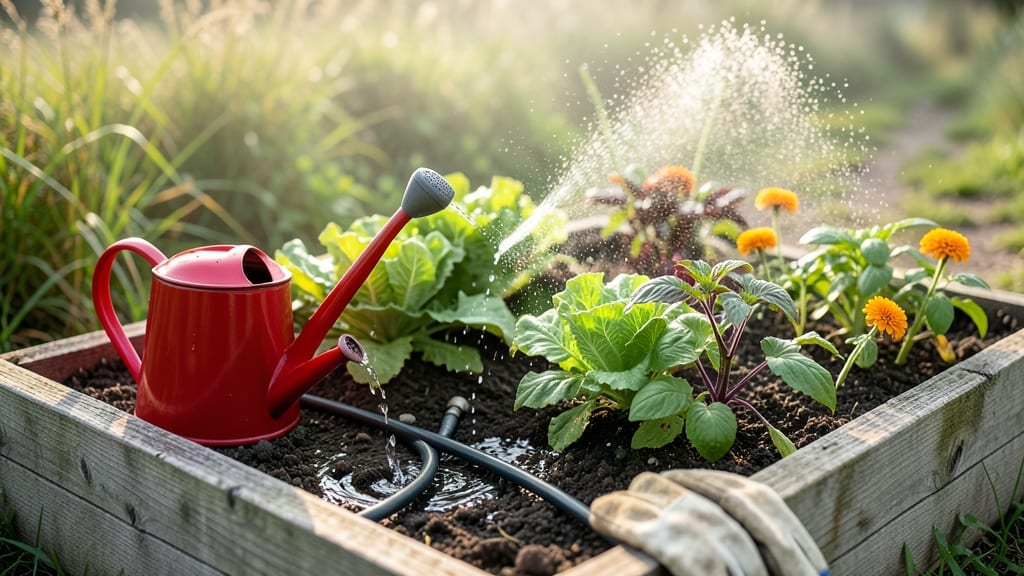
Watering your garden bed properly is the single most important factor in keeping your plants thriving—yet most gardeners either drown their roots or leave them parched.
Picture this: you’ve spent hours planting your 🌱 garden bed, only to watch it wither because the watering schedule was off. Maybe you assumed more water was better, or maybe you thought drip irrigation was too complicated.
The truth? The right method can save you time, money, and a whole lot of frustration.
In this guide, I’ll break down the science behind efficient watering, comparing drip irrigation to hand watering so you can decide which approach works best for your plants—and your schedule. We’ll also cover the signs of over- or under-watering and how to fix them before it’s too late.
By the end, you’ll know exactly when to water, how much to give, and which tools will help you keep your garden bed lush without the guesswork. Let’s get started!
How drip irrigation systems transform garden bed watering efficiency
If you've ever watched water run off your garden beds after a hose session, you know how much of that precious resource gets wasted. Drip irrigation changes the game by delivering water directly to plant roots, where it matters most.
Unlike overhead sprinklers that lose 30-50% of water to evaporation and runoff, drip systems target the root zone with surgical precision. This isn't just theory—studies show gardens using drip irrigation can save up to 60% more water while boosting plant health.
The magic happens with emitters and micro-tubing that create a slow, steady drip right at the base of plants. No more soggy leaves or fungal diseases from wet foliage.
Instead, roots get consistent moisture, which means fewer weeds (they don't thrive in dry soil) and healthier plants with deeper root systems.
For gardeners in USDA Zone 6a, where spring and fall are critical growing windows, this efficiency can mean the difference between a thriving garden and one struggling through inconsistent watering.
Let's break down how drip irrigation stacks up against traditional methods in key areas—water efficiency, plant health, and ease of use.
The root zone targeting in drip irrigation is a game-changer for plants like tomatoes and peppers, which need consistent moisture at their base. Traditional sprinklers often wet the leaves, creating the perfect conditions for powdery mildew and other fungal diseases.
With drip systems, water stays where it's needed—right at the roots—so your plants develop stronger, deeper root systems that can access nutrients more efficiently. This is especially critical during Zone 6a's hot summers, where water stress can quickly turn your garden from lush to limp.
Another major advantage is moisture consistency. Drip systems release water slowly over time, mimicking natural rainfall. This means no more dry pockets in your soil where roots struggle to find moisture.
For example, if you're growing herbs like basil or flowers like marigolds, they'll thrive because their roots never dry out completely. In contrast, overhead sprinklers can create uneven moisture levels, leaving some plants thirsty while others sit in soggy soil.
Let’s talk about water savings. A typical garden bed using overhead sprinklers might lose 30-50 gallons per hour to evaporation and runoff. Drip irrigation, however, delivers water at a rate
When hand watering still beats automation for your garden beds
While drip irrigation systems offer convenience, there are times when my hands—and a simple watering can—are the best tools for the job. For small gardens or delicate plants, manual watering gives you precision that automation simply can't match.
Plus, it’s the only way to monitor soil moisture firsthand and spot early signs of pest infestations or disease before they spread.
Even with the best drip systems, clogged emitters or uneven water pressure can leave some plants thirsty while others drown. Hand watering ensures every plant gets the right amount of moisture, especially for container gardens or raised beds where automation might miss spots.
It’s also the only way to gently water seedlings or newly transplanted flowers without disturbing their roots.
My go-to hand watering tools include a long-spout watering can for deep root zones and a flexible wand for hard-to-reach spots. For early morning watering (the best time to reduce evaporation and disease), I set a 30-minute timer to ensure I don’t overwater.
This method also lets me adjust for weather—skipping watering after rain or giving extra to plants in full sun.
Don’t overlook the psychological benefits of hand watering, either. There’s something satisfying about seeing your plants perk up after a deep soak. Plus, it’s a great way to spot weeds or check soil health while you work.
For large gardens, I use hand watering as a spot-check method to calibrate my drip system’s performance.
Even in a tech-driven world, sometimes the human touch is what your garden needs most. Whether it’s a small herb garden or a newly planted perennial bed, hand watering ensures no plant is left behind—and that’s worth the extra effort. 🌱