
Light Requirements
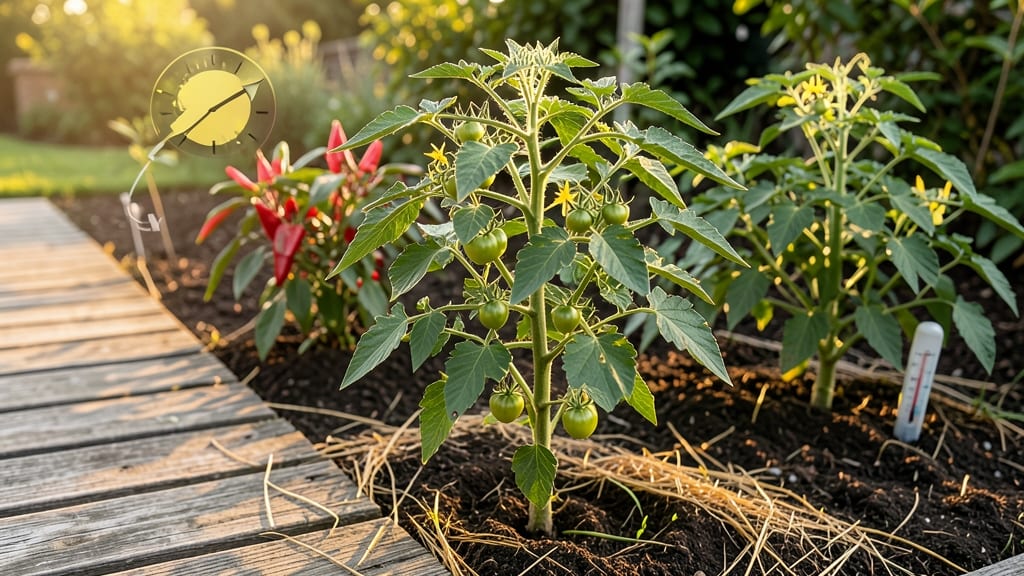
Vegetable gardens need morning sun—about 6 to 8 hours daily—because cooler temperatures help plants retain moisture and avoid stress, while intense afternoon rays can damage tender leaves. Most crops grow best with gentle morning light and partial afternoon shade, especially in warmer climates.
Morning sunlight provides the perfect balance of warmth and gentleness, allowing plants to photosynthesize efficiently without overheating. 🌞 The lower angle of morning sun spreads light more evenly across leaves, reducing the risk of scorching that often occurs when plants face peak afternoon heat.
I've seen firsthand how tomatoes and peppers thrive with morning exposure but struggle when baked by afternoon intensity—leaf edges turn crispy, and yields suffer.
This preference isn't universal, though. Leafy greens like spinach and kale actually prefer consistent light throughout the day, while fruiting plants benefit from morning light's gentler energy. The key is observing your garden's microclimate—if leaves show yellowing or curling, it's often a sign of too much afternoon sun.
A simple solution is adding temporary shade cloth during the hottest hours, which can dramatically improve plant health.
💡 In This Article
- Why Morning Sun Benefits Vegetable Growth More Than Afternoon Sun
- Adjusting Sunlight for Different Vegetables: Morning vs. Afternoon Needs
Why morning sun benefits vegetable growth more than afternoon sun
The primary advantage of morning sunlight lies in its gentler intensity and lower heat levels. During morning hours, sunlight arrives at a lower angle, spreading light more evenly across plant canopies. This reduces the risk of hotspots where leaves could overheat, particularly in delicate crops like basil or cucumbers.
The cooler temperatures—typically 65-75°F in morning—allow plants to maintain optimal photosynthesis rates without the stress of 90°F+ afternoon heat.
Photosynthesis efficiency peaks when temperatures stay within this 65-75°F range. Afternoon sun delivers 10-15% more UV radiation due to the sun's higher position in the sky, which can damage chlorophyll molecules in plant cells.
I've observed that tomatoes exposed to full afternoon sun often develop white or brown scorch marks on their leaves, while those with morning sun maintain vibrant green foliage. The cooler morning air also reduces water evaporation rates by 20-30% compared to afternoon conditions.
Morning light provides the perfect energy balance for fruiting vegetables. Crops like peppers and eggplants need consistent energy for flower and fruit development, but afternoon heat can cause blossom drop—a phenomenon where flowers abort before setting fruit.
Leafy greens, however, handle afternoon sun better because their growth focuses on foliage rather than fruiting. The key difference is that morning sun gives plants time to gradually adjust to light intensity, while afternoon sun delivers a sudden, intense energy spike that many vegetables can't handle.
Temperature plays a crucial role in how plants process sunlight. At 85°F+, photosynthesis actually slows down in many vegetables because enzymes responsible for converting light into energy become less efficient.
Morning sun allows plants to build up energy reserves throughout the cooler part of the day, creating a buffer against afternoon heat stress. This is why I always recommend positioning heat-sensitive crops on the north or east sides of gardens in hot climates.
Another critical factor is light quality. Morning sunlight contains a higher proportion of blue light wavelengths, which are essential for plant growth and development. Blue light promotes stem elongation and leaf expansion, while the red light dominant in afternoon sun is better suited for flowering.
This wavelength difference explains why plants grown with morning light often have stronger, more vigorous growth patterns compared to those bathed solely in afternoon rays.
For gardeners in regions with extreme afternoon heat, creating a partial shade solution can make a dramatic difference. Using 30-50% shade cloth during peak afternoon hours (typically 12-4 PM) can reduce leaf temperatures by 10-15°F, preventing heat stress while still allowing sufficient light for photosynthesis.
This approach works particularly well for Mediterranean climates where afternoon sun intensity can exceed 1000 watts per square meter.