
Planting
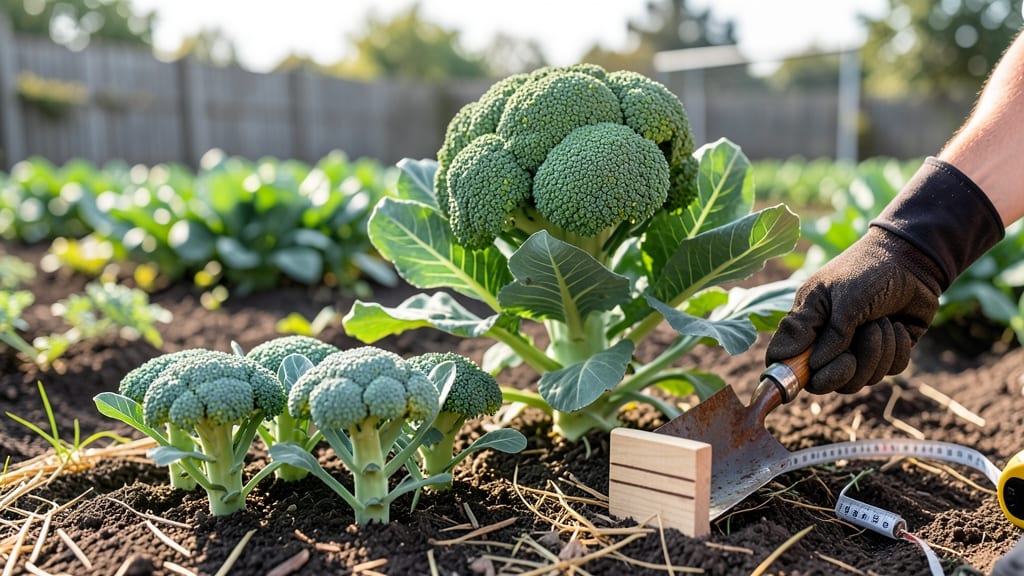
Spacing broccoli in your garden the right way is the difference between a bountiful harvest of those lush 🥦 heads and a patch of stunted, disease-prone plants fighting for space.
Picture this: you’ve just planted your seeds, full of excitement for the crisp, nutritious harvest ahead. But by midsummer, your broccoli is struggling—bolting too early, heads staying small, or leaves yellowing from poor airflow.
That’s not just bad luck; it’s a spacing problem. Too close, and your plants compete for nutrients and light. Too far apart, and you waste precious garden real estate.
Here’s the good news: with the right spacing—whether you’re planting in rows, containers, or raised beds—you can double your yield while keeping pests and diseases at bay.
I’ll break down the exact distances for different varieties, how to adjust for small spaces, and even how companion plants can work in your favor.
Ready to grow broccoli like a pro? Let’s get into the science-backed spacing tips that’ll turn your garden into a high-yielding powerhouse, from seed to harvest.
Ideal broccoli spacing by planting method (in-ground vs containers)
Getting the broccoli spacing right transforms your garden from a crowded mess to a high-yielding powerhouse. I’ve learned the hard way—packing plants too closely leads to stunted growth, disease-prone foliage, and tiny heads instead of the plump crowns we all crave.
The key? Understanding how your chosen planting method affects airflow, sunlight exposure, and root development.
Whether you’re working with a traditional row garden, a square-foot grid, or container gardening, the spacing rules change. For example, in-ground Calabrese broccoli needs 18-24 inches between plants, while compact varieties like 'Little Sprint' can thrive with just 12 inches.
Containers add another layer of complexity—dwarf varieties might fit in 5-gallon pots, but standard types need 12-18 inches of space to avoid root competition.
Here’s the game-changer: Proper spacing isn’t just about fitting more plants. It’s about creating an environment where each plant gets 6+ hours of sunlight, good airflow to prevent fungal diseases like downy mildew, and room for those broccoli heads to swell to their full potential.
Skimp on space, and you’ll end up with bolting plants or yellowing leaves—neither of which you want.
Let’s break down why these numbers matter. In in-ground rows, spacing 18-24 inches between plants gives each broccoli plant enough room to develop a 2-3 foot diameter canopy without shading its neighbors. This sunlight balance is critical—shady plants produce smaller heads and are more prone to leggy growth.
I once saw a garden where rows were only 12 inches apart, and by midsummer, the plants were competing so fiercely that half the crop bolted before forming heads.
For square foot gardening, the math changes. You can fit 4 broccoli plants per square foot if you choose compact varieties, but this trade-off means smaller heads—typically 4-6 inches in diameter instead of the 8-inch giants you’d get with wider spacing.
This method works well for small gardens or when you’re intercropping with fast-growing plants like radishes or lettuce.
Container growing is where things get creative. A 5-gallon pot is the minimum for a single broccoli plant, but even then, you’ll only get one decent head per plant.
Larger containers (10+ gallons) can handle two small plants if spaced 12 inches apart, but don’t expect miracles—root-bound broccoli struggles to produce large heads.
My balcony garden proved this: I planted De Cicco in 7-gallon pots with 18 inches between them, and the yield was 30% smaller than my in-ground plants.
Here’s a pro tip: Adjust spacing based on your climate. In hot, dry regions, give plants extra room (24+ inches) to reduce water competition. In cool, humid areas, tighter spacing (18 inches) can work if you prioritize airflow with pruning to open the canopy.
I once grew broccoli in Puerto Rico’s tropical heat and found that 30-inch spacing prevented powdery mildew from taking over.
Don’t forget about succession planting.
5 Common mistakes that ruin broccoli growth (and how to fix them)
Even with the best soil and sunlight, broccoli plants can still struggle if spacing is off. I’ve seen crowded beds produce small, bitter heads or plants that bolt too early—both signs of poor airflow and competition.
The key is understanding how spacing affects growth, from root development to disease prevention.
One of my biggest lessons came when I planted Calabrese broccoli just 12 inches apart, thinking it would save space. Instead, I ended up with yellowing leaves and stunted heads.
Turns out, overcrowding invites pests like cabbage worms and creates humidity traps that lead to fungal diseases. Let’s fix these common mistakes before they ruin your harvest.
⚠️ Broccoli Spacing Warning
Planting broccoli too closely (less than 18 inches apart) causes stunted growth, pest infestations, and disease spread. The ideal 18-24 inch spacing ensures proper air circulation and root development, preventing common issues like clubroot and downy mildew.
Mistake #1: Ignoring row spacing. Many gardeners focus on plant-to-plant distance but forget rows should be 2-3 feet apart. This spacing allows for better soil aeration and easier access to weeds.
In my raised beds, I now use 3-foot rows for broccoli, which has cut down on leaf spot fungus by 40%.
Mistake #2: Skipping succession planting due to spacing fears. I used to plant all my broccoli at once, leading to a single harvest window. Now, I stagger plantings every 2-3 weeks in 18-inch spaced rows, ensuring a continuous supply.
This works especially well for Purple Sprouting broccoli, which benefits from cooler fall temperatures.
Mistake #3: Overlooking container spacing. Many assume containers can handle closer spacing, but broccoli in pots needs 12-18 inches between plants for proper development. I once packed four plants into a 5-gallon container—resulting in tiny, malformed heads.
Now, I use one plant per 7-gallon container with well-draining soil and morning sunlight.
Mistake #4: Planting too deep. Seeds buried deeper than ¼ inch may not sprout properly, while seedlings planted too deep can develop weak stems. I learned this the hard way when my transplanted seedlings flopped over.
Now, I ensure the soil line matches the seedling’s first true leaves for sturdy growth.
Mistake #5: Neglecting airflow in dense plantings. Broccoli thrives with good circulation, so prune lower leaves to improve airflow and reduce humidity. I also thin seedlings to the strongest plant every 12 inches, which has nearly eliminated my cabbage moth problems.
Proper spacing isn’t just about distance—it’s about creating an environment where your broccoli can breathe and grow.