
Pests
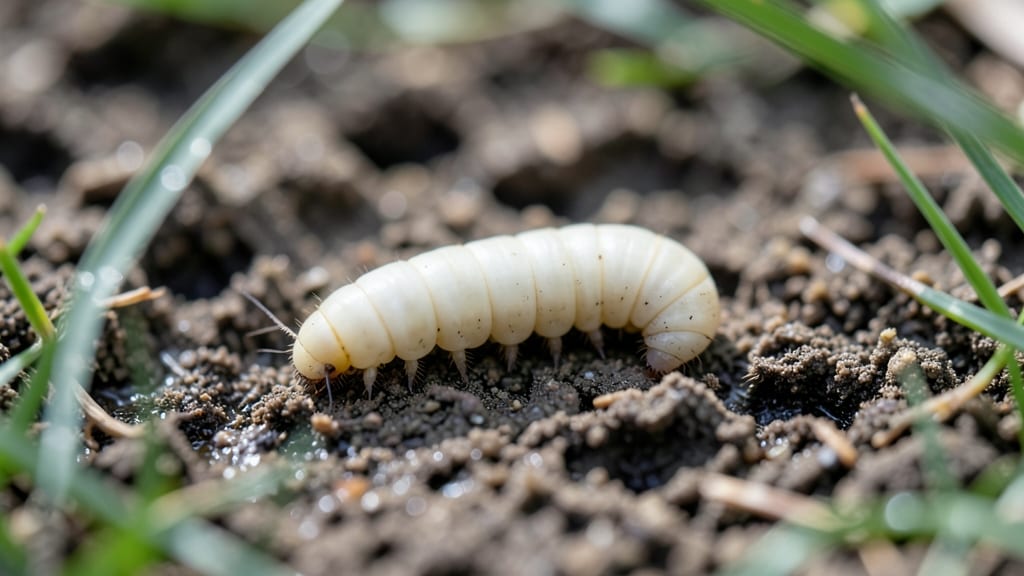
Grubs in your garden are bad because they feed on grass roots and plant roots, causing yellowing lawns, wilting plants, and weak root systems that can lead to patchy or dead areas if left uncontrolled.
Grubs—those C-shaped larvae of beetles—are like silent lawn saboteurs. 🌱 They munch through roots night and day, turning your lush green grass into brown patches that pull up like sodden carpet. The damage starts small but escalates fast, especially during their peak feeding season in late summer and fall.
Without intervention, entire sections of your garden can suffer stunted growth or die off completely, leaving you with a patchwork of struggling plants.
What makes them particularly insidious is their hidden nature—you won’t spot them until the damage is visible. This is why early detection and prevention are key. 🔍 The good news?
Natural solutions like nematodes and milky spore bacteria can effectively disrupt their lifecycle without harsh chemicals, giving your garden a fighting chance.
💡 In This Article
- How Grubs Destroy Garden Roots and Lawns
- Natural Ways to Remove and Prevent Grubs in Gardens
How grubs destroy garden roots and lawns
Grubs—specifically white grubs (larvae of beetles like Japanese beetles) and black grubs (southern masked chafer larvae)—target roots with surgical precision. 🌱 Their mandibles slice through grass roots and plant roots at a rate of about 1-2 inches per week during their peak feeding stage.
This relentless chewing severs the plant's nutrient and water supply, causing roots to weaken and eventually snap. The damage isn't just cosmetic; it disrupts the entire root system's ability to anchor the plant and absorb moisture.
The lifecycle of grubs makes them particularly destructive. Eggs hatch in late spring or early summer, and the larvae spend 10-12 months underground, feeding aggressively before pupating into adult beetles. White grubs, for example, prefer cool-season grasses like Kentucky bluegrass, while black grubs target warm-season grasses like Bermuda.
The most vulnerable plants include young seedlings, shallow-rooted perennials, and newly established shrubs, which lack the depth to compensate for root loss.
One of the first signs of grub damage is soggy, spongy patches in your lawn that pull up easily—like lifting a sodden carpet. 🔍 If you see birds (especially skunks, crows, or raccoons) digging at your lawn, that’s a red flag.
Another telltale sign is yellowing grass that recovers slowly after watering, followed by brown patches that spread. In severe cases, entire sections of turf can die, leaving bare soil exposed. The damage often appears in late summer or early fall, when grubs are most active but before they pupate.
Grubs also create an ideal environment for other pests. Their feeding weakens the soil structure, making it easier for fungi (like brown patch disease) and bacteria to invade. This secondary damage can turn a grub infestation into a full-blown garden crisis if left unchecked.
The key to minimizing harm is catching the problem early—before the grubs reach their 3/4-inch length, which is when they cause the most destruction.
To confirm a grub issue, dig up a small section of turf in the affected area. If you find 5-10 grubs per square foot, it’s time to act.
The damage they leave behind isn’t just unsightly; it can take 1-2 growing seasons for grass to recover fully, even with treatment. That’s why prevention—like applying milky spore bacteria in early spring—is far more effective than playing catch-up later.
Understanding their behavior is half the battle. Grubs are most active at night and in moist soil, which is why watering deeply in the morning (rather than evening) can deter them.
Their preference for freshly watered grass also explains why lawns with inconsistent moisture levels are more susceptible to infestations. 💧