
Pests
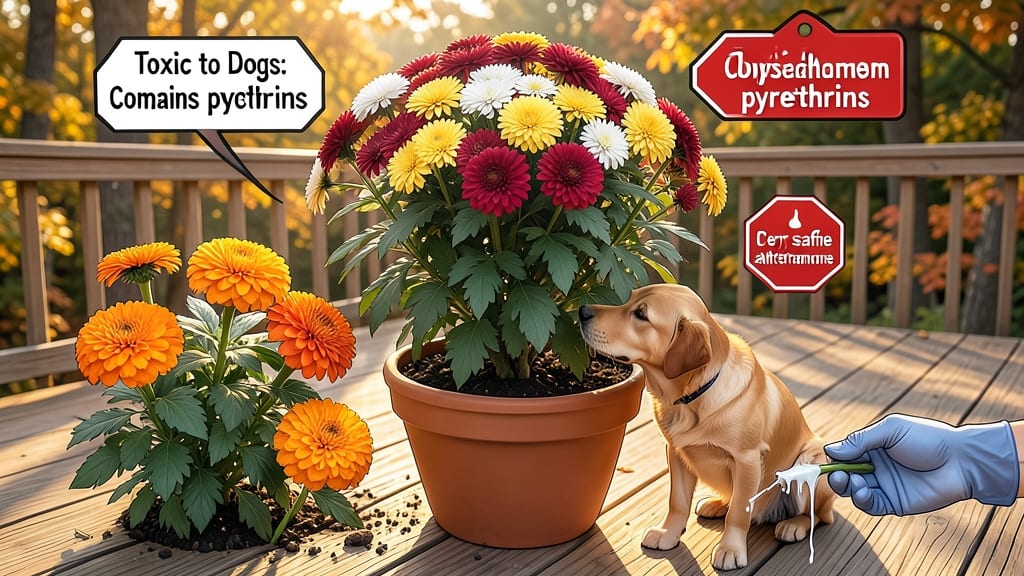
Garden mums (chrysanthemums) are toxic to dogs, containing pyrethrins that cause drooling, vomiting, diarrhea, and lethargy. Avoid planting them near pets or use dog-safe flowers like sunflowers or marigolds instead.
Garden mums contain natural compounds called pyrethrins, which act as insecticides and can trigger serious reactions in dogs when ingested. 🐕 Even small amounts may lead to symptoms like excessive drooling, stomach upset, or weakness, with larger exposures risking more severe neurological effects.
The good news? Many vibrant, pet-friendly flowers—such as sunflowers, snapdragons, or roses—offer the same visual appeal without the danger. I always recommend keeping toxic plants out of reach or opting for certified non-toxic varieties when designing outdoor spaces for homes with curious pets.
If you suspect your dog has eaten chrysanthemum leaves or flowers, contact your vet or a pet poison hotline immediately. Quick action can make all the difference in preventing complications. For prevention, consider raised garden beds or hanging planters to keep these toxic blooms safely out of paw's reach.
💡 In This Article
- Toxic Components in Chrysanthemums and Their Effects on Dogs
- Safe Flower Alternatives for Pet-Friendly Gardens
Toxic components in chrysanthemums and their effects on dogs
Chrysanthemums contain two primary toxic compounds: pyrethrins and sesquiterpene lactones. Pyrethrins are natural insecticides that disrupt the nervous system of insects—and dogs—by overstimulating sodium channels in nerve cells.
This causes muscle tremors, seizures, and respiratory distress in severe cases. 🌿 The plant's leaves and stems contain the highest concentrations, with just 0.1% of a dog's body weight in fresh mum leaves potentially triggering symptoms.
Sesquiterpene lactones, another toxic compound, act as skin irritants and gastrointestinal irritants. When ingested, they cause intense vomiting and diarrhea as the dog's body attempts to expel the plant material.
The severity depends on the dog's size: a 10-pound Chihuahua might show symptoms after eating just one leaf, while a 50-pound Labrador could tolerate slightly more before showing signs. The smaller the dog, the more dangerous the exposure becomes due to their lower body weight and higher metabolic rate.
Symptoms typically appear within 6-12 hours of ingestion and may include excessive drooling, nausea, lethargy, or even collapse in extreme cases.
The plant's bitter taste often deters dogs from eating large quantities, but curious pups may nibble enough to trigger reactions. 🐾 What makes chrysanthemums particularly insidious is that their toxicity persists even after drying—wilted or dead flowers can still cause harm if ingested.
Breed-specific sensitivities play a role too. Brachycephalic breeds (like Pugs or Bulldogs) with compromised respiratory systems may experience more severe reactions due to the pyrethrins' impact on their airways.
The compounds also affect dogs' liver enzymes, which can lead to long-term damage with repeated exposure. This is why even small garden mums near dog-walking paths pose serious risks.
For comparison, the toxicity level of chrysanthemums falls between mild and moderate on the ASPCA's plant toxicity scale—more dangerous than lilies but less immediately life-threatening than foxglove. However, the cumulative effect of multiple exposures or large ingestions can quickly escalate to an emergency situation.
Always monitor your dog's behavior after they've been near these plants, especially if they show signs of sniffing or chewing.
If you're unsure whether your dog has ingested chrysanthemum, look for visual clues like plant material in their fur or mouth, or unusual interest in garden areas where mums grow. The key is acting fast—contact your vet immediately if you notice any symptoms, as early intervention can prevent complications. 🚨